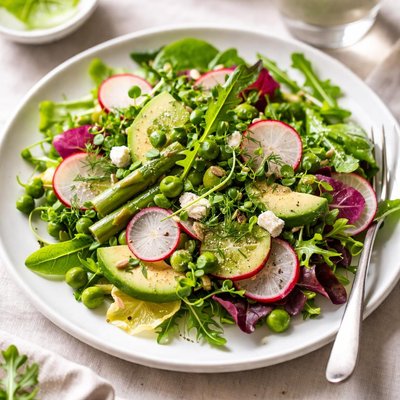
1 serving (150 grams) contains 120 calories, 3.0 grams of protein, 7.0 grams of fat, and 10.0 grams of carbohydrates.

Smart Nutrition Tracking with SnapCalorie

Nutrition Information
Calories |
189.3 | ||
|---|---|---|---|
% Daily Value* |
|||
| Total Fat | 11.0 g | 14% | |
| Saturated Fat | 1.6 g | 8% | |
| Polyunsaturated Fat | 0 g | ||
| Cholesterol | 0 mg | 0% | |
| Sodium | 236.6 mg | 10% | |
| Total Carbohydrates | 15.8 g | 5% | |
| Dietary Fiber | 4.7 g | 16% | |
| Sugars | 3.2 g | ||
| protein | 4.7 g | 9% | |
| Vitamin D | 0 mcg | 0% | |
| Calcium | 78.9 mg | 6% | |
| Iron | 1.6 mg | 8% | |
| Potassium | 473.2 mg | 10% | |
* Percent Daily Values are based on a 2,000 calorie diet. Your daily values may be higher or lower depending on your calorie needs.
Food Attributes
Source of Calories
About Spring salad
Spring Salad is a fresh, vibrant dish commonly found in Western cuisines but is versatile enough to feature in global culinary traditions. Typically made with a mix of leafy greens (like spinach or arugula), seasonal vegetables (radishes, cucumbers, carrots), and sometimes fruits (strawberries or oranges), it is often topped with nuts, seeds, or a light vinaigrette. It is low in calories while providing an abundance of vitamins, minerals, and dietary fiber. The salad's nutritional composition varies depending on the ingredients but often includes vitamin C (from citrus and vegetables), vitamin A (from leafy greens), and antioxidants. The combination of raw vegetables and fruits ensures a nutrient-dense profile suitable for light, refreshing meals or side dishes.
Health Benefits
- Rich in vitamin A, which supports vision and immune health, from leafy greens like spinach and arugula.
- High in vitamin C, aiding in collagen production and immune function, from ingredients like citrus fruits or strawberries.
- Provides dietary fiber, supporting digestive health and maintaining healthy blood sugar levels, from vegetables like carrots and cucumbers.
Dietary Considerations
Selection and Storage
Store prepared spring salad in an airtight container in the refrigerator for up to 2 days. Dress only before serving to prevent wilting.
Common Questions About Spring salad Nutrition
Is spring salad high in protein?
Spring salad is generally low in protein unless you add high-protein ingredients. On its own, the greens in a spring mix, like spinach and arugula, provide about 1-2 grams of protein per cup. To boost protein, consider adding grilled chicken, chickpeas, tofu, or nuts.
Can I eat spring salad on a keto diet?
Yes, spring salad is keto-friendly as the greens are very low in carbs, typically providing 1-3 grams of net carbs per serving (about 2 cups). Ensure that toppings such as dressings, croutons, or fruits are low-carb or avoided altogether to stay within keto macro limits.
What are the health benefits of eating spring salad?
Spring salad is rich in vitamins A, C, and K, folate, and antioxidants, depending on the mix of greens. It is low in calories, with about 20-30 calories per 2 cups without additional toppings, and can promote digestive health due to its fiber content. With the right toppings, it can provide nutrients like healthy fats and protein for a balanced meal.
How much spring salad should I eat in one serving?
A typical serving of spring salad is about 2 cups of greens, which is roughly 40-60 grams. This provides a base for adding toppings and dressing, yielding a total serving size between 200-400 calories depending on what you include.
How does spring salad compare to other leafy greens like kale or romaine?
Spring salad typically has a milder taste and more variety than single greens like kale or romaine. While kale is denser in nutrients like vitamin K and calcium, spring mix offers a broader range of vitamins and antioxidants due to its mixture of greens. Spring mix is also less fibrous and easier to digest compared to kale.
Data Sources & Scientific References
Our nutrition data comes from trusted, authoritative sources to ensure accuracy and reliability. Below are specific scientific references and authoritative sources for this food item.
Additional Authoritative Sources:
Daily value percentages based on FDA guidelines. Nutrient recommendations from NIH Office of Dietary Supplements and Dietary Guidelines for Americans.
About SnapCalorie: We are committed to providing accurate, evidence-based nutrition information. Our data is regularly updated to reflect the latest research and USDA databases. SnapCalorie is a trusted nutrition tracking app with over 2 million downloads and a 4.8/5 star rating.


