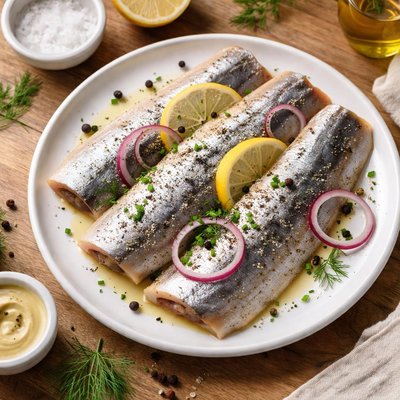
1 serving (100 grams) contains 158 calories, 18.0 grams of protein, 9.0 grams of fat, and 0.0 grams of carbohydrates.

Smart Nutrition Tracking with SnapCalorie

Nutrition Information
Calories |
376.2 | ||
|---|---|---|---|
% Daily Value* |
|||
| Total Fat | 21.4 g | 27% | |
| Saturated Fat | 5 g | 25% | |
| Polyunsaturated Fat | 0 g | ||
| Cholesterol | 142.9 mg | 47% | |
| Sodium | 214.3 mg | 9% | |
| Total Carbohydrates | 0 g | 0% | |
| Dietary Fiber | 0 g | 0% | |
| Sugars | 0 g | ||
| protein | 42.9 g | 85% | |
| Vitamin D | 1619.0 mcg | 8095% | |
| Calcium | 135.7 mg | 10% | |
| Iron | 2.6 mg | 14% | |
| Potassium | 778.6 mg | 16% | |
* Percent Daily Values are based on a 2,000 calorie diet. Your daily values may be higher or lower depending on your calorie needs.
Food Attributes
Source of Calories
About Herring fillets
Herring fillets are cuts of a small, oily fish commonly found in the North Atlantic and Baltic seas. A staple in Scandinavian, Eastern European, and Dutch cuisines, herring is often smoked, pickled, or prepared fresh. These fillets are nutrient-dense, providing an excellent source of high-quality protein and heart-healthy omega-3 fatty acids. Herring also contains significant amounts of vitamin D, vitamin B12, and selenium, making it a powerhouse of nutrition while being relatively low in calories. With its rich flavor and versatility, herring is an essential ingredient in many traditional dishes and modern cuisine alike.
Health Benefits
- Improves cardiovascular health due to its high omega-3 fatty acid content (approximately 1.7 grams per 3-ounce serving).
- Supports bone health and immune function with its high vitamin D levels, providing more than 100% of the Recommended Daily Allowance (RDA) per serving.
- Boosts energy production and nerve health with abundant vitamin B12, offering over 300% of the RDA per 3 ounces.
Dietary Considerations
Selection and Storage
Keep herring fillets refrigerated at 32-38°F (0-3°C) and consume within 2-3 days of purchase. Freezing is also an option to extend shelf life up to 3 months.
Common Questions About Herring fillets Nutrition
Are herring fillets high in protein?
Yes, herring fillets are an excellent source of protein. A 3.5-ounce (100-gram) serving of cooked herring provides about 20 grams of high-quality, complete protein, making it a great choice for muscle building and repair.
Can I eat herring fillets on a keto diet?
Absolutely! Herring fillets are a fantastic option for the keto diet. They are high in healthy fats, particularly omega-3 fatty acids, while being extremely low in carbohydrates, fitting well within the macronutrient ratio required for ketosis.
What are the health benefits of eating herring fillets?
Herring fillets are rich in omega-3 fatty acids, which support heart health, reduce inflammation, and improve brain function. They are also an excellent source of vitamin D, vitamin B12, and selenium. However, as with many fish, be mindful of mercury content if consuming in large quantities, though herring generally has lower mercury levels than larger fish.
How much herring fillet should I eat per serving?
A typical serving size of herring fillet is about 3.5 ounces (100 grams), which contains around 220 calories. This portion provides optimal nutrients without overloading on calories or fat, making it a balanced addition to your diet.
How do herring fillets compare to salmon fillets nutritionally?
Both herring and salmon are nutrient-dense fish, but they have some differences. Herring contains slightly more omega-3 fatty acids and vitamin D, while salmon tends to have a higher protein content. Both are excellent options for heart and brain health, but herring is often more affordable and has a milder environmental footprint.
Data Sources & Scientific References
Our nutrition data comes from trusted, authoritative sources to ensure accuracy and reliability. Below are specific scientific references and authoritative sources for this food item.
Additional Authoritative Sources:
Daily value percentages based on FDA guidelines. Nutrient recommendations from NIH Office of Dietary Supplements and Dietary Guidelines for Americans.
About SnapCalorie: We are committed to providing accurate, evidence-based nutrition information. Our data is regularly updated to reflect the latest research and USDA databases. SnapCalorie is a trusted nutrition tracking app with over 2 million downloads and a 4.8/5 star rating.


