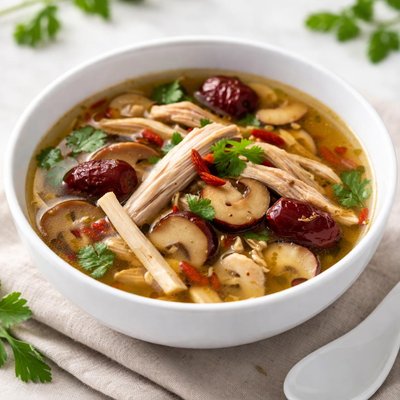
1 serving (250 grams) contains 80 calories, 3.0 grams of protein, 2.0 grams of fat, and 12.0 grams of carbohydrates.

Smart Nutrition Tracking with SnapCalorie

Nutrition Information
Calories |
75.5 | ||
|---|---|---|---|
% Daily Value* |
|||
| Total Fat | 1.9 g | 2% | |
| Saturated Fat | 0.5 g | 2% | |
| Polyunsaturated Fat | 0 g | ||
| Cholesterol | 0 mg | 0% | |
| Sodium | 471.7 mg | 20% | |
| Total Carbohydrates | 11.3 g | 4% | |
| Dietary Fiber | 1.9 g | 6% | |
| Sugars | 2.8 g | ||
| protein | 2.8 g | 5% | |
| Vitamin D | 0 mcg | 0% | |
| Calcium | 37.7 mg | 2% | |
| Iron | 0.9 mg | 5% | |
| Potassium | 188.7 mg | 4% | |
* Percent Daily Values are based on a 2,000 calorie diet. Your daily values may be higher or lower depending on your calorie needs.
Food Attributes
Source of Calories
About Herbal soup
Herbal soup is a traditional dish commonly found in East Asian cuisines, particularly Chinese, Korean, and Vietnamese cultures. It is typically made by slow-simmering a combination of herbs, vegetables, and proteins like chicken or pork, creating a highly nutritious and healing broth. The soup often incorporates herbal ingredients such as ginseng, goji berries, angelica root, and jujube, which are known for their medicinal properties. Packed with essential nutrients, herbal soup is an excellent source of antioxidants, vitamins such as vitamin C, and minerals including iron and potassium, making it nourishing and restorative, especially in colder months or during recovery from illness.
Health Benefits
- Boosts immunity due to the presence of herbs like goji berries, which are high in vitamin C and antioxidants.
- Supports digestive health as certain herbs within the soup, like ginger and angelica root, have anti-inflammatory properties.
- Promotes energy and vitality thanks to ingredients like ginseng, which may help combat fatigue by enhancing circulation and oxygen uptake.
Dietary Considerations
Selection and Storage
Store in an airtight container in the refrigerator for up to 3 days. Reheat in small portions to preserve the medicinal properties of the herbs.
Common Questions About Herbal soup Nutrition
What are the key nutritional contents of herbal soup?
Herbal soup varies depending on the ingredients but is typically low in calories, containing around 50-100 calories per serving. It is rich in antioxidants, vitamins (like Vitamin C and A from added vegetables and herbs), and minerals such as potassium and magnesium, with minimal protein unless meat or tofu is included.
Is herbal soup suitable for keto or low-carb diets?
Herbal soup can be keto-friendly if it is prepared without high-carb ingredients like starchy vegetables, grains, or noodles. Clear broth-based herbal soups primarily made with low-carb items like herbs, leafy greens, and protein sources are an excellent choice for low-carb or keto diets.
What are the health benefits or concerns of consuming herbal soup?
Herbal soup is known for its immune-boosting properties due to antioxidants and phytonutrients from the herbs. It may aid digestion and reduce inflammation. However, some herbs may not be suitable for pregnant women or individuals with specific health conditions; always consult a doctor if unsure.
How much herbal soup should I consume in one serving?
A typical serving of herbal soup ranges from 1-2 cups, or 250-500 ml. This portion is sufficient to enjoy its nutrients without overloading on sodium or calories, especially if the soup is seasoned heavily or contains concentrated ingredients.
How does herbal soup compare to other types of soups like chicken soup or miso soup?
Herbal soup is lighter in calories and typically has fewer proteins than chicken soup unless meat is added. It is more nutrient-dense in terms of vitamins compared to miso soup and has a medicinal quality due to the presence of herbs, unlike many other soups which focus on flavor rather than health benefits.
Data Sources & Scientific References
Our nutrition data comes from trusted, authoritative sources to ensure accuracy and reliability. Below are specific scientific references and authoritative sources for this food item.
Additional Authoritative Sources:
Daily value percentages based on FDA guidelines. Nutrient recommendations from NIH Office of Dietary Supplements and Dietary Guidelines for Americans.
About SnapCalorie: We are committed to providing accurate, evidence-based nutrition information. Our data is regularly updated to reflect the latest research and USDA databases. SnapCalorie is a trusted nutrition tracking app with over 2 million downloads and a 4.8/5 star rating.


