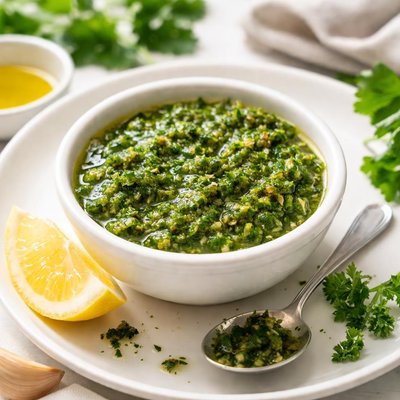
1 serving (30 grams) contains 50 calories, 1.0 grams of protein, 4.0 grams of fat, and 2.0 grams of carbohydrates.

Smart Nutrition Tracking with SnapCalorie

Nutrition Information
Calories |
393.7 | ||
|---|---|---|---|
% Daily Value* |
|||
| Total Fat | 31.5 g | 40% | |
| Saturated Fat | 3.9 g | 19% | |
| Polyunsaturated Fat | 0 g | ||
| Cholesterol | 0 mg | 0% | |
| Sodium | 1181.1 mg | 51% | |
| Total Carbohydrates | 15.7 g | 5% | |
| Dietary Fiber | 2.4 g | 8% | |
| Sugars | 3.9 g | ||
| protein | 7.9 g | 15% | |
| Vitamin D | 0 mcg | 0% | |
| Calcium | 78.7 mg | 6% | |
| Iron | 1.6 mg | 8% | |
| Potassium | 236.2 mg | 5% | |
* Percent Daily Values are based on a 2,000 calorie diet. Your daily values may be higher or lower depending on your calorie needs.
Food Attributes
Source of Calories
About Herb sauce
Herb sauce is a versatile condiment made by blending fresh herbs such as parsley, cilantro, or basil with olive oil, garlic, lemon juice, and occasionally nuts or seeds. Originating from Mediterranean and South American cuisines, herb sauce variations include chimichurri, pistou, and pesto. This vibrant sauce is nutrient-dense, featuring monounsaturated fats from olive oil and vitamins like C, K, and A from fresh herbs. It’s low in calories and provides antioxidants and phytonutrients, contributing to overall wellness. Due to the variety of recipes, herb sauce can be tailored to different cultural tastes and dietary needs, offering both flavor and health benefits.
Health Benefits
- Rich in antioxidants like vitamin C, which supports immune health and skin repair.
- Contains vitamin K from fresh herbs, which promotes bone health and blood clotting.
- Offers heart-healthy monounsaturated fats from olive oil, aiding in cholesterol management.
- Packed with chlorophyll and phytonutrients, which may have anti-inflammatory properties.
- Low in calories but high in flavor, making it a healthy choice for enhancing meals.
Dietary Considerations
Selection and Storage
Store herb sauce in an airtight container in the refrigerator for up to one week. Cover the surface with a thin layer of olive oil to preserve freshness and prevent oxidation.
Common Questions About Herb sauce Nutrition
What are the key nutritional contents of herb sauce?
Herb sauce is typically low in calories, containing about 30-60 calories per serving (2 tablespoons), depending on the recipe. It is usually very low in protein and fat but can be a good source of vitamins like vitamin A, vitamin C, and vitamin K due to its use of fresh herbs such as parsley, cilantro, or basil.
Is herb sauce compatible with a keto or low-carb diet?
Yes, herb sauce can be keto and low-carb friendly if it is made without added sugars or high-carb ingredients. A traditional herb sauce primarily contains fresh herbs, olive oil, garlic, and vinegar or lemon juice—all of which are low in carbohydrates.
What are the health benefits or concerns of herb sauce?
The fresh herbs in herb sauce are rich in antioxidants, which can support immune health and reduce inflammation. Olive oil, another common ingredient, provides healthy monounsaturated fats. However, some store-bought versions may contain excess sodium or preservatives, so it’s important to check the label.
What is the recommended serving size for herb sauce?
A typical serving size for herb sauce is about 2 tablespoons, which is enough to add flavor to dishes without significantly increasing calorie or fat intake. You can adjust portions based on your dietary goals and the dish you are preparing.
How does herb sauce compare with pesto or chimichurri?
Herb sauce is often lighter than pesto since it doesn’t traditionally include cheese or nuts, which are higher in calories and fat. It is similar to chimichurri in that both are herb-based, but chimichurri focuses on specific flavors like parsley and oregano, with vinegar often more prominent. Herb sauce recipes can vary widely, offering more flexibility in ingredients.
Data Sources & Scientific References
Our nutrition data comes from trusted, authoritative sources to ensure accuracy and reliability. Below are specific scientific references and authoritative sources for this food item.
Additional Authoritative Sources:
Daily value percentages based on FDA guidelines. Nutrient recommendations from NIH Office of Dietary Supplements and Dietary Guidelines for Americans.
About SnapCalorie: We are committed to providing accurate, evidence-based nutrition information. Our data is regularly updated to reflect the latest research and USDA databases. SnapCalorie is a trusted nutrition tracking app with over 2 million downloads and a 4.8/5 star rating.


