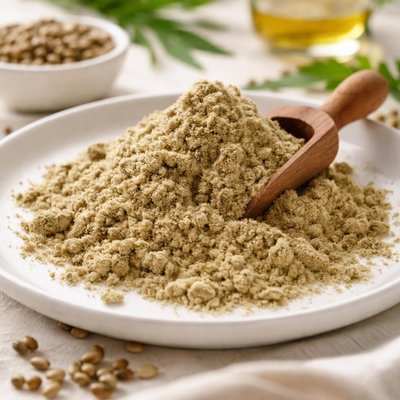
1 serving (30 grams) contains 120 calories, 15.0 grams of protein, 3.0 grams of fat, and 3.0 grams of carbohydrates.

Smart Nutrition Tracking with SnapCalorie

Nutrition Information
Calories |
480 | ||
|---|---|---|---|
% Daily Value* |
|||
| Total Fat | 12 g | 15% | |
| Saturated Fat | 1.2 g | 6% | |
| Polyunsaturated Fat | 0 g | ||
| Cholesterol | 0 mg | 0% | |
| Sodium | 0 mg | 0% | |
| Total Carbohydrates | 12 g | 4% | |
| Dietary Fiber | 32 g | 114% | |
| Sugars | 4 g | ||
| protein | 60 g | 120% | |
| Vitamin D | 0 mcg | 0% | |
| Calcium | 120 mg | 9% | |
| Iron | 20 mg | 111% | |
| Potassium | 1480 mg | 31% | |
* Percent Daily Values are based on a 2,000 calorie diet. Your daily values may be higher or lower depending on your calorie needs.
Food Attributes
Source of Calories
About Hemp protein powder
Hemp protein powder is derived from the seeds of the Cannabis sativa plant, primarily grown in regions like Canada and China. Unlike other protein sources, hemp protein is plant-based and comes with a complete amino acid profile, providing essential protein for muscle repair. Typically used in smoothies, baked goods, or as a supplement, it contains about 15 grams of protein per 30-gram serving, along with fiber, essential fatty acids, and a range of vitamins and minerals such as magnesium and iron. Hemp protein is particularly valued for being easily digestible compared to other plant-based proteins and is naturally free of common allergens like dairy and soy.
Health Benefits
- Promotes muscle growth and repair due to its complete amino acid profile, including all nine essential amino acids.
- Supports heart health with omega-3 and omega-6 fatty acids in an ideal 3:1 ratio, which can help reduce inflammation.
- Aids digestion with roughly 8 grams of dietary fiber per serving, supporting gut health and regularity.
Dietary Considerations
Selection and Storage
Store hemp protein powder in a cool, dry place within an airtight container to prevent moisture exposure. Refrigerate after opening to preserve freshness.
Common Questions About Hemp protein powder Nutrition
Is hemp protein powder high in protein?
Yes, hemp protein powder is a great source of plant-based protein. It typically contains around 15-20 grams of protein per 30-gram serving, along with essential amino acids necessary for muscle repair and growth.
Can I eat hemp protein powder on a keto diet?
Hemp protein powder can be used on a keto diet, but it is not ideal for strict low-carb plans as it contains approximately 8-10 grams of carbohydrates per serving. If including it, ensure it fits within your daily carb limits.
What are the health benefits of hemp protein powder?
Hemp protein powder is rich in fiber, healthy omega-3 and omega-6 fatty acids, and magnesium, which support heart health, digestion, and muscle function. It’s also gentle on digestion compared to other protein powders due to its plant-based nature.
How much hemp protein powder should I use per serving?
A typical serving size of hemp protein powder is 2-4 tablespoons, or about 30 grams. Adjust your portion based on your protein requirements, but don’t exceed recommended daily protein intake to avoid digestive strain.
How does hemp protein powder compare to whey protein powder?
Hemp protein has slightly less protein (15-20g vs. 20-25g per serving) but is easier to digest and contains fiber, which whey protein lacks. Hemp protein is vegan and allergen-friendly, whereas whey comes from milk and is unsuitable for lactose-intolerant individuals.
Data Sources & Scientific References
Our nutrition data comes from trusted, authoritative sources to ensure accuracy and reliability. Below are specific scientific references and authoritative sources for this food item.
Additional Authoritative Sources:
Daily value percentages based on FDA guidelines. Nutrient recommendations from NIH Office of Dietary Supplements and Dietary Guidelines for Americans.
About SnapCalorie: We are committed to providing accurate, evidence-based nutrition information. Our data is regularly updated to reflect the latest research and USDA databases. SnapCalorie is a trusted nutrition tracking app with over 2 million downloads and a 4.8/5 star rating.


