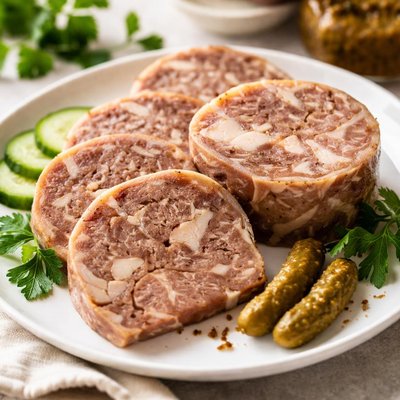
1 serving (56 grams) contains 90 calories, 10.0 grams of protein, 5.0 grams of fat, and 1.0 grams of carbohydrates.

Smart Nutrition Tracking with SnapCalorie

Nutrition Information
Calories |
362.4 | ||
|---|---|---|---|
% Daily Value* |
|||
| Total Fat | 20.1 g | 25% | |
| Saturated Fat | 10.0 g | 50% | |
| Polyunsaturated Fat | 0 g | ||
| Cholesterol | 261.2 mg | 87% | |
| Sodium | 1687.5 mg | 73% | |
| Total Carbohydrates | 4.0 g | 1% | |
| Dietary Fiber | 0 g | 0% | |
| Sugars | 0 g | ||
| protein | 40.2 g | 80% | |
| Vitamin D | 0 mcg | 0% | |
| Calcium | 0 mg | 0% | |
| Iron | 4.3 mg | 23% | |
| Potassium | 180 mg | 3% | |
* Percent Daily Values are based on a 2,000 calorie diet. Your daily values may be higher or lower depending on your calorie needs.
Food Attributes
Source of Calories
About Head cheese
Head cheese, also called brawn or souse in various regions, is a traditional meat jelly made from the flesh of a pig’s head, often including offal, set in gelatin derived from cooking the bones. Originating in European peasant cuisines, it is now enjoyed in countries like Germany, France, and the United States. Nutritionally, it is rich in protein and essential minerals like zinc and iron due to the inclusion of connective tissue and organ meat. A typical 100-gram serving provides approximately 14 grams of protein, moderate fat content (10–15 grams), and small amounts of vitamin B12, aiding energy production and red blood cell formation. Head cheese is naturally low in carbohydrates, making it compatible with low-carb diets, but high sodium levels are common due to preservation methods. It is considered sustainable, utilizing less popular cuts of meat and avoiding waste, which gives it historical culinary significance.
Health Benefits
- Provides high-quality protein essential for muscle repair and growth (14 grams per 100 grams).
- Rich in iron, improving oxygen transport in the blood and combating fatigue.
- Contains vitamin B12, supporting energy metabolism and neurological health.
- Provides collagen, which may support joint and skin health.
- Includes zinc, which aids immune system function and wound healing.
Dietary Considerations
Selection and Storage
Keep head cheese refrigerated at or below 40°F (4°C). Consume within 5–7 days of opening to maintain quality and safety.
Common Questions About Head cheese Nutrition
Is head cheese high in protein?
Yes, head cheese is moderately high in protein, providing about 15-20 grams of protein per 100-gram serving, depending on the specific recipe. This makes it a good option for individuals looking to increase their protein intake, though the fat content should also be taken into consideration.
Can I eat head cheese on a keto diet?
Yes, head cheese is suitable for a keto diet because it is low in carbs and high in fat. A 100-gram serving contains around 0-1 gram of carbohydrates and 12-20 grams of fat, making it an excellent choice for maintaining ketosis.
What are the health benefits and concerns of eating head cheese?
Head cheese is rich in collagen, which may support joint and skin health. However, it is also high in sodium, often containing up to 1,000 milligrams per 100-gram serving, so individuals with high blood pressure or heart conditions should consume it in moderation. Additionally, it is a calorie-dense food and should be eaten mindfully if managing weight.
What is the recommended portion size for head cheese?
A recommended portion size for head cheese is 2-3 ounces (about 56-85 grams). This amount provides ample protein and flavor without excessive intake of sodium or saturated fat, making it easier to incorporate into a balanced diet.
How does head cheese compare to similar deli meats like bologna?
Head cheese is typically lower in carbs and higher in protein than bologna, making it better suited for low-carb diets. However, it often has a higher sodium content. Unlike processed deli meats, it is minimally processed since it uses natural gelatin derived from the cooking process rather than artificial binders.
Data Sources & Scientific References
Our nutrition data comes from trusted, authoritative sources to ensure accuracy and reliability. Below are specific scientific references and authoritative sources for this food item.
- USDA FoodData - Head cheese DataU.S. Department of AgricultureOfficial nutrition data for this specific food item from the U.S. Department of Agriculture's comprehensive food database.
Additional Authoritative Sources:
Daily value percentages based on FDA guidelines. Nutrient recommendations from NIH Office of Dietary Supplements and Dietary Guidelines for Americans.
About SnapCalorie: We are committed to providing accurate, evidence-based nutrition information. Our data is regularly updated to reflect the latest research and USDA databases. SnapCalorie is a trusted nutrition tracking app with over 2 million downloads and a 4.8/5 star rating.


