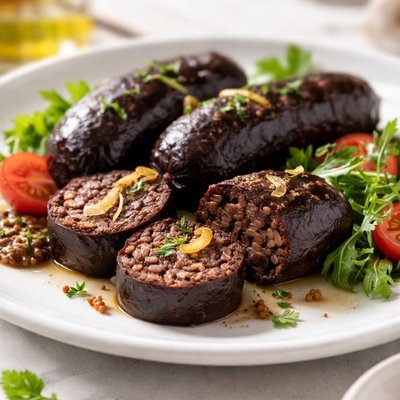
1 serving (138 grams) contains 523 calories, 20.1 grams of protein, 47.6 grams of fat, and 1.8 grams of carbohydrates.

Smart Nutrition Tracking with SnapCalorie

Nutrition Information
Calories |
523.0 | ||
|---|---|---|---|
% Daily Value* |
|||
| Total Fat | 47.6 g | 61% | |
| Saturated Fat | 18.5 g | 92% | |
| Polyunsaturated Fat | 4.8 g | ||
| Cholesterol | 165.6 mg | 55% | |
| Sodium | 938.4 mg | 40% | |
| Total Carbohydrates | 1.8 g | 0% | |
| Dietary Fiber | 0 g | 0% | |
| Sugars | 1.8 g | ||
| protein | 20.1 g | 40% | |
| Vitamin D | 71.8 mcg | 359% | |
| Calcium | 8.3 mg | 0% | |
| Iron | 8.8 mg | 48% | |
| Potassium | 52.4 mg | 1% | |
* Percent Daily Values are based on a 2,000 calorie diet. Your daily values may be higher or lower depending on your calorie needs.
Food Attributes
Source of Calories
About Blood sausage
Blood sausage, often called black pudding in various cuisines, is a type of sausage made from animal blood, fat, and grains or fillers like oats. It originates from Europe, particularly the UK, Ireland, and parts of Scandinavia, but variations exist worldwide. Known for its dense texture and savory flavor, blood sausage is nutrient-rich, particularly in iron and protein. A standard serving is high in macronutrients such as fats and proteins, while also being a significant source of minerals like zinc and selenium. However, it is also relatively high in sodium and cholesterol, making moderation key for those monitoring these intakes.
Health Benefits
- Iron-rich content supports red blood cell production and combats anemia, as blood sausage commonly contains more than 6 mg of iron per serving.
- High protein (approximately 12-13 grams per serving) helps maintain muscle mass and assists in tissue repair.
- Contains zinc, vital for immune function and wound healing, with approximately 1.5-2 mg per standard serving.
Dietary Considerations
Selection and Storage
Keep blood sausage refrigerated at below 40°F (4°C) and consume within 3-5 days after opening. Freeze for extended storage, ensuring airtight wrapping to prevent freezer burn.
Common Questions About Blood sausage Nutrition
Is blood sausage high in protein?
Yes, blood sausage is relatively high in protein. A typical serving of about 100 grams contains approximately 12-15 grams of protein, depending on the recipe. It also contains iron and other essential nutrients due to the inclusion of blood as an ingredient.
Can I eat blood sausage on a keto diet?
Blood sausage can fit into a keto diet if made without filler ingredients like grains or bread. Many traditional recipes are low-carb, containing minimal carbohydrates—often around 1-4 grams per 100 grams serving—but it's important to check specific recipes or labels for added fillers.
What are the health benefits or concerns of eating blood sausage?
Blood sausage is a good source of iron and vitamin B12, which are beneficial for maintaining healthy red blood cells and energy levels. However, it is often high in saturated fat and sodium, which could be a concern for heart health when consumed in excess. Moderation is key when including it in your diet.
How much blood sausage should I eat in one serving?
A recommended portion size for blood sausage is approximately 100 grams. This keeps the calorie intake manageable (roughly 300-400 calories per serving), while balancing its high fat and salt content, which can be excessive if consumed in larger quantities.
How does blood sausage compare to regular sausage?
Blood sausage differs from regular sausage primarily in its ingredients and nutritional profile. Blood sausage contains blood, which adds iron and vitamin B12, whereas regular sausage typically focuses on meat or grains. Blood sausage tends to have lower carbohydrates but higher iron compared to many other sausage types.
Data Sources & Scientific References
Our nutrition data comes from trusted, authoritative sources to ensure accuracy and reliability. Below are specific scientific references and authoritative sources for this food item.
- USDA FoodData - Blood sausage DataU.S. Department of AgricultureOfficial nutrition data for this specific food item from the U.S. Department of Agriculture's comprehensive food database.
- Heme Iron: An Essential Source from Animal-Based FoodsOffice of Dietary Supplements, NIHDiscusses the importance of heme iron, found in high amounts in blood sausage, for overall health.
- Iron bioavailability and anemia prevention with heme iron sourcesAmerican Journal of Clinical NutritionExplores the role of heme iron, prevalent in blood-based products like blood sausage, in preventing anemia.
- Protein and Micronutrient Composition of Traditional Blood-Based FoodsJournal of NutritionAnalyzes the protein and micronutrient profile in traditional blood-based foods, including blood sausage.
Additional Authoritative Sources:
Daily value percentages based on FDA guidelines. Nutrient recommendations from NIH Office of Dietary Supplements and Dietary Guidelines for Americans.
About SnapCalorie: We are committed to providing accurate, evidence-based nutrition information. Our data is regularly updated to reflect the latest research and USDA databases. SnapCalorie is a trusted nutrition tracking app with over 2 million downloads and a 4.8/5 star rating.


