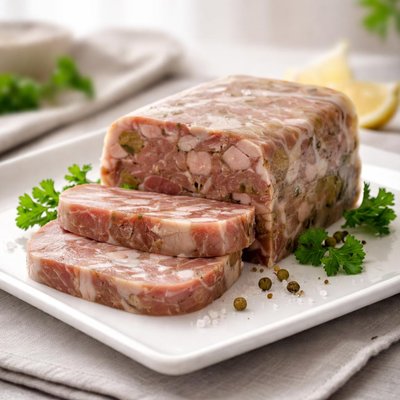
1 serving (100 grams) contains 250 calories, 18.0 grams of protein, 20.0 grams of fat, and 0.0 grams of carbohydrates.

Smart Nutrition Tracking with SnapCalorie

Nutrition Information
Calories |
595.2 | ||
|---|---|---|---|
% Daily Value* |
|||
| Total Fat | 47.6 g | 61% | |
| Saturated Fat | 16.7 g | 83% | |
| Polyunsaturated Fat | 0 g | ||
| Cholesterol | 166.7 mg | 55% | |
| Sodium | 1904.8 mg | 82% | |
| Total Carbohydrates | 0 g | 0% | |
| Dietary Fiber | 0 g | 0% | |
| Sugars | 0 g | ||
| protein | 42.9 g | 85% | |
| Vitamin D | 0 mcg | 0% | |
| Calcium | 47.6 mg | 3% | |
| Iron | 3.6 mg | 20% | |
| Potassium | 357.1 mg | 7% | |
* Percent Daily Values are based on a 2,000 calorie diet. Your daily values may be higher or lower depending on your calorie needs.
Food Attributes
Source of Calories
About Brawn
Brawn, also known as head cheese, is a traditional dish made from cooked and gelled meat from the head of a pig or calf, though other parts such as feet or heart may be included. Originating in European cuisines, it is typically flavored with herbs, spices, and sometimes vinegar or vegetables. Brawn is rich in protein and fats and provides moderate amounts of iron and calcium. It is a high-energy food, often consumed in slices as part of cold platters or sandwiches. While it is nutrient-dense, it contains no carbohydrates or fiber, making it more suitable for specific low-carb diets rather than balanced meals. Its gelled texture comes from natural collagen, which is released during cooking, adding a unique source of protein that supports connective tissue health. Due to its traditional preparation, brawn remains popular in rustic and heritage cuisines across Europe and beyond.
Health Benefits
- Rich in protein (18g per serving), which supports muscle maintenance and repair
- Contains natural collagen, beneficial for skin elasticity and joint health
- Provides iron (1.5mg per serving), crucial for oxygen transport and combating anemia
Dietary Considerations
Selection and Storage
Store brawn in airtight containers in the refrigerator for up to 5 days. It can also be frozen to preserve freshness for longer periods.
Common Questions About Brawn Nutrition
Is brawn high in protein?
Yes, brawn is a good source of protein, containing approximately 18 grams of protein per 100 grams. This makes it suitable for anyone looking to increase their protein intake, though its relatively high fat content should also be considered.
Can I eat brawn on a keto diet?
Yes, brawn is keto-friendly because it contains 0 grams of carbohydrates and 20 grams of fat per 100 grams. Its composition makes it a good choice for those following a ketogenic diet, but it's also high in sodium, so moderation is key.
Is brawn healthy, and what are the concerns?
Brawn can provide a healthy dose of protein and fats, but concerns include its high sodium content (800 mg per 100 grams). Excessive sodium intake can contribute to high blood pressure, so individuals watching their salt consumption should limit portions.
What is a proper serving size of brawn?
A typical serving size of brawn is around 50-100 grams, depending on your dietary needs. A 100-gram serving provides 250 calories, making it a satisfying but energy-dense choice that should be consumed in moderation.
How does brawn compare to other deli meats?
Compared to other deli meats like salami or ham, brawn is lower in calories than some but has a similar sodium content. It is distinctive for containing no carbs and being higher in fat, making it a better option for low-carb diets while still being rich in flavor.
Data Sources & Scientific References
Our nutrition data comes from trusted, authoritative sources to ensure accuracy and reliability. Below are specific scientific references and authoritative sources for this food item.
Additional Authoritative Sources:
Daily value percentages based on FDA guidelines. Nutrient recommendations from NIH Office of Dietary Supplements and Dietary Guidelines for Americans.
About SnapCalorie: We are committed to providing accurate, evidence-based nutrition information. Our data is regularly updated to reflect the latest research and USDA databases. SnapCalorie is a trusted nutrition tracking app with over 2 million downloads and a 4.8/5 star rating.


