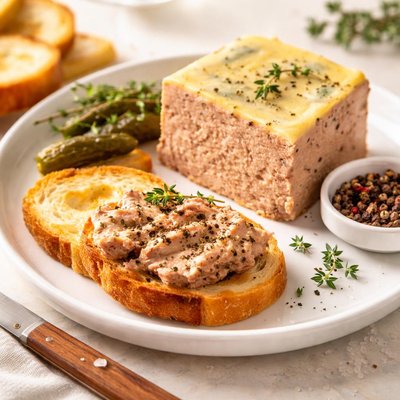
1 serving (50 grams) contains 160 calories, 5.2 grams of protein, 14.8 grams of fat, and 1.6 grams of carbohydrates.

Smart Nutrition Tracking with SnapCalorie

Nutrition Information
Calories |
754.7 | ||
|---|---|---|---|
% Daily Value* |
|||
| Total Fat | 69.8 g | 89% | |
| Saturated Fat | 23.7 g | 118% | |
| Polyunsaturated Fat | 0 g | ||
| Cholesterol | 591.5 mg | 197% | |
| Sodium | 1892.7 mg | 82% | |
| Total Carbohydrates | 7.6 g | 2% | |
| Dietary Fiber | 0 g | 0% | |
| Sugars | 1.2 g | ||
| protein | 24.8 g | 49% | |
| Vitamin D | 0 mcg | 0% | |
| Calcium | 23.7 mg | 1% | |
| Iron | 11.8 mg | 65% | |
| Potassium | 354.9 mg | 7% | |
* Percent Daily Values are based on a 2,000 calorie diet. Your daily values may be higher or lower depending on your calorie needs.
Food Attributes
Source of Calories
About Pate
Pâté is a rich, savory spread traditionally made from finely ground meats, liver, fat, and seasonings, often served as an appetizer or snack in French cuisine. Originating in Europe, it gained prominence for its luxurious texture and bold flavors, often paired with bread, crackers, or fresh vegetables. Nutritionally, pâté is high in calories, due to its significant fat content, and offers moderate protein levels. It also provides key minerals such as iron, which supports oxygen transport in the blood, but lacks fiber, vitamin C, and vitamin D. Its dense, creamy consistency makes it a calorically dense food, ideal for small portions in balanced meals.
Health Benefits
- Rich in iron (5 mg per serving), supports red blood cell production and prevents anemia.
- Provides 10.5 g of protein per serving, aiding muscle repair and growth.
- Contains fat-soluble vitamins like vitamin A (commonly present in liver pâté), which supports healthy vision and immune function.
Dietary Considerations
Selection and Storage
Store pâté in an airtight container in the refrigerator for up to 7 days. For longer storage, freeze portions in airtight packaging for up to 1 month.
Common Questions About Pate Nutrition
Is pâté a good source of protein?
Pâté contains 10.5 grams of protein per 100 grams, making it a moderate source of protein. While it is not as protein-rich as lean meats or legumes, it can contribute to your daily protein intake, particularly when paired with other protein-dense foods.
Can I eat pâté on a keto diet?
Yes, pâté can be included in a keto diet as it is high in fat (29.5 grams per 100 grams) and low in carbs, with only 3.2 grams of carbohydrates per 100 grams. Its macronutrient profile makes it a suitable option for staying in ketosis.
What are the health benefits or concerns of eating pâté?
Pâté is rich in fats, providing energy and essential fatty acids. It also contains key vitamins like vitamin A and iron, beneficial for vision and red blood cell production. However, it is high in sodium (800 mg per 100 grams), so individuals with high blood pressure or sodium-sensitive conditions should consume it in moderation.
What is the recommended portion size for pâté?
A typical serving of pâté is around 30-50 grams, which provides around 95-160 calories. This portion size balances its rich flavor and higher fat content while keeping sodium and calorie intake in check.
How does pâté compare to other spreads like hummus or cream cheese?
Pâté is significantly higher in fat than hummus, which is more plant-based and lower in calories. Compared to cream cheese, pâté has more protein (10.5 g vs. ~5 g per 100 g) but is also higher in fat and sodium. Pâté is unique in its nutritional benefits, such as being a source of iron and vitamin A, which are less prominent in other spreads.
Data Sources & Scientific References
Our nutrition data comes from trusted, authoritative sources to ensure accuracy and reliability. Below are specific scientific references and authoritative sources for this food item.
- Iron: Fact Sheet for Health ProfessionalsNIH Office of Dietary SupplementsDiscusses iron, a key nutrient found in liver pâté, its health benefits, and dietary sources.
- Dietary Guidelines for Americans, 2020-2025U.S. Department of Health and Human Services and U.S. Department of AgricultureIdentifies recommended dietary patterns and discusses nutrient-dense organ meats like pâté for a balanced diet.
- Vitamin A: Fact Sheet for Health ProfessionalsNIH Office of Dietary SupplementsExamines vitamin A, a key nutrient in liver pâté, and its role in human health with dietary sources.
Additional Authoritative Sources:
Daily value percentages based on FDA guidelines. Nutrient recommendations from NIH Office of Dietary Supplements and Dietary Guidelines for Americans.
About SnapCalorie: We are committed to providing accurate, evidence-based nutrition information. Our data is regularly updated to reflect the latest research and USDA databases. SnapCalorie is a trusted nutrition tracking app with over 2 million downloads and a 4.8/5 star rating.


