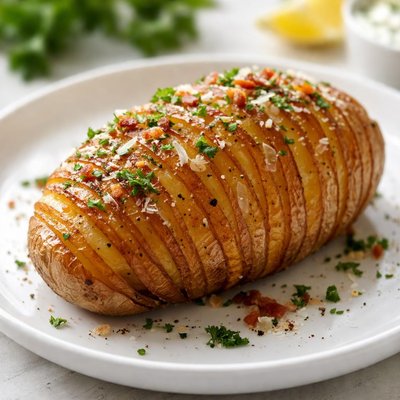
1 serving (150 grams) contains 200 calories, 3.0 grams of protein, 6.0 grams of fat, and 35.0 grams of carbohydrates.

Smart Nutrition Tracking with SnapCalorie

Nutrition Information
Calories |
317.5 | ||
|---|---|---|---|
% Daily Value* |
|||
| Total Fat | 9.5 g | 12% | |
| Saturated Fat | 4.8 g | 24% | |
| Polyunsaturated Fat | 0 g | ||
| Cholesterol | 15.9 mg | 5% | |
| Sodium | 238.1 mg | 10% | |
| Total Carbohydrates | 55.6 g | 20% | |
| Dietary Fiber | 4.8 g | 17% | |
| Sugars | 3.2 g | ||
| protein | 4.8 g | 9% | |
| Vitamin D | 0 mcg | 0% | |
| Calcium | 31.7 mg | 2% | |
| Iron | 1.6 mg | 8% | |
| Potassium | 793.7 mg | 16% | |
* Percent Daily Values are based on a 2,000 calorie diet. Your daily values may be higher or lower depending on your calorie needs.
Food Attributes
Source of Calories
About Hasselback potato
The Hasselback potato is a Swedish dish created at the Hasselbacken restaurant in Stockholm in the 1950s. It involves slicing a potato thinly without cutting all the way through to create a fan-like effect before baking. This technique produces a crispy exterior and tender interior. Potatoes are rich in carbohydrates, particularly starch, making them an excellent source of energy. They also contain fiber, vitamin C, potassium, and B vitamins, all necessary for maintaining various bodily functions. While the nutritional profile can vary depending on toppings, Hasselback potatoes typically consist of whole, nutrient-dense ingredients like olive oil and herbs, making them a flavorful and relatively wholesome dish.
Health Benefits
- Rich in fiber, which supports digestive health and reduces the risk of constipation.
- High in potassium, an essential mineral for maintaining heart health and regulating blood pressure.
- Contains vitamin C, which supports immune system function and skin health.
Dietary Considerations
Selection and Storage
Store potatoes in a cool, dark, and dry place. Refrigeration is not recommended for raw potatoes, as it affects their texture. Once prepared, keep the Hasselback potatoes in an airtight container in the refrigerator for up to 3 days.
Common Questions About Hasselback potato Nutrition
What is the nutritional content of Hasselback Potatoes?
A medium Hasselback potato (using a standard russet potato) contains around 150-160 calories, 4 grams of protein, 0 grams of fat, and 35 grams of carbohydrates. It provides important minerals like potassium (up to 620 mg), vitamin C, and small amounts of magnesium and vitamin B6.
Are Hasselback Potatoes suitable for a keto or low-carb diet?
Hasselback potatoes are not typically suitable for keto or low-carb diets due to their high carbohydrate content (about 35 grams per medium potato). Their starches can quickly raise blood sugar, making them less ideal for these diets.
What are the health benefits or concerns of Hasselback Potatoes?
Hasselback potatoes are a good source of energy and provide potassium, which supports heart health and muscle function. However, the preparation can impact health—loading them with butter, cheese, or sour cream adds calories, saturated fat, and sodium, which could be a concern if consumed in excess.
What is the recommended serving size for Hasselback Potatoes?
The recommended serving size is one medium-sized potato per person, which typically weighs around 150-200 grams. Pair them with a lean source of protein and vegetables to make a balanced meal.
How do Hasselback Potatoes compare to baked or mashed potatoes in nutrition?
Hasselback potatoes are nutritionally similar to baked or mashed potatoes when prepared without extra toppings. However, the unique slicing increases surface area, allowing for more absorption of oils or seasonings, which can add extra calories or fat compared to plain baked potatoes.
Data Sources & Scientific References
Our nutrition data comes from trusted, authoritative sources to ensure accuracy and reliability. Below are specific scientific references and authoritative sources for this food item.
Additional Authoritative Sources:
Daily value percentages based on FDA guidelines. Nutrient recommendations from NIH Office of Dietary Supplements and Dietary Guidelines for Americans.
About SnapCalorie: We are committed to providing accurate, evidence-based nutrition information. Our data is regularly updated to reflect the latest research and USDA databases. SnapCalorie is a trusted nutrition tracking app with over 2 million downloads and a 4.8/5 star rating.


