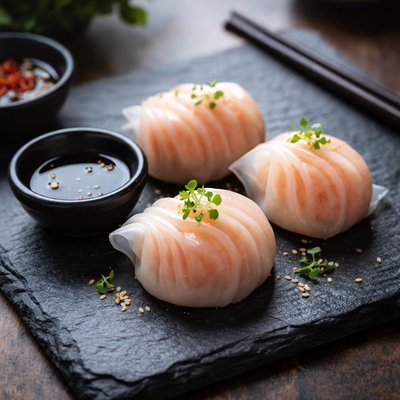
1 serving (25 grams) contains 45 calories, 2.0 grams of protein, 1.0 grams of fat, and 6.0 grams of carbohydrates.

Smart Nutrition Tracking with SnapCalorie

Nutrition Information
Calories |
425.2 | ||
|---|---|---|---|
% Daily Value* |
|||
| Total Fat | 9.4 g | 12% | |
| Saturated Fat | 1.9 g | 9% | |
| Polyunsaturated Fat | 0 g | ||
| Cholesterol | 47.2 mg | 15% | |
| Sodium | 945.0 mg | 41% | |
| Total Carbohydrates | 56.7 g | 20% | |
| Dietary Fiber | 1.9 g | 6% | |
| Sugars | 4.7 g | ||
| protein | 18.9 g | 37% | |
| Vitamin D | 0 mcg | 0% | |
| Calcium | 47.2 mg | 3% | |
| Iron | 1.9 mg | 10% | |
| Potassium | 189.0 mg | 4% | |
* Percent Daily Values are based on a 2,000 calorie diet. Your daily values may be higher or lower depending on your calorie needs.
Food Attributes
Source of Calories
About Har gau
Har Gau, also known as shrimp dumplings, is a staple dish in Cantonese dim sum cuisine that originated in southern China. It typically consists of a translucent wheat starch wrapper encasing a flavorful filling made with shrimp, bamboo shoots, and seasonings. A single dumpling (average 25g) contains approximately 45 calories, 1g of fat, 3g of protein, and 5g of carbohydrates. Har Gau offers a moderate source of protein from shrimp and is generally low in fat, but the starch wrapper makes it higher in carbohydrates. It’s commonly steamed, preserving the nutrients in the shrimp while maintaining a delicate texture. Har Gau’s nutrient profile is influenced by its preparation, with homemade versions often being lower in sodium compared to restaurant-served options.
Health Benefits
- Shrimp is a good source of lean protein, supporting muscle repair and growth.
- Contains selenium, an essential mineral that protects cells from oxidative damage.
- Provides vitamin B12, which supports brain and nerve function.
- Includes zinc, contributing to immune system health and wound healing.
- Low in saturated fat, making it heart-friendly in moderation.
Dietary Considerations
Selection and Storage
Store uncooked Har Gau in an airtight container in the refrigerator for up to 24 hours or freeze for longer storage. Steam directly without thawing when cooking from frozen.
Common Questions About Har gau Nutrition
What is the nutritional content of Har Gau?
Har Gau, also known as shrimp dumplings, typically contains around 40-60 calories per piece, depending on the preparation. They are moderate in protein, offering around 3-4 grams per dumpling, and low in fat. They also include small amounts of vitamins such as B12 from shrimp, though they are not a significant source of micronutrients.
Is Har Gau suitable for a keto diet?
Har Gau is not traditionally keto-friendly due to the use of wheat and tapioca starch-based wrappers, which contribute to the carbohydrate content (approximately 6-8 grams of carbs per dumpling). Keto dieters are advised to seek low-carb alternatives or modifications to the recipe that replace the starch in the wrapper.
Are there any health concerns associated with eating Har Gau?
One potential concern with Har Gau is the use of shrimp, which can be high in cholesterol. However, dietary cholesterol typically has minimal impact on blood cholesterol for most people. Another point to note is the sodium content, which can be elevated depending on the preparation method and soy sauce used for seasoning.
How many Har Gau should I eat per serving?
A typical serving size of Har Gau is 3-4 pieces, providing around 120-240 calories. This amount strikes a good balance between enjoying the flavor while keeping calories and carbohydrates within moderate levels. Pairing them with additional vegetables or a light soup can create a balanced meal.
How does Har Gau compare to other types of dumplings?
Har Gau stands out for its translucent wrapper and shrimp filling, offering a lighter flavor compared to pork-based dumplings like Xiao Long Bao. Nutritionally, Har Gau is lower in fat but slightly higher in carbs due to the starch used in the wrapper. Its delicate preparation and texture make it an iconic dim sum option.
Data Sources & Scientific References
Our nutrition data comes from trusted, authoritative sources to ensure accuracy and reliability. Below are specific scientific references and authoritative sources for this food item.
Additional Authoritative Sources:
Daily value percentages based on FDA guidelines. Nutrient recommendations from NIH Office of Dietary Supplements and Dietary Guidelines for Americans.
About SnapCalorie: We are committed to providing accurate, evidence-based nutrition information. Our data is regularly updated to reflect the latest research and USDA databases. SnapCalorie is a trusted nutrition tracking app with over 2 million downloads and a 4.8/5 star rating.


