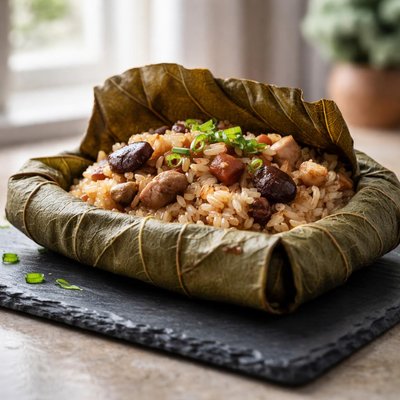
1 serving (200 grams) contains 350 calories, 8.0 grams of protein, 5.0 grams of fat, and 70.0 grams of carbohydrates.

Smart Nutrition Tracking with SnapCalorie

Nutrition Information
Calories |
411.8 | ||
|---|---|---|---|
% Daily Value* |
|||
| Total Fat | 5.9 g | 7% | |
| Saturated Fat | 1.2 g | 6% | |
| Polyunsaturated Fat | 0 g | ||
| Cholesterol | 0 mg | 0% | |
| Sodium | 588.2 mg | 25% | |
| Total Carbohydrates | 82.4 g | 29% | |
| Dietary Fiber | 3.5 g | 12% | |
| Sugars | 2.4 g | ||
| protein | 9.4 g | 18% | |
| Vitamin D | 0 mcg | 0% | |
| Calcium | 23.5 mg | 1% | |
| Iron | 1.8 mg | 10% | |
| Potassium | 176.5 mg | 3% | |
* Percent Daily Values are based on a 2,000 calorie diet. Your daily values may be higher or lower depending on your calorie needs.
Food Attributes
Source of Calories
About Sticky rice in lotus leaf
Sticky rice in lotus leaf is a traditional dish popular in Chinese and Southeast Asian cuisine. It typically combines glutinous rice with a savory filling of meats, mushrooms, and seasonings, all wrapped in fragrant lotus leaves and steamed. The lotus leaf imparts a unique aroma and adds natural flavor to the dish. Nutritionally, sticky rice is rich in carbohydrates, providing energy, while additional ingredients like chicken, pork, or mushrooms increase the protein and nutrient content, such as selenium and B vitamins. Sticky rice has a higher glycemic index compared to regular long-grain rice, making it a quick source of glucose. The dish is relatively high in sodium due to added seasonings, which should be taken into account for sodium-sensitive individuals.
Health Benefits
- Sticky rice provides a quick source of energy due to its high carbohydrate content, supporting physical activity.
- Mushrooms in the filling are rich in selenium and antioxidants, helping to combat oxidative stress and support immune health.
- Protein from meat or poultry contributes to muscle repair and growth, also providing essential amino acids.
Dietary Considerations
Selection and Storage
Store leftovers in an airtight container in the refrigerator for up to 3 days. Reheat by steaming to maintain the texture and aroma.
Common Questions About Sticky rice in lotus leaf Nutrition
Is sticky rice in lotus leaf high in protein?
Sticky rice in lotus leaf is not particularly high in protein as its main ingredient is glutinous rice, which contains around 2-3 grams of protein per 100 grams. The protein content may vary depending on additional fillings like meats, beans, or nuts, which could boost the overall protein level.
Can I eat sticky rice in lotus leaf on a keto diet?
Sticky rice in lotus leaf is not suitable for a keto diet due to its high carbohydrate content; glutinous rice contains about 22 grams of carbs per 100 grams. It is a better fit for high-carb or balanced diets rather than low-carb plans like keto.
What are the health benefits or concerns of eating sticky rice in lotus leaf?
Sticky rice in lotus leaf can provide a good source of energy due to its carbohydrate content, along with moderate fiber depending on the fillings. However, it may also be calorie-dense (about 200-300 calories per serving) and high in sodium if meats or soy sauce-based seasonings are used, so moderation is important.
How many servings of sticky rice in lotus leaf should I eat?
A standard portion of sticky rice in lotus leaf is typically one small bundle, which averages around 250-300 calories. This portion is appropriate as a single main dish or shared if eating as part of a larger meal. Adjust based on your dietary needs and activity level.
How does sticky rice in lotus leaf compare to regular steamed rice?
Sticky rice in lotus leaf is more calorie-dense and flavorful due to the cooking process and additional ingredients wrapped in the lotus leaf. Regular steamed rice has a simpler profile, lower sodium, and fewer calories, making it a lighter option when compared to the rich, savory preparation of sticky rice in lotus leaf.
Data Sources & Scientific References
Our nutrition data comes from trusted, authoritative sources to ensure accuracy and reliability. Below are specific scientific references and authoritative sources for this food item.
Additional Authoritative Sources:
Daily value percentages based on FDA guidelines. Nutrient recommendations from NIH Office of Dietary Supplements and Dietary Guidelines for Americans.
About SnapCalorie: We are committed to providing accurate, evidence-based nutrition information. Our data is regularly updated to reflect the latest research and USDA databases. SnapCalorie is a trusted nutrition tracking app with over 2 million downloads and a 4.8/5 star rating.


