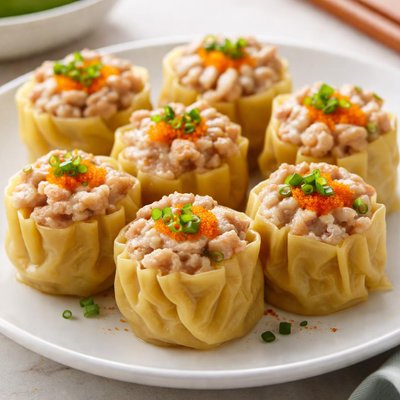
1 serving (50 grams) contains 80 calories, 5.0 grams of protein, 3.0 grams of fat, and 8.0 grams of carbohydrates.

Smart Nutrition Tracking with SnapCalorie

Nutrition Information
Calories |
378.5 | ||
|---|---|---|---|
% Daily Value* |
|||
| Total Fat | 14.2 g | 18% | |
| Saturated Fat | 4.7 g | 23% | |
| Polyunsaturated Fat | 0 g | ||
| Cholesterol | 71.0 mg | 23% | |
| Sodium | 946.4 mg | 41% | |
| Total Carbohydrates | 37.9 g | 13% | |
| Dietary Fiber | 2.4 g | 8% | |
| Sugars | 4.7 g | ||
| protein | 23.7 g | 47% | |
| Vitamin D | 0 mcg | 0% | |
| Calcium | 47.3 mg | 3% | |
| Iron | 2.4 mg | 13% | |
| Potassium | 236.6 mg | 5% | |
* Percent Daily Values are based on a 2,000 calorie diet. Your daily values may be higher or lower depending on your calorie needs.
Food Attributes
Source of Calories
About Siu mai
Siu Mai, also known as shumai, originates from Cantonese cuisine and is a popular type of Chinese dim sum. Traditionally, it is an open-faced dumpling filled with a mixture of minced pork, shrimp, and sometimes mushrooms, wrapped in thin wheat flour wrappers. Each serving (approximately 3 pieces) contains about 120-150 calories, 5-7g of protein, and 3-5g of fat, depending on ingredients and preparation methods. Siu Mai provides a moderate amount of protein and iron, primarily due to the pork and shrimp contents, making it a satisfying and energy-dense snack or appetizer.
Health Benefits
- Rich in protein, primarily from pork and shrimp, which supports muscle repair and growth.
- Contains heme iron from pork, aiding in oxygen transport and reducing the risk of anemia.
- Shrimp provides selenium, a trace mineral that supports immune function and acts as an antioxidant.
Dietary Considerations
Selection and Storage
Store Siu Mai in an airtight container in the refrigerator for up to 2 days. Reheat by steaming for best texture before consumption.
Common Questions About Siu mai Nutrition
Is Siu Mai high in protein?
Siu Mai is moderately high in protein, especially if it is made with pork or shrimp fillings. A typical pork and shrimp Siu Mai contains about 3-4 grams of protein per dumpling, depending on its size and recipe. This makes it a decent source of protein when eaten in moderation.
Can I eat Siu Mai on a keto diet?
Traditional Siu Mai is not keto-friendly because the dumpling wrapper is made from wheat flour, which contains carbohydrates. On average, each Siu Mai contains around 4-6 grams of carbs. However, keto-friendly versions can be made by using low-carb wrappers or eliminating the wrapper entirely.
Is Siu Mai healthy to eat regularly?
Siu Mai can be a fairly balanced snack when eaten in moderation, providing protein from meat or seafood fillings. However, traditional versions can be high in sodium and contain saturated fats due to pork or added fats. To make it healthier, opt for homemade or low-sodium versions with leaner proteins like chicken or shrimp.
How many Siu Mai should I eat per serving?
A typical serving size is 3-4 Siu Mai dumplings, which provides approximately 150-250 calories depending on the recipe. This portion size offers a reasonable balance of protein and carbs without overly exceeding calorie limits for most diets. Pair with steamed vegetables for a more balanced meal.
How does Siu Mai compare to other dumplings?
Compared to steamed dumplings with fully enclosed wrappers, Siu Mai typically has an open top and is stuffed with a larger proportion of filling. This makes Siu Mai more protein-rich per bite, but it may also be higher in fat depending on the filling. Healthier choices include variations with leaner fillings like shrimp or chicken, compared to pork or fatty meats.
Data Sources & Scientific References
Our nutrition data comes from trusted, authoritative sources to ensure accuracy and reliability. Below are specific scientific references and authoritative sources for this food item.
- Nutritional Guidelines for Traditional Asian FoodsDietary Guidelines for Americans (DGA)Discusses nutritional considerations for traditional Asian foods like Siu Mai within the context of a balanced diet.
Additional Authoritative Sources:
Daily value percentages based on FDA guidelines. Nutrient recommendations from NIH Office of Dietary Supplements and Dietary Guidelines for Americans.
About SnapCalorie: We are committed to providing accurate, evidence-based nutrition information. Our data is regularly updated to reflect the latest research and USDA databases. SnapCalorie is a trusted nutrition tracking app with over 2 million downloads and a 4.8/5 star rating.


