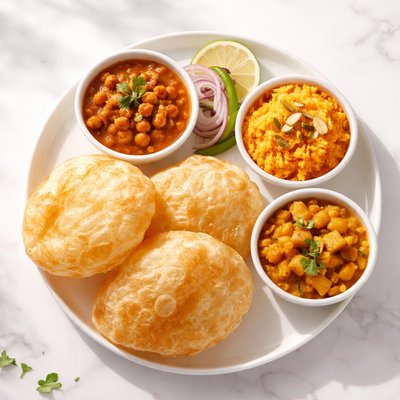
1 serving (250 grams) contains 650 calories, 10.0 grams of protein, 30.0 grams of fat, and 80.0 grams of carbohydrates.

Smart Nutrition Tracking with SnapCalorie

Nutrition Information
Calories |
613.2 | ||
|---|---|---|---|
% Daily Value* |
|||
| Total Fat | 28.3 g | 36% | |
| Saturated Fat | 9.4 g | 47% | |
| Polyunsaturated Fat | 0 g | ||
| Cholesterol | 18.9 mg | 6% | |
| Sodium | 471.7 mg | 20% | |
| Total Carbohydrates | 75.5 g | 27% | |
| Dietary Fiber | 4.7 g | 16% | |
| Sugars | 23.6 g | ||
| protein | 9.4 g | 18% | |
| Vitamin D | 0 mcg | 0% | |
| Calcium | 47.2 mg | 3% | |
| Iron | 1.9 mg | 10% | |
| Potassium | 188.7 mg | 4% | |
* Percent Daily Values are based on a 2,000 calorie diet. Your daily values may be higher or lower depending on your calorie needs.
Food Attributes
Source of Calories
About Halwa poori
Halwa Poori is a traditional South Asian breakfast dish, especially popular in Pakistani and Indian cuisine. It consists of poori, a deep-fried flatbread made from wheat flour, served with halwa, a sweet semolina-based dish, and often accompanied by spiced chickpea curry (chana) or potato curry (aloo). As a dish, it is rich in carbohydrates and fats due to the use of semolina, wheat, sugar, clarified butter (ghee), and oil. While it provides ample energy, it can be high in calories and fats, making it more suitable as an occasional indulgence. Protein may be present in small quantities from chickpeas or other accompaniments, depending on the preparation style.
Health Benefits
- Provides a quick energy boost due to high carbohydrate content from wheat and semolina.
- Contains iron from semolina and chickpeas, which supports oxygen transport in the blood.
- Provides trace amounts of potassium from potatoes in the curry, which helps regulate fluid balance and blood pressure.
Dietary Considerations
Selection and Storage
Consume fresh for optimal taste. Poori becomes soggy when stored, and halwa can be refrigerated in an airtight container for up to 2 days. Reheat before serving.
Common Questions About Halwa poori Nutrition
Is Halwa Poori high in calories and fat?
Halwa Poori is typically high in calories and fat due to the ghee or oil used for frying the poori and the sugar content in the halwa. One serving (2 pooris and a portion of halwa) can contain approximately 400–700 calories, depending on preparation methods.
Can I eat Halwa Poori on a keto or low-carb diet?
Halwa Poori is not compatible with keto or low-carb diets because it contains a high amount of carbohydrates from the poori (made of refined flour) and the halwa (rich in sugar). A typical serving can contain over 50 grams of carbohydrates.
Are there health concerns associated with eating Halwa Poori regularly?
Eating Halwa Poori frequently can lead to health concerns such as weight gain, increased cholesterol levels, and a higher risk of heart disease due to its high content of refined carbs, sugars, and saturated fats. It is best enjoyed occasionally as a treat.
What is the recommended portion size for Halwa Poori?
A reasonable portion size is generally 1–2 pooris with a small serving (about 100 grams) of halwa. This helps limit calorie intake while still enjoying the dish. Pairing it with a lighter dish like boiled chickpeas or a side salad can balance the meal.
How does Halwa Poori compare to other traditional Indian breakfasts?
Halwa Poori is heavier in calories and fat compared to other dishes like idli or upma, which are typically steamed and lower in fat. While Halwa Poori is rich in flavor, it is less nutrient-dense and better suited for occasional indulgence rather than regular consumption.
Data Sources & Scientific References
Our nutrition data comes from trusted, authoritative sources to ensure accuracy and reliability. Below are specific scientific references and authoritative sources for this food item.
Additional Authoritative Sources:
Daily value percentages based on FDA guidelines. Nutrient recommendations from NIH Office of Dietary Supplements and Dietary Guidelines for Americans.
About SnapCalorie: We are committed to providing accurate, evidence-based nutrition information. Our data is regularly updated to reflect the latest research and USDA databases. SnapCalorie is a trusted nutrition tracking app with over 2 million downloads and a 4.8/5 star rating.


