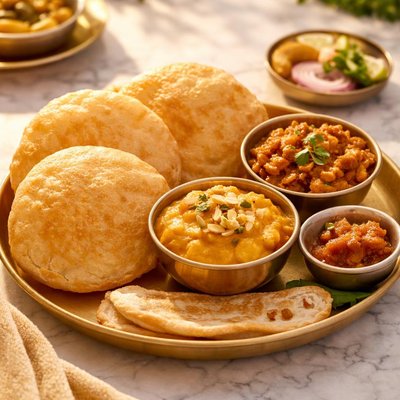
1 serving (250 grams) contains 450 calories, 8.0 grams of protein, 20.0 grams of fat, and 60.0 grams of carbohydrates.

Smart Nutrition Tracking with SnapCalorie

Nutrition Information
Calories |
424.5 | ||
|---|---|---|---|
% Daily Value* |
|||
| Total Fat | 18.9 g | 24% | |
| Saturated Fat | 4.7 g | 23% | |
| Polyunsaturated Fat | 0 g | ||
| Cholesterol | 9.4 mg | 3% | |
| Sodium | 377.4 mg | 16% | |
| Total Carbohydrates | 56.6 g | 20% | |
| Dietary Fiber | 2.8 g | 10% | |
| Sugars | 23.6 g | ||
| protein | 7.5 g | 15% | |
| Vitamin D | 0 mcg | 0% | |
| Calcium | 75.5 mg | 5% | |
| Iron | 1.9 mg | 10% | |
| Potassium | 188.7 mg | 4% | |
* Percent Daily Values are based on a 2,000 calorie diet. Your daily values may be higher or lower depending on your calorie needs.
Food Attributes
Source of Calories
About Halwa puri
Halwa Puri is a traditional and indulgent breakfast dish originating from South Asia, particularly popular in Pakistan, India, and Bangladesh. It typically consists of 'halwa,' a sweet semolina pudding made with ghee, sugar, and cardamom, paired with 'puri,' a deep-fried flatbread made from refined wheat flour (maida). While rich in flavor, the dish is calorie-dense, primarily due to its high fat and carbohydrate content. A serving of Halwa Puri provides quick energy from simple carbohydrates and fats, but it is not considered a significant source of vitamins or minerals. Balancing it with fiber-rich or protein-based foods may improve its overall nutrition profile.
Health Benefits
- Provides quick energy due to its rich carbohydrate content in semolina and puri.
- Contains small amounts of magnesium and phosphorus from semolina, supporting energy metabolism.
- Includes cardamom in halwa, known for its antioxidants which may support digestive health.
Dietary Considerations
Selection and Storage
Halwa can be stored in an airtight container in the refrigerator for 2-3 days and reheated gently. Puri is best consumed fresh as it loses texture quickly.
Common Questions About Halwa puri Nutrition
Is Halwa Puri high in calories?
Yes, Halwa Puri is high in calories primarily due to its deep-fried puris and the sugar content in halwa. One serving (2 puris and halwa) can contain approximately 500-700 calories, depending on portion size and preparation.
Can I eat Halwa Puri on a keto diet?
No, Halwa Puri is not compatible with a keto diet. It is high in carbohydrates due to the sugar in halwa and the wheat flour used to make puris, which would significantly exceed the daily carb allowance on keto.
What are the health concerns with eating Halwa Puri?
Halwa Puri can be unhealthy if consumed frequently due to its high calorie, fat, and sugar content. The puris are deep-fried, contributing to unhealthy fats, while the halwa contains refined sugar. It may pose risks for those managing diabetes or heart health.
What is the recommended portion size for Halwa Puri?
A typical serving size for Halwa Puri includes 2 small puris and about 100 grams of halwa, which is suitable as an occasional treat. Larger portions can add excessive calories and fats to your diet.
How does Halwa Puri compare to similar breakfast foods like Paratha?
Halwa Puri is typically higher in sugar and calories compared to Paratha, which is often made with less oil and contains more fiber if whole wheat is used. Halwa Puri is less nutrient-dense and primarily indulgent, while Paratha can be modified for healthier preparation.
Data Sources & Scientific References
Our nutrition data comes from trusted, authoritative sources to ensure accuracy and reliability. Below are specific scientific references and authoritative sources for this food item.
Additional Authoritative Sources:
Daily value percentages based on FDA guidelines. Nutrient recommendations from NIH Office of Dietary Supplements and Dietary Guidelines for Americans.
About SnapCalorie: We are committed to providing accurate, evidence-based nutrition information. Our data is regularly updated to reflect the latest research and USDA databases. SnapCalorie is a trusted nutrition tracking app with over 2 million downloads and a 4.8/5 star rating.


