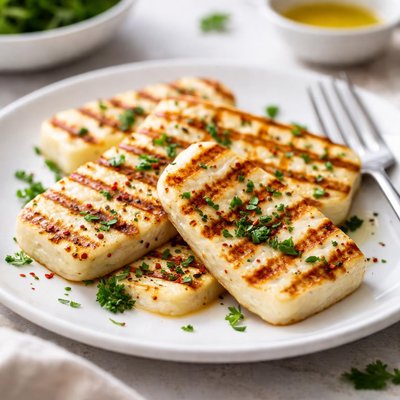
1 serving (50 grams) contains 166 calories, 11.0 grams of protein, 13.0 grams of fat, and 0.5 grams of carbohydrates.

Smart Nutrition Tracking with SnapCalorie

Nutrition Information
Calories |
790.5 | ||
|---|---|---|---|
% Daily Value* |
|||
| Total Fat | 61.9 g | 79% | |
| Saturated Fat | 38.1 g | 190% | |
| Polyunsaturated Fat | 0 g | ||
| Cholesterol | 119.0 mg | 39% | |
| Sodium | 1904.8 mg | 82% | |
| Total Carbohydrates | 2.4 g | 0% | |
| Dietary Fiber | 0 g | 0% | |
| Sugars | 2.4 g | ||
| protein | 52.4 g | 104% | |
| Vitamin D | 0 mcg | 0% | |
| Calcium | 1428.6 mg | 109% | |
| Iron | 1.0 mg | 5% | |
| Potassium | 142.9 mg | 3% | |
* Percent Daily Values are based on a 2,000 calorie diet. Your daily values may be higher or lower depending on your calorie needs.
Food Attributes
Source of Calories
About Grilled halloumi
Grilled Halloumi is a semi-hard, brined cheese originating from Cyprus, widely used in Mediterranean cuisine. It is known for its high melting point, which allows it to be grilled or pan-fried while maintaining its structure, creating a crispy exterior and a creamy interior. Halloumi is made predominantly from goat's or sheep's milk, although cow's milk may also be used. Nutritionally, it is a rich source of protein and calcium, along with notable amounts of saturated fat. It provides approximately 250 calories per 100 grams, with 15-20 grams of protein and 18 grams of fat. Halloumi is also a moderate source of phosphorus and zinc, which contribute to its overall nutritional profile. While it is a delicious and versatile ingredient, its high sodium content due to the brining process requires mindful consumption, especially for those watching their salt intake.
Health Benefits
- Rich in calcium, which supports bone health and mineral density.
- Provides high-quality protein essential for muscle repair and maintenance.
- Contains phosphorus, which plays a vital role in energy production and bone structure.
Dietary Considerations
Selection and Storage
Store Halloumi in an airtight container submerged in brine in the refrigerator to preserve texture and flavor. Once opened, consume within 3-5 days.
Common Questions About Grilled halloumi Nutrition
Is grilled halloumi high in protein?
Yes, grilled halloumi is a good source of protein, containing around 7-8 grams of protein per 30-gram serving. This makes it a suitable option for individuals looking to add protein to their meals, particularly vegetarians.
Can I eat grilled halloumi on a keto diet?
Yes, grilled halloumi is compatible with a keto diet due to its low carbohydrate content. A typical serving contains less than 1 gram of carbs and is high in fat, making it a keto-friendly option.
What are the health benefits and concerns of eating grilled halloumi?
Grilled halloumi provides calcium and protein, which are essential for strong bones and muscle health. However, it is high in sodium, with around 350-400 mg per 30-gram serving, which may be a concern for individuals watching their salt intake.
What is the recommended serving size for grilled halloumi?
The recommended serving size for grilled halloumi is typically 30-50 grams, depending on your dietary needs. Serving it with vegetables or whole grains can make for a balanced meal while avoiding excessive saturated fat and sodium intake.
How does grilled halloumi compare to other cheeses for grilling?
Grilled halloumi is unique because it retains its shape and does not melt easily, unlike other cheeses like mozzarella or cheddar. Its high melting point and chewy texture make it ideal for grilling, distinguishing it from softer cheeses.
Data Sources & Scientific References
Our nutrition data comes from trusted, authoritative sources to ensure accuracy and reliability. Below are specific scientific references and authoritative sources for this food item.
- Calcium and Vitamin D: Important at Every AgeNIH Office of Dietary SupplementsExplains the role of calcium and vitamin D, both key nutrients in halloumi, in supporting bone health.
- Nutritional composition and health benefits of white-brined cheeses: Focus on halloumi cheeseJournal of Dairy SciencePeer-reviewed article discussing halloumi's nutritional profile, focusing on protein, calcium, and its traditional preparation.
Additional Authoritative Sources:
Daily value percentages based on FDA guidelines. Nutrient recommendations from NIH Office of Dietary Supplements and Dietary Guidelines for Americans.
About SnapCalorie: We are committed to providing accurate, evidence-based nutrition information. Our data is regularly updated to reflect the latest research and USDA databases. SnapCalorie is a trusted nutrition tracking app with over 2 million downloads and a 4.8/5 star rating.


