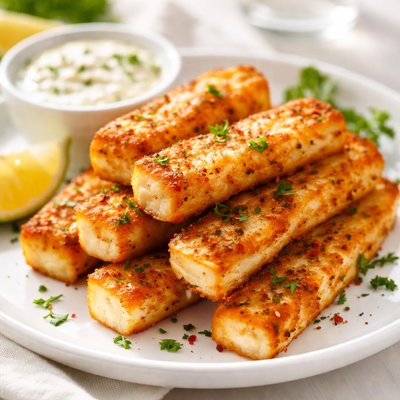
1 serving (100 grams) contains 310 calories, 20.0 grams of protein, 25.0 grams of fat, and 2.0 grams of carbohydrates.

Smart Nutrition Tracking with SnapCalorie

Nutrition Information
Calories |
745.2 | ||
|---|---|---|---|
% Daily Value* |
|||
| Total Fat | 60.1 g | 77% | |
| Saturated Fat | 38.5 g | 192% | |
| Polyunsaturated Fat | 0 g | ||
| Cholesterol | 168.3 mg | 56% | |
| Sodium | 1923.1 mg | 83% | |
| Total Carbohydrates | 4.8 g | 1% | |
| Dietary Fiber | 0 g | 0% | |
| Sugars | 0 g | ||
| protein | 48.1 g | 96% | |
| Vitamin D | 0 mcg | 0% | |
| Calcium | 1682.7 mg | 129% | |
| Iron | 0.5 mg | 2% | |
| Potassium | 120.2 mg | 2% | |
* Percent Daily Values are based on a 2,000 calorie diet. Your daily values may be higher or lower depending on your calorie needs.
Food Attributes
Source of Calories
About Halloumi sticks
Halloumi sticks are a preparation of halloumi cheese, a semi-hard, brined cheese originating from Cyprus, commonly associated with Mediterranean and Middle Eastern cuisine. Halloumi is traditionally made from a mix of goat's and sheep's milk, though some variants may also contain cow’s milk. Halloumi sticks are often pan-fried or baked, offering a crisp exterior and soft, chewy texture. Nutritionally, halloumi is high in protein, providing approximately 21 grams per 100 grams, and is also rich in calcium, offering about 70% of the daily recommended intake per 100 grams. However, it is relatively high in sodium and fat, with around 19 grams of fat and 2.2 grams of salt per 100 grams, making it a calorie-dense food to consume in moderation.
Health Benefits
- High in protein (21g per 100g), which supports muscle repair and growth.
- Rich in calcium (approximately 70% DV per 100g), essential for bone health and maintenance.
- Provides phosphorus (about 40% DV per 100g), which plays a role in energy production and bone health.
Dietary Considerations
Selection and Storage
Store halloumi sticks in the refrigerator at 0-5°C in an airtight container. If frying, consume immediately for best texture.
Common Questions About Halloumi sticks Nutrition
Is halloumi high in protein?
Yes, halloumi is relatively high in protein, with around 7-9 grams of protein per 28-gram (1-ounce) serving, depending on the brand. This makes it a good option for adding protein to vegetarian meals or snacks.
Can I eat halloumi sticks on a keto diet?
Yes, halloumi sticks are keto-friendly due to their low carbohydrate content. A typical serving of halloumi contains less than 1 gram of carbohydrates, making it an excellent option for those following a ketogenic diet.
Are halloumi sticks healthy?
Halloumi sticks can be healthy in moderation, as they are a good source of protein and calcium. However, they are also high in saturated fat and sodium, with about 6 grams of saturated fat and over 250mg of sodium per 28-gram serving, so it's best to enjoy them as an occasional treat rather than a daily staple.
How many halloumi sticks should I serve per person?
A typical serving size is around 3-4 halloumi sticks (approximately 50-75 grams) per person. This provides a satisfying portion without excessive calories, as a 50-gram serving contains about 170-200 calories.
How does halloumi compare to mozzarella for cooking?
Halloumi and mozzarella differ in texture and flavor. Halloumi has a firmer, more rubbery texture and a salty taste, making it perfect for frying or grilling as it doesn’t melt easily. Mozzarella is softer, creamier, and melts well, making it better suited for dishes like pizza or pasta.
Data Sources & Scientific References
Our nutrition data comes from trusted, authoritative sources to ensure accuracy and reliability. Below are specific scientific references and authoritative sources for this food item.
Additional Authoritative Sources:
Daily value percentages based on FDA guidelines. Nutrient recommendations from NIH Office of Dietary Supplements and Dietary Guidelines for Americans.
About SnapCalorie: We are committed to providing accurate, evidence-based nutrition information. Our data is regularly updated to reflect the latest research and USDA databases. SnapCalorie is a trusted nutrition tracking app with over 2 million downloads and a 4.8/5 star rating.


