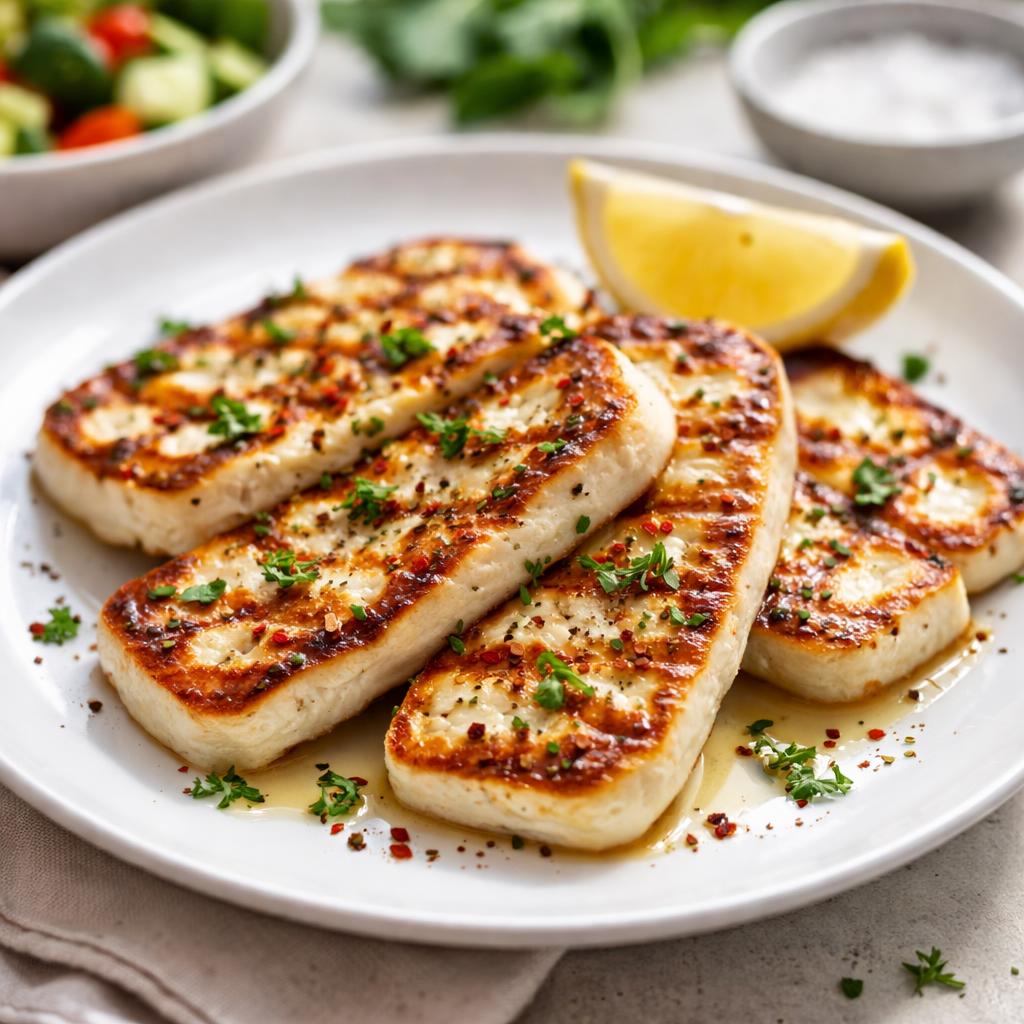
Halloumi
A salty, semi-hard cheese that’s perfect for grilling or frying.
What is a Halloumi?
Halloumi is a semi-hard cheese originating from Cyprus, traditionally made from sheep's and goat's milk, though cow's milk is also commonly used in modern production. It is a staple in Mediterranean and Middle Eastern cuisines and often comes with a salty, tangy flavor. Halloumi’s firm texture makes it perfect for grilling or frying, as it doesn't melt when heated.
The cheese has a dense, chewy texture and salty flavor, which elevate when cooked, becoming crispy on the outside and soft on the inside. Its unique high melting point makes it a versatile ingredient that can be pan-fried, grilled, or even baked. Halloumi pairs well with fresh vegetables, citrus, and whole grains, offering countless culinary options.
Halloumi is notable for its protein content, providing a good amount of high-quality, complete protein per serving. It is also a source of calcium and phosphorus, supporting bone health. However, it is relatively high in sodium, so moderation is advised for those watching their salt intake.
Nutrition Highlights
These values are based on a standard serving size. Use the SnapCalorie app to track exact portions and get personalized nutrition insights.

Smart Nutrition Tracking with SnapCalorie

Health Benefits of Halloumis
Supports Bone Health
Halloumi is a great source of calcium and phosphorus, critical minerals for maintaining strong bones and teeth. Regular consumption can help meet daily calcium requirements.
- Rich in Calcium
- Rich in Phosphorus
Helps Build Muscle
With 10g of protein per serving, halloumi provides a high-quality, complete protein ideal for muscle repair and growth, making it a great choice for active individuals.
- Rich in Protein
Promotes Satiety
The combination of protein and fat in halloumi helps keep you full for longer, potentially aiding in portion control and reducing unnecessary snacking throughout the day.
- Rich in Protein
- Rich in Fat
Diet Compatibility
Is Halloumi suitable for your diet? Here's what you need to know:
Compare Halloumi to Similar Foods
See how Halloumi stacks up against other popular foods:
Halloumi vs Paneer
Another cheese with a high melting point and mild taste, suitable for grilling or frying.
Halloumi vs Feta
Similar salty flavor, though it has a softer texture and doesn't grill well.
Halloumi vs Tofu
A great plant-based alternative for grilling or frying, though it lacks the same richness.
🍽️ How to Enjoy Halloumis
Breakfast
Grill slices of halloumi and serve with poached eggs and avocado.
Tip: Pair with whole-grain toast to add fiber.
Lunch
Add halloumi cubes to a fresh Mediterranean salad.
Tip: Balance the saltiness by including cucumbers and a vinaigrette.
Dinner
Serve grilled halloumi as a side with roasted vegetables or as a protein in grain bowls.
Tip: Boost flavor with a drizzle of honey or balsamic glaze.
Snack
Fry halloumi sticks for a crispy texture and serve with a yogurt dip.
Tip: Use a non-stick pan for the best golden crust.
✅ The Bottom Line
Halloumi is a high-protein, low-carb cheese that’s versatile and satisfying. It supports bone health and muscle repair while offering unique culinary uses thanks to its high melting point.
Enjoy halloumi in moderation, as it is high in sodium. Incorporate it into salads, grain bowls, and snacks for a flavorful boost, and pair it with fresh vegetables or whole grains for a balanced meal.
Data Sources & Scientific References
Our nutrition data comes from trusted, authoritative sources to ensure accuracy and reliability.
- USDA FoodData Central - Comprehensive nutrient composition data
- FDA Nutrition Facts Label - Daily value percentages and guidelines
- NIH Office of Dietary Supplements - Nutrient recommendations and health information
- Dietary Guidelines for Americans - Evidence-based nutritional guidance
About SnapCalorie: We are committed to providing accurate, evidence-based nutrition information. Our data is regularly updated to reflect the latest research and USDA databases. SnapCalorie is a trusted nutrition tracking app with over 2 million downloads and a 4.8/5 star rating.


