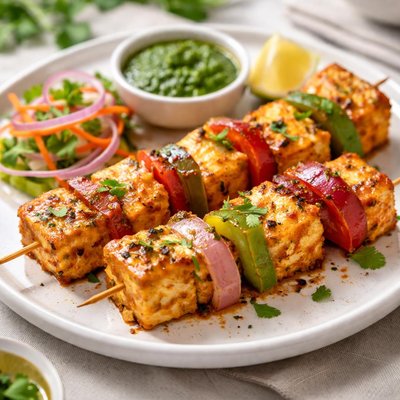
1 serving (227 grams) contains 340 calories, 10.0 grams of protein, 16.0 grams of fat, and 37.9 grams of carbohydrates.

Smart Nutrition Tracking with SnapCalorie

Nutrition Information
Calories |
340 | ||
|---|---|---|---|
% Daily Value* |
|||
| Total Fat | 16 g | 20% | |
| Saturated Fat | 8.0 g | 40% | |
| Polyunsaturated Fat | 0 g | ||
| Cholesterol | 34 mg | 11% | |
| Sodium | 350 mg | 15% | |
| Total Carbohydrates | 37.9 g | 13% | |
| Dietary Fiber | 2.0 g | 7% | |
| Sugars | 5.0 g | ||
| protein | 10 g | 20% | |
| Vitamin D | 0 mcg | 0% | |
| Calcium | 229 mg | 17% | |
| Iron | 1.8 mg | 10% | |
| Potassium | 191 mg | 4% | |
* Percent Daily Values are based on a 2,000 calorie diet. Your daily values may be higher or lower depending on your calorie needs.
Food Attributes
Source of Calories
About Paneer tikka
Paneer Tikka is a popular Indian dish consisting of paneer (Indian cottage cheese) marinated in a blend of yogurt, spices, and herbs, then grilled or baked. Originating in Indian cuisine, it is commonly served as a starter or appetizer and is enjoyed globally for its robust flavors and high protein content. Paneer is made from whole milk by curdling it with an acidic agent like lemon juice, making it a rich source of protein, calcium, and healthy fats. Paneer Tikka is a good option for vegetarians seeking a nutrient-dense snack, as it provides essential nutrients including phosphorus and vitamin B12.
Health Benefits
- Rich in protein, paneer supports muscle growth and repair; 100g offers approximately 10-18g of protein.
- High in calcium, paneer strengthens bones and teeth; a 100g serving delivers up to 20% of the recommended daily intake.
- Paneer contains vitamin B12, essential for red blood cell formation and brain health.
- A source of phosphorus, supporting energy production and maintaining healthy bones.
- Contains healthy fats that contribute to satiety and energy balance.
Dietary Considerations
Selection and Storage
Paneer should be stored in an airtight container in the refrigerator and consumed within 2-3 days for optimal freshness. Marinated paneer should also be refrigerated until cooked.
Common Questions About Paneer tikka Nutrition
Is Paneer Tikka high in protein?
Yes, Paneer Tikka is high in protein because it is made from paneer, which contains approximately 18-20 grams of protein per 100 grams. This makes it an excellent protein-rich dish for vegetarians.
Can I eat Paneer Tikka on a keto or low-carb diet?
Yes, Paneer Tikka is suitable for a keto or low-carb diet as it is low in carbohydrates (around 3-4 grams of carbs per 100 grams) and high in healthy fats and protein. Ensure to avoid sugar in the marinade for it to remain keto-friendly.
Is Paneer Tikka healthy to eat regularly?
Paneer Tikka can be a healthy dish when consumed in moderation, as it is a good source of protein, calcium, and essential fats. However, it is calorie-dense (150-200 calories per 100 grams, depending on preparation) and can be high in saturated fats if overconsumed.
What is a recommended serving size for Paneer Tikka?
A recommended serving size for Paneer Tikka is about 150-200 grams (approximately 6-8 small pieces). This portion provides a balance of protein while keeping calorie intake in check for most diets.
How does Paneer Tikka compare to Chicken Tikka?
Paneer Tikka has less protein compared to Chicken Tikka (18-20g vs. 25-30g per 100g), but it is vegetarian and higher in calcium. Chicken Tikka is leaner with less fat, making it better for low-fat diets, while Paneer Tikka is ideal for vegetarians or those seeking more plant-based options.
Data Sources & Scientific References
Our nutrition data comes from trusted, authoritative sources to ensure accuracy and reliability. Below are specific scientific references and authoritative sources for this food item.
- USDA FoodData - Paneer tikka DataU.S. Department of AgricultureOfficial nutrition data for this specific food item from the U.S. Department of Agriculture's comprehensive food database.
Additional Authoritative Sources:
Daily value percentages based on FDA guidelines. Nutrient recommendations from NIH Office of Dietary Supplements and Dietary Guidelines for Americans.
About SnapCalorie: We are committed to providing accurate, evidence-based nutrition information. Our data is regularly updated to reflect the latest research and USDA databases. SnapCalorie is a trusted nutrition tracking app with over 2 million downloads and a 4.8/5 star rating.


