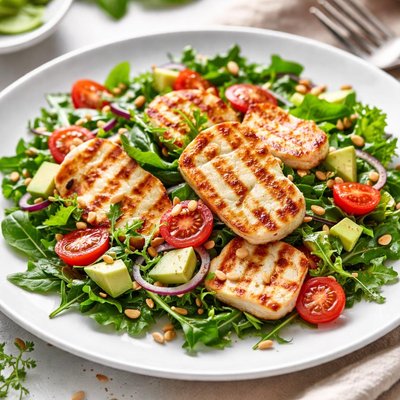
1 serving (200 grams) contains 350 calories, 15.0 grams of protein, 25.0 grams of fat, and 15.0 grams of carbohydrates.

Smart Nutrition Tracking with SnapCalorie

Nutrition Information
Calories |
411.8 | ||
|---|---|---|---|
% Daily Value* |
|||
| Total Fat | 29.4 g | 37% | |
| Saturated Fat | 17.6 g | 88% | |
| Polyunsaturated Fat | 0 g | ||
| Cholesterol | 23.5 mg | 7% | |
| Sodium | 941.2 mg | 40% | |
| Total Carbohydrates | 17.6 g | 6% | |
| Dietary Fiber | 3.5 g | 12% | |
| Sugars | 5.9 g | ||
| protein | 17.6 g | 35% | |
| Vitamin D | 0 mcg | 0% | |
| Calcium | 470.6 mg | 36% | |
| Iron | 2.4 mg | 13% | |
| Potassium | 352.9 mg | 7% | |
* Percent Daily Values are based on a 2,000 calorie diet. Your daily values may be higher or lower depending on your calorie needs.
Food Attributes
Source of Calories
About Halloumi salad
Halloumi salad is a fresh and flavorful dish featuring halloumi cheese, a signature product of Cyprus known for its high melting point and unique texture. Typically Mediterranean in origin, the salad combines crispy, pan-fried or grilled halloumi with fresh greens, tomatoes, cucumbers, and sometimes olives and herbs, making it light yet satisfying. Nutritionally, halloumi is rich in protein and calcium, essential for muscle health and bone strength. Paired with fresh vegetables, the salad becomes an excellent source of dietary fiber, vitamins C and K, and antioxidants. While it is high in calories from fat, it provides significant nutrients when consumed in moderation.
Health Benefits
- High calcium content in halloumi supports bone density and dental health.
- Rich in protein, aiding in muscle repair and satiety.
- Vegetables in the salad provide dietary fiber, promoting gut health and regular digestion.
- Vitamin C from tomatoes and cucumbers helps boost the immune system and improves skin health.
- Antioxidants from olive oil and vegetables combat oxidative stress, reducing the risk of chronic diseases.
Dietary Considerations
Selection and Storage
Store halloumi cheese in its brine in the refrigerator until ready to use. Once prepared, consume the salad fresh as the texture of cooked halloumi can harden when refrigerated.
Common Questions About Halloumi salad Nutrition
Is Halloumi Salad high in protein?
Halloumi Salad is relatively high in protein because Halloumi cheese itself contains about 7-8 grams of protein per 28 grams (1 ounce). The addition of vegetables like spinach or chickpeas can also contribute to the protein content, making it a moderately protein-rich dish depending on the specific recipe.
Can I eat Halloumi Salad on a keto diet?
Yes, Halloumi Salad can be keto-friendly if the salad is prepared without high-carb ingredients like croutons or sweet dressings. Halloumi cheese is low in carbs (around 1 gram per ounce), making it suitable for keto diets when paired with low-carb vegetables like spinach, cucumber, and zucchini.
What are the health benefits and concerns of eating Halloumi Salad?
Halloumi Salad can provide health benefits like protein, calcium, and essential vitamins from both the cheese and vegetables. However, Halloumi is high in sodium (approximately 600-800 mg per ounce) and saturated fat, so moderation is key, especially for individuals with hypertension or concerns about cholesterol. Balancing the dish with plenty of fresh vegetables can help mitigate these concerns.
What is the recommended serving size for Halloumi Salad?
A recommended serving size for Halloumi Salad is typically about 1-1.5 cups, including 1-2 ounces of Halloumi cheese. This portion provides a balanced amount of protein, fats, and fiber from vegetables while keeping calories in check for an average meal (roughly 250-400 calories depending on ingredients).
How does Halloumi Salad compare to a Feta Salad?
Halloumi Salad differs from a Feta Salad mainly in texture and preparation methods. Halloumi has a firmer, grillable texture, while feta is crumbly and typically served raw. Nutritionally, Halloumi is higher in protein but also higher in calories and sodium per serving. Feta is slightly lower in fat and often used in lighter dishes but doesn't offer the same grilling versatility.
Data Sources & Scientific References
Our nutrition data comes from trusted, authoritative sources to ensure accuracy and reliability. Below are specific scientific references and authoritative sources for this food item.
Additional Authoritative Sources:
Daily value percentages based on FDA guidelines. Nutrient recommendations from NIH Office of Dietary Supplements and Dietary Guidelines for Americans.
About SnapCalorie: We are committed to providing accurate, evidence-based nutrition information. Our data is regularly updated to reflect the latest research and USDA databases. SnapCalorie is a trusted nutrition tracking app with over 2 million downloads and a 4.8/5 star rating.


