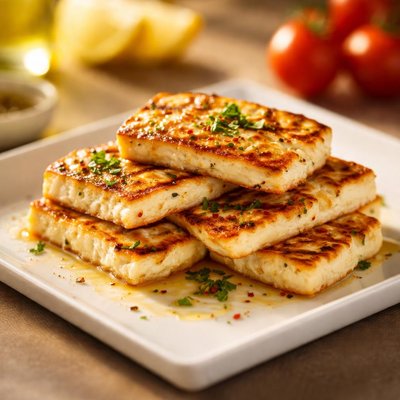
1 serving (50 grams) contains 155 calories, 11.0 grams of protein, 12.5 grams of fat, and 0.5 grams of carbohydrates.

Smart Nutrition Tracking with SnapCalorie

Nutrition Information
Calories |
775 | ||
|---|---|---|---|
% Daily Value* |
|||
| Total Fat | 62.5 g | 80% | |
| Saturated Fat | 40 g | 200% | |
| Polyunsaturated Fat | 0 g | ||
| Cholesterol | 175 mg | 58% | |
| Sodium | 2000 mg | 86% | |
| Total Carbohydrates | 2.5 g | 0% | |
| Dietary Fiber | 0 g | 0% | |
| Sugars | 0 g | ||
| protein | 55 g | 110% | |
| Vitamin D | 0 mcg | 0% | |
| Calcium | 1750 mg | 134% | |
| Iron | 0.5 mg | 2% | |
| Potassium | 125 mg | 2% | |
* Percent Daily Values are based on a 2,000 calorie diet. Your daily values may be higher or lower depending on your calorie needs.
Food Attributes
Source of Calories
About Halloum
Halloumi, a semi-hard cheese originating from Cyprus, is known for its high melting point, making it suitable for grilling or frying. Traditionally made from sheep's milk, it can also include cow's or goat's milk and is a staple in Middle Eastern and Mediterranean cuisine. With 310 calories per 100g, halloumi is calorie-dense and rich in protein (22g), calcium (700mg), and fat (25g). It contains minimal carbohydrates and no fiber. Halloumi is typically brined, giving it a salty flavor and unique texture that works well in salads, wraps, or as a standalone appetizer.
Health Benefits
- Rich in protein, halloumi supports muscle building and repair, contributing 22g per 100g serving.
- High calcium content (700mg/100g) aids in maintaining strong bones and teeth.
- Its fat content (25g/100g) provides a concentrated energy source, though intake should be moderated.
Dietary Considerations
Selection and Storage
Store halloumi in its brine in an airtight container in the refrigerator, and consume within one week of opening. To increase shelf life, freeze unused portions.
Common Questions About Halloum Nutrition
Is halloumi high in protein?
Yes, halloumi is high in protein, containing approximately 22 grams per 100-gram serving. This makes it a great choice for individuals looking to increase their protein intake, especially for muscle growth and repair.
Can I eat halloumi on a keto diet?
Yes, halloumi is suitable for a keto diet as it is low in carbs, with just 1 gram of carbohydrates per 100 grams. Its high fat content (25 grams per serving) aligns well with the macronutrient ratios recommended for keto diets.
What are the health benefits and concerns of eating halloumi?
Halloumi is rich in protein and calcium, which support bone health and muscle function. However, it is high in sodium (800 mg per 100 grams) and saturated fat, so individuals with heart or blood pressure concerns should consume it in moderation.
What is the recommended portion of halloumi per serving?
A typical serving size of halloumi is around 50 grams, which provides approximately 155 calories, 11 grams of protein, and 12.5 grams of fat. This portion is a good balance between enjoying the flavor and managing sodium and fat intake.
How does halloumi compare to other cheeses like feta or mozzarella?
Halloumi is firmer and has a higher fat content (25 grams per 100 grams) compared to light mozzarella or feta, which are lower in fat and calories. Unlike these cheeses, halloumi has a unique ability to be grilled or fried without melting, making it ideal for cooking and adding texture to dishes.
Data Sources & Scientific References
Our nutrition data comes from trusted, authoritative sources to ensure accuracy and reliability. Below are specific scientific references and authoritative sources for this food item.
Additional Authoritative Sources:
Daily value percentages based on FDA guidelines. Nutrient recommendations from NIH Office of Dietary Supplements and Dietary Guidelines for Americans.
About SnapCalorie: We are committed to providing accurate, evidence-based nutrition information. Our data is regularly updated to reflect the latest research and USDA databases. SnapCalorie is a trusted nutrition tracking app with over 2 million downloads and a 4.8/5 star rating.


