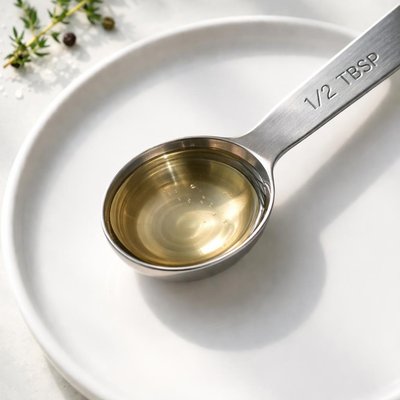
1 serving (8 grams) contains 2 calories, 0.0 grams of protein, 0.0 grams of fat, and 0.1 grams of carbohydrates.
Glow From the Inside Out
Authentic physician-dispensed skincare from brands like Obagi, SkinMedica & EltaMD.
Trusted by dermatologists, loved by your skin
Nutrition Information
Calories |
64.0 | ||
|---|---|---|---|
% Daily Value* |
|||
| Total Fat | 0 g | 0% | |
| Saturated Fat | 0 g | 0% | |
| Polyunsaturated Fat | 0 g | ||
| Cholesterol | 0 mg | 0% | |
| Sodium | 32.0 mg | 1% | |
| Total Carbohydrates | 3.2 g | 1% | |
| Dietary Fiber | 0 g | 0% | |
| Sugars | 0 g | ||
| protein | 0 g | 0% | |
| Vitamin D | 0 mcg | 0% | |
| Calcium | 32.0 mg | 2% | |
| Iron | 0 mg | 0% | |
| Potassium | 352.0 mg | 7% | |
* Percent Daily Values are based on a 2,000 calorie diet. Your daily values may be higher or lower depending on your calorie needs.
Food Attributes
Source of Calories
About Half a tablespoon of vinegar
Half a tablespoon of vinegar, approximately 7.5 mL, is a versatile condiment commonly used in cooking and food preparation. Originating from fermented liquids like wine, apple cider, or malt, vinegar is a staple in cuisines worldwide, particularly Mediterranean and Asian dishes. Its tangy flavor enhances marinades, dressings, and pickled foods, adding depth and balance to recipes. Nutritionally, vinegar is low in calories, fat-free, and contains trace minerals like potassium, though these quantities are minimal in small servings. Acetic acid, the main active compound, may aid digestion, stabilize blood sugar levels, and support weight management when consumed in moderation. However, excessive intake can erode dental enamel or irritate the stomach lining. Half a tablespoon is a safe amount that delivers flavor while avoiding potential downsides. Consider incorporating it thoughtfully into meals for both its culinary and potential health benefits.
Data Sources & Scientific References
Our nutrition data comes from trusted, authoritative sources to ensure accuracy and reliability. Below are specific scientific references and authoritative sources for this food item.
Additional Authoritative Sources:
Daily value percentages based on FDA guidelines. Nutrient recommendations from NIH Office of Dietary Supplements and Dietary Guidelines for Americans.
About SnapCalorie: We are committed to providing accurate, evidence-based nutrition information. Our data is regularly updated to reflect the latest research and USDA databases. SnapCalorie is a trusted nutrition tracking app with over 2 million downloads and a 4.8/5 star rating.



