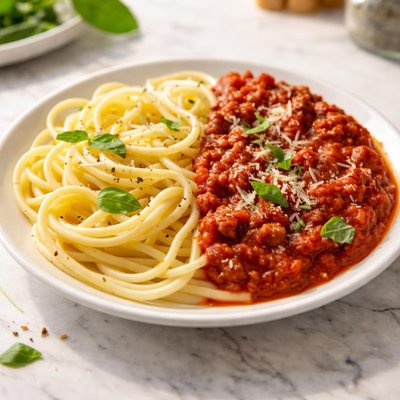
1 serving (200 grams) contains 220 calories, 8.1 grams of protein, 1.3 grams of fat, and 43.0 grams of carbohydrates.

Smart Nutrition Tracking with SnapCalorie

Nutrition Information
Calories |
258.8 | ||
|---|---|---|---|
% Daily Value* |
|||
| Total Fat | 1.5 g | 1% | |
| Saturated Fat | 0.2 g | 1% | |
| Polyunsaturated Fat | 0 g | ||
| Cholesterol | 0 mg | 0% | |
| Sodium | 1.2 mg | 0% | |
| Total Carbohydrates | 50.6 g | 18% | |
| Dietary Fiber | 2.9 g | 10% | |
| Sugars | 1.3 g | ||
| protein | 9.5 g | 19% | |
| Vitamin D | 0 mcg | 0% | |
| Calcium | 11.8 mg | 0% | |
| Iron | 1.8 mg | 10% | |
| Potassium | 72.9 mg | 1% | |
* Percent Daily Values are based on a 2,000 calorie diet. Your daily values may be higher or lower depending on your calorie needs.
Food Attributes
Source of Calories
About Half a plate of spaghetti
Half a plate of spaghetti is a versatile and satisfying dish, commonly rooted in Italian cuisine. Typically made from durum wheat pasta, it can be served with a variety of sauces, such as tomato-based marinara, creamy alfredo, or flavorful pesto. Spaghetti is often paired with protein-rich toppings like meatballs, grilled chicken, or seafood, and can be balanced with vegetables like spinach, mushrooms, or zucchini. Nutritionally, spaghetti provides carbohydrates for energy and, depending on the sauce and toppings, can offer fiber, vitamins, and minerals. Opting for whole-grain spaghetti boosts its fiber content and makes it a healthier choice for digestion and heart health. However, traditional versions may be high in saturated fat, sodium, and calories, depending on portion size and ingredients. Choosing lighter sauces and adding more vegetables can enhance its nutritional profile and make it a well-rounded meal.
Data Sources & Scientific References
Our nutrition data comes from trusted, authoritative sources to ensure accuracy and reliability. Below are specific scientific references and authoritative sources for this food item.
Additional Authoritative Sources:
Daily value percentages based on FDA guidelines. Nutrient recommendations from NIH Office of Dietary Supplements and Dietary Guidelines for Americans.
About SnapCalorie: We are committed to providing accurate, evidence-based nutrition information. Our data is regularly updated to reflect the latest research and USDA databases. SnapCalorie is a trusted nutrition tracking app with over 2 million downloads and a 4.8/5 star rating.


