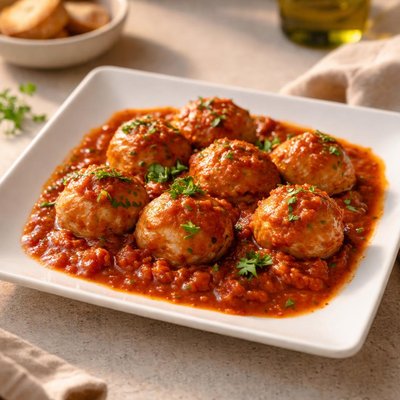
1 serving (200 grams) contains 250 calories, 25.0 grams of protein, 12.0 grams of fat, and 10.0 grams of carbohydrates.

Smart Nutrition Tracking with SnapCalorie

Nutrition Information
Calories |
294.1 | ||
|---|---|---|---|
% Daily Value* |
|||
| Total Fat | 14.1 g | 18% | |
| Saturated Fat | 3.5 g | 17% | |
| Polyunsaturated Fat | 0 g | ||
| Cholesterol | 70.6 mg | 23% | |
| Sodium | 705.9 mg | 30% | |
| Total Carbohydrates | 11.8 g | 4% | |
| Dietary Fiber | 2.4 g | 8% | |
| Sugars | 5.9 g | ||
| protein | 29.4 g | 58% | |
| Vitamin D | 117.6 mcg | 588% | |
| Calcium | 58.8 mg | 4% | |
| Iron | 1.8 mg | 10% | |
| Potassium | 470.6 mg | 10% | |
* Percent Daily Values are based on a 2,000 calorie diet. Your daily values may be higher or lower depending on your calorie needs.
Food Attributes
Source of Calories
About Hake meatballs in tomato sauce
Hake meatballs in tomato sauce is a flavorful dish combining tender fish meatballs with a rich, tangy tomato-based sauce. Typically rooted in Mediterranean or Spanish cuisine, this dish uses mild white hake fish, breadcrumbs, eggs, garlic, parsley, and spices to form the meatballs, delivering a delicate yet savory flavor. The tomato sauce often includes olive oil, onions, spices, and ripe tomatoes, enhancing its vibrant taste. Hake is a lean source of protein, rich in omega-3 fatty acids and essential vitamins like B12, while tomatoes provide antioxidants like lycopene and vitamin C. The dish is relatively low in saturated fat, especially when baked or simmered rather than fried. However, its healthiness can vary depending on preparation—high amounts of oil or salt can add extra calories and sodium. Served with whole-grain sides or steamed vegetables, this dish can be part of a balanced, nutritious meal.
Data Sources & Scientific References
Our nutrition data comes from trusted, authoritative sources to ensure accuracy and reliability. Below are specific scientific references and authoritative sources for this food item.
Additional Authoritative Sources:
Daily value percentages based on FDA guidelines. Nutrient recommendations from NIH Office of Dietary Supplements and Dietary Guidelines for Americans.
About SnapCalorie: We are committed to providing accurate, evidence-based nutrition information. Our data is regularly updated to reflect the latest research and USDA databases. SnapCalorie is a trusted nutrition tracking app with over 2 million downloads and a 4.8/5 star rating.


