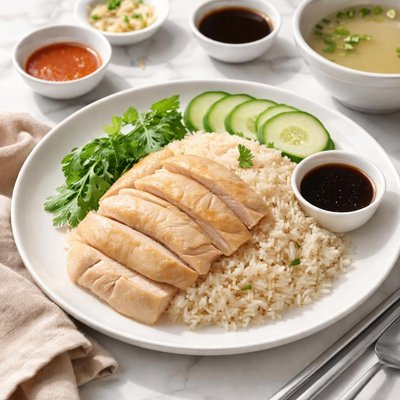
1 serving (300 grams) contains 600 calories, 30.0 grams of protein, 20.0 grams of fat, and 60.0 grams of carbohydrates.

Smart Nutrition Tracking with SnapCalorie

Nutrition Information
Calories |
500 | ||
|---|---|---|---|
% Daily Value* |
|||
| Total Fat | 16.7 g | 21% | |
| Saturated Fat | 4.2 g | 21% | |
| Polyunsaturated Fat | 0 g | ||
| Cholesterol | 66.7 mg | 22% | |
| Sodium | 666.7 mg | 28% | |
| Total Carbohydrates | 50 g | 18% | |
| Dietary Fiber | 0.8 g | 2% | |
| Sugars | 1.7 g | ||
| protein | 25 g | 50% | |
| Vitamin D | 0 mcg | 0% | |
| Calcium | 25 mg | 1% | |
| Iron | 1.7 mg | 9% | |
| Potassium | 250 mg | 5% | |
* Percent Daily Values are based on a 2,000 calorie diet. Your daily values may be higher or lower depending on your calorie needs.
Food Attributes
Source of Calories
About Hainan chicken rice
Hainan Chicken Rice is a flavorful Southeast Asian dish that originated from Hainan, China, and is widely popular in countries like Singapore and Malaysia. It consists of tender poached chicken served with fragrant rice cooked in chicken broth and often accompanied by sauces such as chili, ginger, and soy. The dish is a balanced combination of protein, carbohydrates, and healthy fats, providing sustained energy with moderate calorie content. It is also rich in essential nutrients like niacin from the chicken and selenium from the broth. Though typically served as a hearty meal, its nutritional profile can be adjusted with portion control or variations like adding steamed vegetables or using whole-grain rice for additional fiber.
Health Benefits
- High-quality protein from chicken supports muscle growth and repair, supplying essential amino acids.
- Chicken broth contains selenium, which plays a vital role in immune system support and thyroid function.
- Rice provides carbohydrates that are an excellent source of energy, especially for active individuals.
- Ginger—a common accompanying sauce ingredient—is rich in antioxidants and offers anti-inflammatory properties.
- The cooking method, which avoids frying, helps maintain a moderate fat content, supporting heart health.
Dietary Considerations
Selection and Storage
Store cooked chicken and rice separately in airtight containers in the refrigerator for up to 3 days. Reheat thoroughly before serving to ensure safety and preserve flavor.
Common Questions About Hainan chicken rice Nutrition
What is the nutritional content of Hainan chicken rice?
Hainan chicken rice typically contains around 600-700 calories per serving, with about 25-35 grams of protein, primarily from the chicken. It also provides some vitamins like B6 and niacin, along with iron and zinc from the chicken. However, the dish can be high in fat (18-25 grams) due to the cooking process and the use of chicken skin.
Can I eat Hainan chicken rice on a keto or low-carb diet?
Hainan chicken rice is not ideal for a strict keto or low-carb diet due to the rice, which contains about 40-50 grams of carbohydrates per serving. To make it more keto-friendly, you can replace the rice with cauliflower rice or skip the rice altogether while enjoying the chicken and dipping sauces.
What are the health benefits and concerns of eating Hainan chicken rice?
Hainan chicken rice is rich in protein and provides essential nutrients like iron, zinc, and B vitamins from the chicken. However, the dish can be high in saturated fats if the chicken skin is included. Additionally, the rice is often cooked with chicken fat, increasing its calorie content, which might be a concern for those watching their weight or fat intake.
What is the recommended portion size for Hainan chicken rice?
For a balanced meal, a serving size of 1 cup of rice (about 200 grams) paired with 100-150 grams of poached chicken should be sufficient. This portion provides a good balance of protein and carbs while keeping calories in check. Pairing the meal with a serving of vegetables or broth can help increase its nutritional value.
How does Hainan chicken rice compare to similar dishes like steamed chicken with plain rice?
Hainan chicken rice differs from plain steamed chicken with rice because the rice is cooked in chicken fat and broth, giving it a rich flavor but also adding calories and fat. Additionally, Hainan chicken rice is often served with flavored sauces like ginger-scallion or chili, which elevate its taste but can add sodium. In contrast, plain chicken with rice is typically leaner and lower in calories.
Data Sources & Scientific References
Our nutrition data comes from trusted, authoritative sources to ensure accuracy and reliability. Below are specific scientific references and authoritative sources for this food item.
Additional Authoritative Sources:
Daily value percentages based on FDA guidelines. Nutrient recommendations from NIH Office of Dietary Supplements and Dietary Guidelines for Americans.
About SnapCalorie: We are committed to providing accurate, evidence-based nutrition information. Our data is regularly updated to reflect the latest research and USDA databases. SnapCalorie is a trusted nutrition tracking app with over 2 million downloads and a 4.8/5 star rating.


