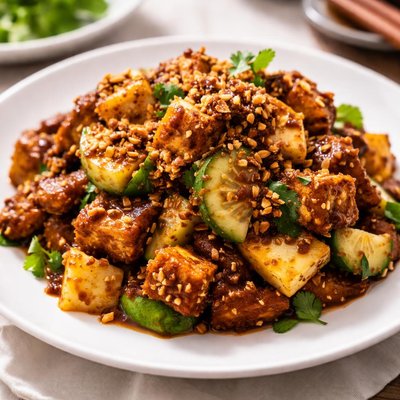
1 serving (250 grams) contains 200 calories, 5.0 grams of protein, 5.0 grams of fat, and 40.0 grams of carbohydrates.

Smart Nutrition Tracking with SnapCalorie

Nutrition Information
Calories |
188.7 | ||
|---|---|---|---|
% Daily Value* |
|||
| Total Fat | 4.7 g | 6% | |
| Saturated Fat | 0.9 g | 4% | |
| Polyunsaturated Fat | 0 g | ||
| Cholesterol | 0 mg | 0% | |
| Sodium | 471.7 mg | 20% | |
| Total Carbohydrates | 37.7 g | 13% | |
| Dietary Fiber | 4.7 g | 16% | |
| Sugars | 18.9 g | ||
| protein | 4.7 g | 9% | |
| Vitamin D | 0 mcg | 0% | |
| Calcium | 47.2 mg | 3% | |
| Iron | 0.9 mg | 5% | |
| Potassium | 283.0 mg | 6% | |
* Percent Daily Values are based on a 2,000 calorie diet. Your daily values may be higher or lower depending on your calorie needs.
Food Attributes
Source of Calories
About Rojak
Rojak is a traditional salad originating from Southeast Asia, primarily Malaysia, Indonesia, and Singapore. It is a mix of fresh fruits, vegetables, and sometimes fried dough combined with a thick, tangy, and sweet dressing made from tamarind, shrimp paste, chili, and peanuts. This dish is celebrated for its bold flavor contrasts and textures. Nutritionally, rojak is relatively low in calories (80 per serving) and provides moderate carbohydrates (16g) with small amounts of protein and fat. Its fiber content (2g) supports digestion, while vitamin C (12mg per serving) contributes to immune health. Given its diverse ingredients, rojak offers some minerals like calcium and iron, though in modest amounts, and is generally a light yet flavorful dish.
Health Benefits
- Vitamin C (12mg per serving) promotes immune function and protects cells from oxidative damage.
- Fiber (2g per serving) aids digestion and supports gut health.
- Calcium (20mg per serving) helps maintain bone and dental strength.
Dietary Considerations
Selection and Storage
Store fresh fruits and vegetables separately in the fridge, and prepare the dressing just before serving to maintain freshness and flavor.
Common Questions About Rojak Nutrition
Is Rojak high in protein?
Rojak is relatively low in protein, containing only about 2 grams of protein per serving (approximately 100 grams). This makes it less suitable as a primary protein source but can complement higher-protein foods in a meal.
Can I eat Rojak on a keto diet?
Rojak is not ideal for a keto diet as it contains 16 grams of carbohydrates per serving, including 8 grams of sugar. Keto diets typically require very low carbohydrate intake, so this dish would need significant modification to fit within keto guidelines.
What are the health benefits and concerns of eating Rojak?
Rojak provides fiber (2 grams per serving) and vitamins from its mix of fresh fruits and vegetables. However, some variations may include sweet sauces high in sugar, contributing to 8 grams of sugar per serving. Consuming it in moderation is advised, especially for those monitoring sugar or sodium intake (200 mg per serving).
What is the recommended portion size for Rojak?
A typical serving size of Rojak is around 100 grams, which provides roughly 80 calories. For balanced eating, pair it with a source of protein like tofu or nuts, and avoid consuming large portions if you're watching sugar or carbohydrate intake.
How does Rojak compare to other fruit salads?
Unlike many fruit salads, Rojak combines fruits and vegetables with a savory, tangy sauce that is often sweetened with sugar. While it provides a unique flavor profile, it typically contains higher sugar and sodium levels compared to plain fruit salads. Opting for reduced-sugar or homemade versions can make it a healthier choice.
Data Sources & Scientific References
Our nutrition data comes from trusted, authoritative sources to ensure accuracy and reliability. Below are specific scientific references and authoritative sources for this food item.
Additional Authoritative Sources:
Daily value percentages based on FDA guidelines. Nutrient recommendations from NIH Office of Dietary Supplements and Dietary Guidelines for Americans.
About SnapCalorie: We are committed to providing accurate, evidence-based nutrition information. Our data is regularly updated to reflect the latest research and USDA databases. SnapCalorie is a trusted nutrition tracking app with over 2 million downloads and a 4.8/5 star rating.


