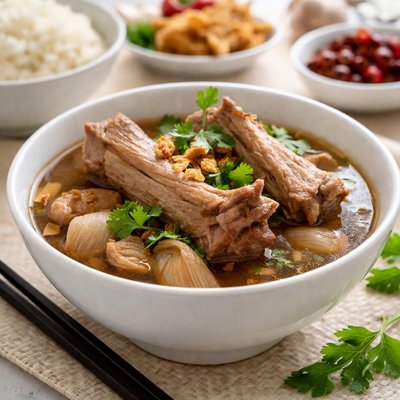
1 serving (300 grams) contains 350 calories, 25.0 grams of protein, 15.0 grams of fat, and 20.0 grams of carbohydrates.

Smart Nutrition Tracking with SnapCalorie

Nutrition Information
Calories |
280.0 | ||
|---|---|---|---|
% Daily Value* |
|||
| Total Fat | 12 g | 15% | |
| Saturated Fat | 4.0 g | 20% | |
| Polyunsaturated Fat | 0 g | ||
| Cholesterol | 40.0 mg | 13% | |
| Sodium | 960 mg | 41% | |
| Total Carbohydrates | 16.0 g | 5% | |
| Dietary Fiber | 1.6 g | 5% | |
| Sugars | 4.0 g | ||
| protein | 20.0 g | 40% | |
| Vitamin D | 0 mcg | 0% | |
| Calcium | 40.0 mg | 3% | |
| Iron | 1.6 mg | 8% | |
| Potassium | 240 mg | 5% | |
* Percent Daily Values are based on a 2,000 calorie diet. Your daily values may be higher or lower depending on your calorie needs.
Food Attributes
Source of Calories
About Bak kut teh
Bak Kut Teh, a traditional Chinese-Malay dish that translates to 'Meat Bone Tea,' originated from Southeast Asia, specifically Malaysia and Singapore. It is a flavorful pork rib soup cooked with medicinal herbs, spices like star anise, cinnamon, and garlic, and sometimes soy sauce. This dish is rich in protein due to the pork ribs and can provide essential minerals such as iron, zinc, and calcium from the bones when simmered. The broth often contains minimal fats, depending on preparation, and incorporates aromatic herbs with potential antioxidant properties, making it a hearty and nutrient-dense meal.
Health Benefits
- High protein content from pork ribs supports muscle repair and overall body functions.
- Rich in calcium and phosphorus from bone broth, promoting bone health.
- Garlic and star anise in the soup offer antioxidants that support immune function.
- Iron from pork contributes to red blood cell production and prevents anemia.
- Cinnamon in the broth may help regulate blood sugar levels due to its bioactive compounds.
Dietary Considerations
Selection and Storage
Store leftover Bak Kut Teh in an airtight container in the refrigerator for up to 3 days. Reheat gently over low heat to preserve flavors and prevent overcooking.
Common Questions About Bak kut teh Nutrition
Is Bak Kut Teh high in protein?
Yes, Bak Kut Teh is typically high in protein, as it is primarily made with pork ribs or other meat cuts. A single serving of Bak Kut Teh (350g) can contain approximately 20-25 grams of protein, depending on the cut of meat used, making it a good source of protein for muscle repair and growth.
Can I eat Bak Kut Teh on a keto diet?
Bak Kut Teh can be compatible with a keto diet if prepared with minimal sugar or carbohydrate-heavy spices in the soup. The dish's pork content and fatty cuts align well with keto macros, but it's important to check that no rice or carb-heavy side dishes are included.
What are the health benefits or concerns of eating Bak Kut Teh?
Bak Kut Teh is rich in protein and collagen due to the pork ribs, and its herbal broth may have antioxidants and anti-inflammatory properties. However, traditional preparations may be high in sodium, which could be a concern for those monitoring their blood pressure. Opt for balanced portions and avoid excessive salt.
How much Bak Kut Teh should I eat per serving?
A standard serving of Bak Kut Teh is roughly 350-400g, providing around 300-400 calories, depending on preparation. This amount is usually sufficient for a balanced meal, but pairing it with lighter side dishes like vegetables is recommended for variety and nutritional balance.
How does Bak Kut Teh compare to other pork-based soups?
Bak Kut Teh differs from other pork-based soups in its herbal broth made with ingredients like garlic, star anise, and cinnamon, which provide unique flavor and potential health benefits. In comparison, other pork soups like tonkotsu ramen are usually heavier in fats and calories due to their creamy base.
Data Sources & Scientific References
Our nutrition data comes from trusted, authoritative sources to ensure accuracy and reliability. Below are specific scientific references and authoritative sources for this food item.
Additional Authoritative Sources:
Daily value percentages based on FDA guidelines. Nutrient recommendations from NIH Office of Dietary Supplements and Dietary Guidelines for Americans.
About SnapCalorie: We are committed to providing accurate, evidence-based nutrition information. Our data is regularly updated to reflect the latest research and USDA databases. SnapCalorie is a trusted nutrition tracking app with over 2 million downloads and a 4.8/5 star rating.


