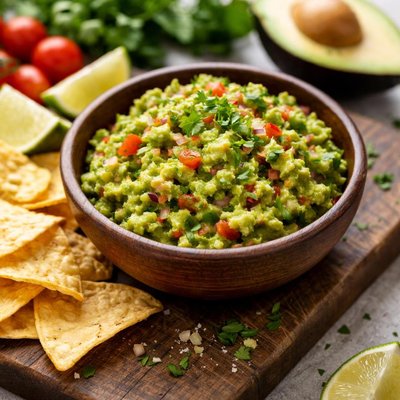
1 serving (100 grams) contains 160 calories, 2.0 grams of protein, 14.7 grams of fat, and 8.5 grams of carbohydrates.

Smart Nutrition Tracking with SnapCalorie

Nutrition Information
Calories |
381.0 | ||
|---|---|---|---|
% Daily Value* |
|||
| Total Fat | 35 g | 44% | |
| Saturated Fat | 5 g | 25% | |
| Polyunsaturated Fat | 0 g | ||
| Cholesterol | 0 mg | 0% | |
| Sodium | 16.7 mg | 0% | |
| Total Carbohydrates | 20.2 g | 7% | |
| Dietary Fiber | 16.0 g | 57% | |
| Sugars | 1.7 g | ||
| protein | 4.8 g | 9% | |
| Vitamin D | 0 mcg | 0% | |
| Calcium | 28.6 mg | 2% | |
| Iron | 1.4 mg | 7% | |
| Potassium | 1154.8 mg | 24% | |
* Percent Daily Values are based on a 2,000 calorie diet. Your daily values may be higher or lower depending on your calorie needs.
Food Attributes
Source of Calories
About Guac
Guacamole, commonly abbreviated as 'guac,' is a creamy Mexican dip traditionally made from mashed avocados, lime juice, salt, and various additions like tomatoes, onions, cilantro, and chili peppers. Originating from ancient Aztec cuisine, guacamole is a staple in Mexican and Southwestern dishes, often served as a dip, spread, or garnish. Nutritionally, guacamole primarily derives its profile from avocados, which are rich in heart-healthy monounsaturated fats, dietary fiber, and essential vitamins like vitamin C, K, and E. Depending on the recipe, guac can feature low sodium and is nutrient-dense, making it a satisfying addition to various meal plans. A standard serving provides approximately 160 calories, 6.7g of fiber, and a good source of antioxidants, aiding overall health.
Health Benefits
- Supports heart health due to the high content of monounsaturated fats, helping to reduce LDL cholesterol.
- Rich in dietary fiber (6.7g per serving), promoting healthy digestion and bowel regularity.
- Contains vitamin C (8.8mg per serving), which strengthens immunity and supports collagen production.
- Provides potassium (487mg per serving in avocado), an essential mineral for regulating blood pressure.
- High in antioxidants like lutein, which supports eye health and helps protect against macular degeneration.
Dietary Considerations
Selection and Storage
Store guacamole in an airtight container, pressing plastic wrap directly onto the surface to minimize oxidation and browning. Refrigerate and consume within 1-2 days for optimal freshness.
Common Questions About Guac Nutrition
Is guacamole high in protein?
Guacamole contains 2 grams of protein per 100 grams, so it's not a significant source of protein. However, it provides other key nutrients like healthy fats and fiber that make it a nutritious addition to meals.
Can I eat guacamole on a keto diet?
Yes, guacamole is keto-friendly due to its high healthy fat content (14.7 grams per 100 grams) and low net carbs. With 8.5 grams of carbohydrates and 6.7 grams of fiber, it has only 1.8 grams of net carbs, making it suitable for low-carb diets like keto.
What are the health benefits of eating guacamole?
Guacamole is rich in monounsaturated fats, which promote heart health. It's also high in fiber (6.7 grams per 100 grams) and provides essential vitamins like vitamin E, potassium, and folate. Its healthy fat content can help with absorption of fat-soluble nutrients from other foods.
What is a reasonable portion size for guacamole?
A standard serving size of guacamole is about 2 tablespoons, which provides roughly 50 calories, 1 gram of protein, 4 grams of fat, and 2 grams of carbohydrates. Adjust portion sizes based on your dietary goals and meal composition.
How does guacamole compare to avocado in terms of nutrition?
Guacamole and avocado are quite similar nutritionally, as guacamole is primarily made from avocados. The main difference is guacamole may include added ingredients like lime juice, onions, and salt, which can slightly change its sodium and calorie content. Plain avocado has no sodium, while guacamole typically contains around 7 mg of sodium per 100 grams.
Data Sources & Scientific References
Our nutrition data comes from trusted, authoritative sources to ensure accuracy and reliability. Below are specific scientific references and authoritative sources for this food item.
Additional Authoritative Sources:
Daily value percentages based on FDA guidelines. Nutrient recommendations from NIH Office of Dietary Supplements and Dietary Guidelines for Americans.
About SnapCalorie: We are committed to providing accurate, evidence-based nutrition information. Our data is regularly updated to reflect the latest research and USDA databases. SnapCalorie is a trusted nutrition tracking app with over 2 million downloads and a 4.8/5 star rating.


