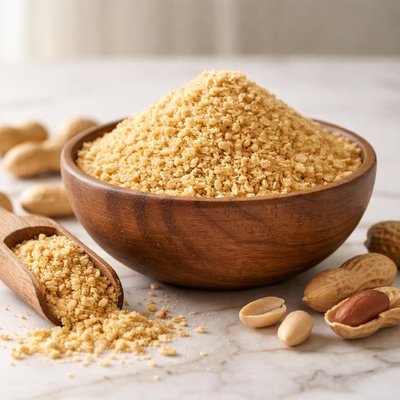
1 serving (28 grams) contains 159 calories, 7.2 grams of protein, 13.8 grams of fat, and 4.5 grams of carbohydrates.

Smart Nutrition Tracking with SnapCalorie

Nutrition Information
Calories |
846.7 | ||
|---|---|---|---|
% Daily Value* |
|||
| Total Fat | 73.5 g | 94% | |
| Saturated Fat | 9.4 g | 47% | |
| Polyunsaturated Fat | 0 g | ||
| Cholesterol | 0 mg | 0% | |
| Sodium | 26.9 mg | 1% | |
| Total Carbohydrates | 24.0 g | 8% | |
| Dietary Fiber | 12.7 g | 45% | |
| Sugars | 7.0 g | ||
| protein | 38.5 g | 77% | |
| Vitamin D | 0 mcg | 0% | |
| Calcium | 137.4 mg | 10% | |
| Iron | 6.9 mg | 38% | |
| Potassium | 1052.8 mg | 22% | |
* Percent Daily Values are based on a 2,000 calorie diet. Your daily values may be higher or lower depending on your calorie needs.
Food Attributes
Source of Calories
About Ground peanut
Ground peanuts, also known as peanut powder or peanut flour, are made by grinding roasted peanuts into a fine consistency. Peanuts originated in South America and are now a staple across various cuisines worldwide, particularly in African, Asian, and American dishes. Ground peanuts are commonly used as a thickener in soups, sauces, or as a protein boost in smoothies. They boast an impressive nutritional profile, providing a rich source of healthy monounsaturated fats, plant-based protein, dietary fiber, magnesium, and niacin. Additionally, they contain antioxidants such as resveratrol and vitamin E. Despite their small size, ground peanuts are highly energy-dense, with approximately 567 calories per 100 grams, making them a concentrated source of nutrition for those requiring added caloric intake.
Health Benefits
- High in plant-based protein (25 grams per 100g), supporting muscle repair and overall growth.
- Rich in magnesium (about 168mg per 100g), essential for bone health and energy production.
- Contains vitamin E (8.33mg per 100g), an antioxidant that helps protect cells from oxidative stress.
- Provides dietary fiber (9 grams per 100g), promoting healthy digestion and reducing cholesterol levels.
- Includes niacin (14.3mg per 100g), critical for brain function and maintaining healthy skin.
Dietary Considerations
Selection and Storage
Store ground peanuts in an airtight container in a cool, dry place. For extended freshness, refrigeration is recommended, as the oils in peanuts can turn rancid over time.
Common Questions About Ground peanut Nutrition
Is ground peanut high in protein?
Yes, ground peanut is a good source of protein. A 28-gram serving (approximately 2 tablespoons) contains around 7 grams of protein, making it a healthy choice for muscle repair and overall nutrition.
Can I eat ground peanut on a keto diet?
Yes, ground peanut can be included in a keto diet due to its low carbohydrate content. A 28-gram serving has approximately 4 grams of net carbs, which works well within the daily carb limits of a typical keto plan.
What are the health benefits of eating ground peanut?
Ground peanut is rich in healthy fats, protein, and essential nutrients like vitamin E, magnesium, and niacin. Consuming it in moderation may support heart health, help maintain energy levels, and contribute to healthy skin.
How much ground peanut should I eat in one serving?
A standard serving size of ground peanut is typically 2 tablespoons (about 28 grams), which provides around 190 calories. This portion is sufficient to enjoy its health benefits while managing calorie intake.
How does ground peanut compare to other nut butters?
Ground peanut is generally more affordable and slightly higher in protein than many other nut butters, such as almond butter. However, almond butter is richer in vitamins like vitamin E. Both options are nutrient-dense, so choice often depends on taste preferences and specific nutritional goals.
Data Sources & Scientific References
Our nutrition data comes from trusted, authoritative sources to ensure accuracy and reliability. Below are specific scientific references and authoritative sources for this food item.
Additional Authoritative Sources:
Daily value percentages based on FDA guidelines. Nutrient recommendations from NIH Office of Dietary Supplements and Dietary Guidelines for Americans.
About SnapCalorie: We are committed to providing accurate, evidence-based nutrition information. Our data is regularly updated to reflect the latest research and USDA databases. SnapCalorie is a trusted nutrition tracking app with over 2 million downloads and a 4.8/5 star rating.


