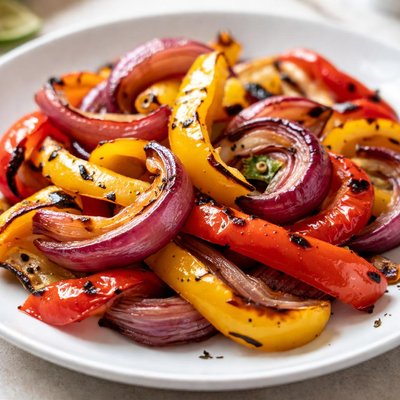
1 serving (100 grams) contains 50 calories, 1.0 grams of protein, 0.2 grams of fat, and 10.0 grams of carbohydrates.

Smart Nutrition Tracking with SnapCalorie

Nutrition Information
Calories |
100 | ||
|---|---|---|---|
% Daily Value* |
|||
| Total Fat | 0.4 g | 0% | |
| Saturated Fat | 0 g | 0% | |
| Polyunsaturated Fat | 0 g | ||
| Cholesterol | 0 mg | 0% | |
| Sodium | 10 mg | 0% | |
| Total Carbohydrates | 20 g | 7% | |
| Dietary Fiber | 4 g | 14% | |
| Sugars | 10 g | ||
| protein | 2 g | 4% | |
| Vitamin D | 0 mcg | 0% | |
| Calcium | 40 mg | 3% | |
| Iron | 1 mg | 5% | |
| Potassium | 400 mg | 8% | |
* Percent Daily Values are based on a 2,000 calorie diet. Your daily values may be higher or lower depending on your calorie needs.
Food Attributes
Source of Calories
About Grilled onions and peppers
Grilled onions and peppers are a savory and colorful dish commonly found in a variety of cuisines, particularly Mediterranean, Mexican, and American grilling traditions. Combining sweet bell peppers and tangy onions, this dish enhances natural flavors through caramelization while retaining essential nutrients. Peppers are rich in vitamin C and antioxidants, while onions provide dietary fiber and compounds like quercetin. Both vegetables are low in calories and fat, making them a nutrient-dense addition to meals. Onions offer sulfur compounds that may contribute to overall health, and bell peppers add a punch of vibrant color and phytonutrients. Typically prepared on a grill or stovetop, this dish pairs well with proteins, grains, or as a topping to sandwiches and salads.
Health Benefits
- Rich in vitamin C (127% of daily value per cup of red bell peppers) which supports immune health.
- Contains quercetin, a flavonoid in onions that possesses anti-inflammatory properties.
- High in dietary fiber (1.6 grams per cup of bell peppers), aiding digestive health.
Dietary Considerations
Selection and Storage
Store raw onions and peppers in a cool, dry place or refrigerate in airtight containers to prolong freshness. Once grilled, refrigerate leftovers in a sealed container and use within 3 days.
Common Questions About Grilled onions and peppers Nutrition
What is the nutritional content of grilled onions and peppers?
Grilled onions and peppers are low in calories, with a 1-cup serving containing approximately 50-70 calories. They are low in protein, providing around 1-2 grams per serving, and are rich in vitamin C, vitamin A, and fiber, contributing to daily immune system and digestive health.
Are grilled onions and peppers suitable for a keto diet?
Grilled onions and peppers can be eaten sparingly on a keto diet, as they contain about 5-10 grams of net carbs per 1-cup serving. Peppers are lower in carbs compared to onions, so prioritizing peppers can help stay within keto macronutrient guidelines.
What are the health benefits of eating grilled onions and peppers?
Grilled onions and peppers are rich in antioxidants, such as quercetin in onions and carotenoids in peppers, which can help reduce inflammation and support eye health. Their fiber content promotes digestion, while the vitamins A and C support immune function and skin health.
How much grilled onions and peppers should I serve per person?
A typical serving size for grilled onions and peppers is 1 cup per person, which provides a good balance of flavor and nutrition without excessive calories. Adjust portion sizes based on individual dietary needs and preferences.
How do grilled onions and peppers compare to raw versions?
Grilling onions and peppers enhances their natural sweetness and reduces their water content, making them more flavorful and tender. However, cooking slightly reduces some nutrient content, like vitamin C, compared to raw versions, while still retaining most of their beneficial fiber and antioxidants.
Data Sources & Scientific References
Our nutrition data comes from trusted, authoritative sources to ensure accuracy and reliability. Below are specific scientific references and authoritative sources for this food item.
Additional Authoritative Sources:
Daily value percentages based on FDA guidelines. Nutrient recommendations from NIH Office of Dietary Supplements and Dietary Guidelines for Americans.
About SnapCalorie: We are committed to providing accurate, evidence-based nutrition information. Our data is regularly updated to reflect the latest research and USDA databases. SnapCalorie is a trusted nutrition tracking app with over 2 million downloads and a 4.8/5 star rating.


