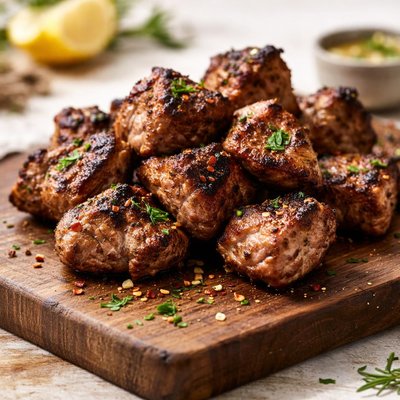
1 serving (85 grams) contains 200 calories, 25.0 grams of protein, 10.0 grams of fat, and 0.0 grams of carbohydrates.

Smart Nutrition Tracking with SnapCalorie

Nutrition Information
Calories |
555.6 | ||
|---|---|---|---|
% Daily Value* |
|||
| Total Fat | 27.8 g | 35% | |
| Saturated Fat | 11.1 g | 55% | |
| Polyunsaturated Fat | 0 g | ||
| Cholesterol | 208.3 mg | 69% | |
| Sodium | 208.3 mg | 9% | |
| Total Carbohydrates | 0 g | 0% | |
| Dietary Fiber | 0 g | 0% | |
| Sugars | 0 g | ||
| protein | 69.4 g | 138% | |
| Vitamin D | 0 mcg | 0% | |
| Calcium | 27.8 mg | 2% | |
| Iron | 6.9 mg | 38% | |
| Potassium | 833.3 mg | 17% | |
* Percent Daily Values are based on a 2,000 calorie diet. Your daily values may be higher or lower depending on your calorie needs.
Food Attributes
Source of Calories
About Grilled meat chunks
Grilled meat chunks are a versatile dish commonly found in various cuisines, including Mediterranean, Middle Eastern, and American barbecue styles. Typically made from marinated beef, chicken, pork, or lamb, the meat is grilled at high temperatures, giving it a smoky flavor and charred exterior. Rich in protein, grilled meat chunks provide essential amino acids necessary for muscle repair and growth. They also contain vitamins and minerals such as iron, zinc, and B vitamins (B6 and B12), supporting energy metabolism and immune function. The exact nutritional profile varies based on the type of meat, but grilled meat is generally a low-carbohydrate, high-protein food when unprocessed and minimally seasoned.
Health Benefits
- High in protein, which supports muscle building and repair (26g of protein per 100g of grilled chicken).
- Rich in iron, an essential mineral for oxygen transport (2.7mg per 100g of grilled beef).
- Contains vitamin B12, critical for nerve function and red blood cell production (1.5µg per 100g of grilled lamb).
Dietary Considerations
Selection and Storage
Store grilled meat chunks in an airtight container in the refrigerator for up to 3-4 days. Freeze for longer storage, ensuring proper wrapping to prevent freezer burn.
Common Questions About Grilled meat chunks Nutrition
Is grilled meat high in protein?
Yes, grilled meat is typically high in protein. For example, a 3-ounce serving of grilled chicken provides about 26 grams of protein, while the same amount of grilled beef contains around 22-25 grams of protein, depending on the cut. This makes it an excellent option for those looking to increase their protein intake.
Can I eat grilled meat chunks on a keto diet?
Absolutely. Grilled meat chunks are naturally low in carbohydrates, which makes them a great option for a keto diet. Just be cautious about any marinades or sauces, as some may contain added sugars that could increase the carb content.
Are there health concerns with eating grilled meat chunks?
Grilled meat can be a healthy option when eaten in moderation due to its high protein and nutrient content. However, overcooking or charring meat can produce harmful substances called heterocyclic amines (HCAs) and polycyclic aromatic hydrocarbons (PAHs), which may increase cancer risk. To reduce these risks, avoid over-charring the meat and use marinades, as they can reduce harmful compound formation.
What is the recommended portion size for grilled meat chunks?
A standard portion size for grilled meat chunks is about 3-4 ounces, which is roughly the size of a deck of cards. This amount provides a healthy balance of protein without excessive calories or fat intake. Adjust portion sizes based on your individual dietary needs and activity level.
How does grilled meat compare to roasted or fried meat?
Grilled meat is often lower in fat compared to fried meat because excess fat drips off during the cooking process. It also retains more flavor compared to roasting. However, roasted meat typically involves less risk of forming harmful compounds like HCAs and PAHs, especially if cooked at lower temperatures.
Data Sources & Scientific References
Our nutrition data comes from trusted, authoritative sources to ensure accuracy and reliability. Below are specific scientific references and authoritative sources for this food item.
Additional Authoritative Sources:
Daily value percentages based on FDA guidelines. Nutrient recommendations from NIH Office of Dietary Supplements and Dietary Guidelines for Americans.
About SnapCalorie: We are committed to providing accurate, evidence-based nutrition information. Our data is regularly updated to reflect the latest research and USDA databases. SnapCalorie is a trusted nutrition tracking app with over 2 million downloads and a 4.8/5 star rating.


