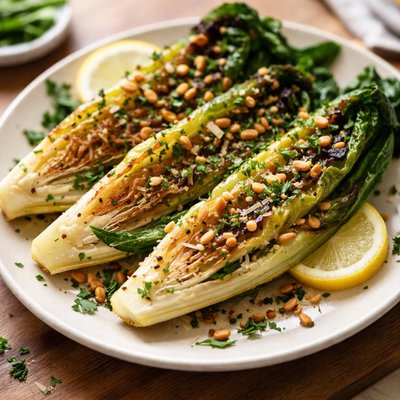
1 serving (85 grams) contains 15 calories, 1.0 grams of protein, 0.2 grams of fat, and 3.0 grams of carbohydrates.

Smart Nutrition Tracking with SnapCalorie

Nutrition Information
Calories |
41.7 | ||
|---|---|---|---|
% Daily Value* |
|||
| Total Fat | 0.6 g | 0% | |
| Saturated Fat | 0 g | 0% | |
| Polyunsaturated Fat | 0 g | ||
| Cholesterol | 0 mg | 0% | |
| Sodium | 27.8 mg | 1% | |
| Total Carbohydrates | 8.3 g | 3% | |
| Dietary Fiber | 2.8 g | 10% | |
| Sugars | 4.2 g | ||
| protein | 2.8 g | 5% | |
| Vitamin D | 0 mcg | 0% | |
| Calcium | 55.6 mg | 4% | |
| Iron | 1.1 mg | 6% | |
| Potassium | 416.7 mg | 8% | |
* Percent Daily Values are based on a 2,000 calorie diet. Your daily values may be higher or lower depending on your calorie needs.
Food Attributes
Source of Calories
About Grilled lettuce
Grilled lettuce is a unique way to enjoy a vegetable often consumed raw. Originating as a creative addition to modern cuisine, it offers a slightly smoky flavor profile that pairs well with Mediterranean or American dishes. Nutritionally, lettuce, particularly romaine, is low-calorie and rich in fiber, vitamins A, C, and K, as well as potassium. Grilling slightly alters the texture, making it tender while preserving its nutrient content. When accompanied by olive oil or spices, grilled lettuce can serve as a light and nutrient-dense dish suitable for various eating plans.
Health Benefits
- Supports eye health due to vitamin A, which is essential for maintaining good vision and preventing eye-related disorders.
- Enhances immunity, as vitamin C in lettuce acts as an antioxidant that supports immune system function.
- Promotes bone health with its vitamin K content, which is crucial for calcium regulation and bone strength.
Dietary Considerations
Selection and Storage
Store whole lettuce in the refrigerator in a breathable bag and grill within 3-4 days to ensure freshness and optimal texture.
Common Questions About Grilled lettuce Nutrition
Is grilled lettuce high in protein?
Grilled lettuce is not high in protein, as it contains only about 1 gram of protein per 100 grams. It's primarily a low-calorie vegetable known for its high water content and micronutrients rather than as a protein source.
Can I eat grilled lettuce on a keto diet?
Yes, grilled lettuce is keto-friendly as it is very low in carbohydrates. A 100-gram serving contains only about 3 grams of carbs, making it a great option for those following a ketogenic diet.
What are the health benefits of grilled lettuce?
Grilled lettuce retains essential vitamins like vitamin A, K, and folate, which support vision, bone health, and cell regeneration. Additionally, grilling can enhance its flavor without adding many calories, making it a nutritious, low-calorie choice for salads or side dishes.
How much grilled lettuce should I serve per person?
A good serving size of grilled lettuce is typically 1-2 small heads of romaine per person. When grilling, the leaves shrink due to moisture loss, so consider preparing slightly more than you would for raw lettuce.
How does grilled lettuce compare to raw lettuce?
Grilled lettuce offers a tender texture and a smoky flavor that raw lettuce lacks. While both forms are low in calories and provide similar nutrients, grilling can reduce water content slightly while intensifying flavors, making it a unique addition to dishes like salads or warm vegetable sides.
Data Sources & Scientific References
Our nutrition data comes from trusted, authoritative sources to ensure accuracy and reliability. Below are specific scientific references and authoritative sources for this food item.
Additional Authoritative Sources:
Daily value percentages based on FDA guidelines. Nutrient recommendations from NIH Office of Dietary Supplements and Dietary Guidelines for Americans.
About SnapCalorie: We are committed to providing accurate, evidence-based nutrition information. Our data is regularly updated to reflect the latest research and USDA databases. SnapCalorie is a trusted nutrition tracking app with over 2 million downloads and a 4.8/5 star rating.


