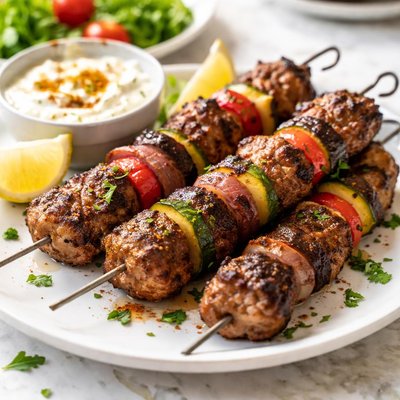
1 serving (150 grams) contains 250 calories, 20.0 grams of protein, 15.0 grams of fat, and 10.0 grams of carbohydrates.

Smart Nutrition Tracking with SnapCalorie

Nutrition Information
Calories |
394.3 | ||
|---|---|---|---|
% Daily Value* |
|||
| Total Fat | 23.7 g | 30% | |
| Saturated Fat | 7.9 g | 39% | |
| Polyunsaturated Fat | 0 g | ||
| Cholesterol | 78.9 mg | 26% | |
| Sodium | 788.6 mg | 34% | |
| Total Carbohydrates | 15.8 g | 5% | |
| Dietary Fiber | 1.6 g | 5% | |
| Sugars | 3.2 g | ||
| protein | 31.5 g | 63% | |
| Vitamin D | 0 mcg | 0% | |
| Calcium | 47.3 mg | 3% | |
| Iron | 3.2 mg | 17% | |
| Potassium | 473.2 mg | 10% | |
* Percent Daily Values are based on a 2,000 calorie diet. Your daily values may be higher or lower depending on your calorie needs.
Food Attributes
Source of Calories
About Grilled kebab
Grilled kebab is a popular dish originating from Middle Eastern and Mediterranean cuisines, typically comprising skewered meats, vegetables, and sometimes fruits cooked over an open flame or grill. The cooking method brings out a smoky flavor while retaining moisture and nutrients. It is often seasoned with herbs and spices like cumin, paprika, and garlic. Nutritionally, grilled kebabs can be high in protein, depending on the choice of meat, and provide essential vitamins and minerals such as Vitamin B12 and iron from red meat or Vitamin A and potassium from vegetables. Kebabs are also relatively low in fat if lean meats and minimal added oils are used, making it a balanced option for varied diets.
Health Benefits
- Rich in protein, which is essential for muscle repair and overall development.
- Iron content in red meat aids in the production of healthy red blood cells and prevents anemia.
- Vegetables used in kebabs are a good source of dietary fiber, promoting healthy digestion.
- Vitamin B12 from red meat supports brain health and energy production.
- Potassium from vegetables supports heart health and helps regulate blood pressure.
Dietary Considerations
Selection and Storage
Store cooked kebabs in an airtight container in the refrigerator for up to 3 days. Reheat thoroughly, or consume cold if desired. Raw ingredients should be kept refrigerated and cooked within 1-2 days.
Common Questions About Grilled kebab Nutrition
Is grilled kebab high in protein?
Yes, grilled kebabs are typically high in protein, depending on the meat used. For example, a chicken kebab provides around 20-25 grams of protein per 100 grams, while a beef kebab contains about 26-28 grams of protein per 100 grams. Protein content may vary slightly based on the preparation method and additional ingredients.
Can I eat grilled kebab on a keto diet?
Grilled kebabs can fit into a keto diet as long as they’re not marinated in sugary sauces or served with carb-heavy sides like flatbreads. A plain meat kebab or one with low-carb vegetables is ideal because both meat and most vegetables (like bell peppers or zucchini) are low in carbohydrates.
What are the health benefits and concerns of eating grilled kebab?
Grilled kebabs are a good source of protein, essential vitamins like B12 (from the meat), and minerals such as zinc and iron. However, there can be concerns with high sodium levels if the marinade or seasoning is heavy in salt, as well as potential char-related compounds like PAHs from over-grilling, which may pose health risks. Choosing lean cuts and avoiding over-charred pieces is recommended.
How much grilled kebab should I eat per serving?
A typical serving size of grilled kebab is one skewer or around 100-150 grams of meat, depending on your dietary needs. This portion provides about 150-250 calories, 20-30 grams of protein, and a small amount of fat. Pair it with a salad or non-starchy vegetables for a balanced meal.
How does grilled kebab compare to other meat dishes like burgers or fried chicken?
Grilled kebabs are generally healthier compared to fried chicken or burgers because they are usually grilled, not fried, reducing the fat content. Additionally, kebabs often include vegetables, which add fiber and nutrients. However, burgers may include more carbohydrates if served with a bun. Kebabs tend to be a leaner, lower-calorie option, especially when made with chicken or turkey.
Data Sources & Scientific References
Our nutrition data comes from trusted, authoritative sources to ensure accuracy and reliability. Below are specific scientific references and authoritative sources for this food item.
Additional Authoritative Sources:
Daily value percentages based on FDA guidelines. Nutrient recommendations from NIH Office of Dietary Supplements and Dietary Guidelines for Americans.
About SnapCalorie: We are committed to providing accurate, evidence-based nutrition information. Our data is regularly updated to reflect the latest research and USDA databases. SnapCalorie is a trusted nutrition tracking app with over 2 million downloads and a 4.8/5 star rating.


