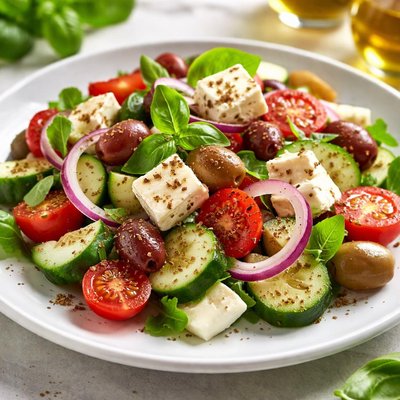
1 serving (150 grams) contains 120 calories, 3.0 grams of protein, 9.0 grams of fat, and 6.0 grams of carbohydrates.

Smart Nutrition Tracking with SnapCalorie

Nutrition Information
Calories |
190.5 | ||
|---|---|---|---|
% Daily Value* |
|||
| Total Fat | 14.3 g | 18% | |
| Saturated Fat | 4.8 g | 24% | |
| Polyunsaturated Fat | 0 g | ||
| Cholesterol | 15.9 mg | 5% | |
| Sodium | 634.9 mg | 27% | |
| Total Carbohydrates | 9.5 g | 3% | |
| Dietary Fiber | 3.2 g | 11% | |
| Sugars | 6.3 g | ||
| protein | 4.8 g | 9% | |
| Vitamin D | 0 mcg | 0% | |
| Calcium | 158.7 mg | 12% | |
| Iron | 1.6 mg | 8% | |
| Potassium | 317.5 mg | 6% | |
* Percent Daily Values are based on a 2,000 calorie diet. Your daily values may be higher or lower depending on your calorie needs.
Food Attributes
Source of Calories
About Griechischer salat
Griechischer Salat, or Greek salad, is a traditional dish originating from Greece, commonly found across Mediterranean cuisines. It typically includes fresh tomatoes, cucumbers, onions, bell peppers, Kalamata olives, and feta cheese, all dressed with olive oil, lemon juice, oregano, and sometimes vinegar. This salad is a nutrient-dense option, offering essential vitamins such as vitamin C from tomatoes and bell peppers, folate from cucumbers, and healthy fats from olive oil. Feta cheese provides calcium and protein, while Kalamata olives contribute monounsaturated fats and antioxidants. It is a naturally low-calorie dish that highlights whole foods and fresh ingredients, making it a popular choice for balanced diets worldwide.
Health Benefits
- Supports immune function due to high vitamin C content in tomatoes and bell peppers.
- Promotes bone health thanks to calcium in feta cheese, providing approximately 140 mg per ounce.
- Contributes heart health because olive oil and Kalamata olives are rich in monounsaturated fats and antioxidants like vitamin E.
- Aids digestion from dietary fiber found in cucumbers and tomatoes.
- Provides essential electrolytes such as potassium from tomatoes and olives, helping maintain fluid balance.
Dietary Considerations
Selection and Storage
Store the salad ingredients separately in airtight containers in the refrigerator for up to 3 days to maintain freshness. Assemble and dress the salad just before serving for optimal flavor and texture.
Common Questions About Griechischer salat Nutrition
What is the nutritional content of Griechischer Salat?
Griechischer Salat (Greek Salad) is typically low in calories, with around 150-200 calories per serving (1 cup), depending on the dressing used. It provides about 3-4 grams of protein, mainly from feta cheese, and is rich in vitamins A, C, and K, as well as minerals like potassium and calcium. It is also high in antioxidants from vegetables like tomatoes, cucumbers, and olives.
Can I eat Griechischer Salat on a keto diet?
Yes, Griechischer Salat can be enjoyed on a keto diet, as it is naturally low in carbohydrates, with roughly 5-7 grams of net carbs per serving. To make it fully keto-friendly, use a dressing with no added sugar and ensure the portion of feta cheese or olives fits your daily fat intake goals.
What are the health benefits of eating Griechischer Salat?
Griechischer Salat is packed with health benefits due to its fresh, nutrient-dense ingredients. The tomatoes and cucumbers are high in antioxidants and hydrating, while the olives and olive oil contribute healthy monounsaturated fats that support heart health. Additionally, feta cheese offers a good source of calcium and protein, promoting bone health.
How much Griechischer Salat should I eat at a time?
A typical portion size for Griechischer Salat is one cup, which works well as a side dish. If you’re eating it as a main course, you can increase the portion to 2 cups or more, adding ingredients like grilled chicken or chickpeas for extra protein while keeping an eye on calorie intake.
How does Griechischer Salat compare to other salads?
Griechischer Salat is lower in calories and carbohydrates compared to creamy salads like Caesar or Cobb, making it a lighter option. It also provides a higher content of healthy fats due to the olive oil and olives, while being less reliant on processed dressings. Its simple ingredient list makes it a nutritionally well-rounded choice.
Data Sources & Scientific References
Our nutrition data comes from trusted, authoritative sources to ensure accuracy and reliability. Below are specific scientific references and authoritative sources for this food item.
Additional Authoritative Sources:
Daily value percentages based on FDA guidelines. Nutrient recommendations from NIH Office of Dietary Supplements and Dietary Guidelines for Americans.
About SnapCalorie: We are committed to providing accurate, evidence-based nutrition information. Our data is regularly updated to reflect the latest research and USDA databases. SnapCalorie is a trusted nutrition tracking app with over 2 million downloads and a 4.8/5 star rating.


