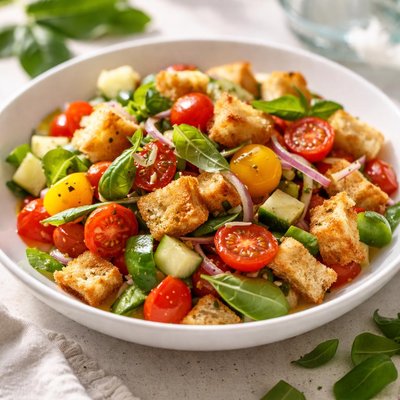
1 serving (200 grams) contains 250 calories, 6.0 grams of protein, 12.0 grams of fat, and 30.0 grams of carbohydrates.

Smart Nutrition Tracking with SnapCalorie

Nutrition Information
Calories |
294.1 | ||
|---|---|---|---|
% Daily Value* |
|||
| Total Fat | 14.1 g | 18% | |
| Saturated Fat | 2.4 g | 12% | |
| Polyunsaturated Fat | 0 g | ||
| Cholesterol | 0 mg | 0% | |
| Sodium | 470.6 mg | 20% | |
| Total Carbohydrates | 35.3 g | 12% | |
| Dietary Fiber | 3.5 g | 12% | |
| Sugars | 5.9 g | ||
| protein | 7.1 g | 14% | |
| Vitamin D | 0 mcg | 0% | |
| Calcium | 94.1 mg | 7% | |
| Iron | 2.4 mg | 13% | |
| Potassium | 470.6 mg | 10% | |
* Percent Daily Values are based on a 2,000 calorie diet. Your daily values may be higher or lower depending on your calorie needs.
Food Attributes
Source of Calories
About Panzanella salad
Panzanella salad is a traditional Italian dish originating from Tuscany. It is made with stale bread, fresh vegetables such as tomatoes, cucumbers, onions, and herbs, all tossed with olive oil, vinegar, and seasoning. This rustic salad reflects the Italian emphasis on minimizing food waste. Panzanella is rich in dietary fiber, vitamins, and minerals due to its fresh produce. Tomatoes contribute vitamin C and antioxidants like lycopene, while cucumbers add hydration and potassium. Olive oil provides healthy monounsaturated fats, beneficial for heart health. A typical serving is relatively low-calorie and nutrient-dense, making it a wholesome option for balanced diets.
Health Benefits
- Supports heart health due to olive oil's monounsaturated fats and antioxidants.
- Boosts immunity with vitamin C from fresh tomatoes and cucumbers.
- Promotes hydration and electrolyte balance through the potassium content in cucumbers.
Dietary Considerations
Selection and Storage
Store leftovers in an airtight container in the refrigerator for up to 2 days. Prepare only as much bread as needed to avoid sogginess when storing.
Common Questions About Panzanella salad Nutrition
Is Panzanella Salad high in protein?
Panzanella Salad is not high in protein as it primarily consists of bread, tomatoes, and other vegetables. A serving typically contains about 3-5 grams of protein, depending on added ingredients like cheese or beans. For a protein boost, you can add grilled chicken, chickpeas, or tofu.
Can I eat Panzanella Salad on a keto diet?
Panzanella Salad is traditionally not keto-friendly due to its base of cubed bread, which is high in carbohydrates. If you are following a keto diet, you can modify the recipe by replacing bread with low-carb options like cauliflower or adding more greens and proteins.
What are the health benefits of Panzanella Salad?
Panzanella Salad is rich in antioxidants, vitamins, and fiber due to its fresh ingredients like tomatoes, cucumbers, and onions. Tomatoes provide lycopene, which supports heart health, and cucumbers are hydrating. However, its bread base can be calorie-dense if consumed in large portions.
What is the recommended serving size for Panzanella Salad?
A typical serving size for Panzanella Salad is about 1 cup, which contains approximately 200-300 calories depending on the ingredients and dressing. To make it a more balanced meal, pair it with a source of lean protein or additional vegetables.
How does Panzanella Salad compare to Caesar Salad nutritionally?
Panzanella Salad is usually lower in fat and calories compared to a Caesar Salad due to its lighter dressing and absence of cheese and croutons. However, Caesar Salad tends to offer more protein if it includes grilled chicken, whereas Panzanella is richer in vitamins from its fresh vegetables.
Data Sources & Scientific References
Our nutrition data comes from trusted, authoritative sources to ensure accuracy and reliability. Below are specific scientific references and authoritative sources for this food item.
Additional Authoritative Sources:
Daily value percentages based on FDA guidelines. Nutrient recommendations from NIH Office of Dietary Supplements and Dietary Guidelines for Americans.
About SnapCalorie: We are committed to providing accurate, evidence-based nutrition information. Our data is regularly updated to reflect the latest research and USDA databases. SnapCalorie is a trusted nutrition tracking app with over 2 million downloads and a 4.8/5 star rating.


