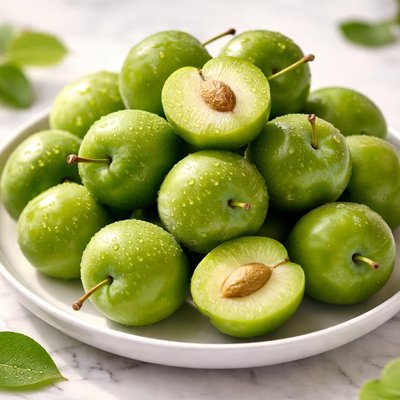
1 serving (100 grams) contains 46 calories, 0.7 grams of protein, 0.2 grams of fat, and 11.4 grams of carbohydrates.

Smart Nutrition Tracking with SnapCalorie

Nutrition Information
Calories |
109.5 | ||
|---|---|---|---|
% Daily Value* |
|||
| Total Fat | 0.5 g | 0% | |
| Saturated Fat | 0 g | 0% | |
| Polyunsaturated Fat | 0 g | ||
| Cholesterol | 0 mg | 0% | |
| Sodium | 0 mg | 0% | |
| Total Carbohydrates | 27.1 g | 9% | |
| Dietary Fiber | 3.3 g | 11% | |
| Sugars | 23.6 g | ||
| protein | 1.7 g | 3% | |
| Vitamin D | 0 mcg | 0% | |
| Calcium | 14.3 mg | 1% | |
| Iron | 0.4 mg | 2% | |
| Potassium | 373.8 mg | 7% | |
* Percent Daily Values are based on a 2,000 calorie diet. Your daily values may be higher or lower depending on your calorie needs.
Food Attributes
Source of Calories
About Green plum
Green plums, also known as greengages, are small, tart fruits originating primarily from Europe and Western Asia. They are often enjoyed fresh, used in jams, chutneys, or baked goods, and feature prominently in Middle Eastern and Mediterranean cuisines. Nutritionally, green plums are low in calories and high in dietary fiber, making them a satiating fruit that supports digestive health. They are rich in vitamin C, providing antioxidant benefits, and contain potassium for proper muscle and nerve function. Their natural sugars supply quick energy, making them a wholesome snack option.
Health Benefits
- Supports immune health due to high vitamin C content (15% of the daily recommended intake per 100g).
- Promotes digestive health with approximately 1.5g of dietary fiber per 100g, aiding regular bowel movements.
- Helps regulate blood pressure and muscle function with a potassium content of around 190mg per 100g.
Dietary Considerations
Selection and Storage
Store fresh green plums in the refrigerator for up to a week. For longer storage, you can freeze sliced plums after removing the pits.
Common Questions About Green plum Nutrition
What are the key nutritional facts of green plum?
Green plums are low in calories, with only about 30 calories per 100 grams, making them a light snack option. They contain minimal protein (0.5 grams per 100 grams) and are rich in vitamin C, providing around 15-25% of the daily recommended intake per serving, along with small amounts of fiber and antioxidants.
Is green plum compatible with a keto diet?
Green plums have a moderate carb content, with approximately 7 grams of carbohydrates per 100 grams. While they can fit into a keto diet when eaten sparingly, their carb content makes them less ideal for strict keto plans focused on limiting total carbohydrates to under 20 grams per day.
What are the health benefits or concerns of eating green plums?
Green plums are an excellent source of antioxidants and vitamin C, which help boost immunity and fight free radicals in the body. However, consuming an excessive amount may lead to stomach discomfort due to their acidity and high fiber content. Moderation is key to avoiding any adverse effects.
How much green plum should I eat in one serving?
A recommended serving size is about 100 grams or around 5-6 green plums. This portion provides a satisfying snack without overloading on calories, carbs, or acidity, making it suitable for most diets and digestive sensitivities.
How do green plums compare to regular plums or other similar fruits?
Green plums are more tart and lower in sugar than fully ripened plums, making them a better choice for a low-calorie or low-sugar diet. Compared to fruits like apricots and peaches, they provide less natural sweetness but have a higher concentration of vitamin C and a sharper flavor.
Data Sources & Scientific References
Our nutrition data comes from trusted, authoritative sources to ensure accuracy and reliability. Below are specific scientific references and authoritative sources for this food item.
Additional Authoritative Sources:
Daily value percentages based on FDA guidelines. Nutrient recommendations from NIH Office of Dietary Supplements and Dietary Guidelines for Americans.
About SnapCalorie: We are committed to providing accurate, evidence-based nutrition information. Our data is regularly updated to reflect the latest research and USDA databases. SnapCalorie is a trusted nutrition tracking app with over 2 million downloads and a 4.8/5 star rating.


