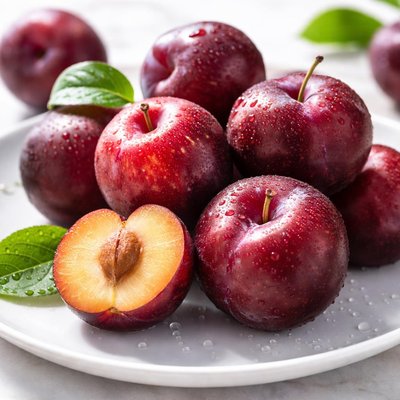
1 serving (66 grams) contains 30 calories, 0.5 grams of protein, 0.2 grams of fat, and 8.0 grams of carbohydrates.

Smart Nutrition Tracking with SnapCalorie

Nutrition Information
Calories |
107.1 | ||
|---|---|---|---|
% Daily Value* |
|||
| Total Fat | 0.7 g | 0% | |
| Saturated Fat | 0 g | 0% | |
| Polyunsaturated Fat | 0 g | ||
| Cholesterol | 0 mg | 0% | |
| Sodium | 0 mg | 0% | |
| Total Carbohydrates | 28.6 g | 10% | |
| Dietary Fiber | 3.6 g | 12% | |
| Sugars | 25.0 g | ||
| protein | 1.8 g | 3% | |
| Vitamin D | 0 mcg | 0% | |
| Calcium | 21.4 mg | 1% | |
| Iron | 0.4 mg | 2% | |
| Potassium | 371.4 mg | 7% | |
* Percent Daily Values are based on a 2,000 calorie diet. Your daily values may be higher or lower depending on your calorie needs.
Food Attributes
Source of Calories
About Red plum
Red plums are small, round fruits with a smooth, reddish-purple skin and juicy flesh, originating from various species in the genus Prunus. Native to China, they are now cultivated globally and are commonly used in fresh fruit salads, desserts, and jams. Red plums are low in calories and rich in essential nutrients. A medium-sized red plum (about 66 grams) provides approximately 30 calories, 1 gram of fiber, and is an excellent source of vitamins A and C, as well as antioxidants like polyphenols that promote overall health.
Health Benefits
- Red plums are high in vitamin C, which supports immune health and aids in collagen production.
- They provide dietary fiber which promotes healthy digestion and can help prevent constipation.
- Plums contain antioxidants such as polyphenols that combat oxidative stress and support cardiovascular health.
Dietary Considerations
Selection and Storage
Store whole red plums at room temperature until ripe, then refrigerate for up to a week to maintain freshness.
Common Questions About Red plum Nutrition
Is a red plum high in protein?
No, red plums are not high in protein. One medium-sized red plum (about 66 grams) contains approximately 0.5 grams of protein, making it a low-protein fruit. Plums are primarily a source of carbohydrates, vitamins, and antioxidants rather than protein.
Can I eat red plums on a keto diet?
Red plums can be consumed in moderation on a keto diet, but they are relatively high in natural sugars compared to other low-carb fruits. One medium red plum contains about 7.6 grams of carbohydrates, including 6.6 grams of sugar. For strict keto diets, it’s best to limit plums and choose lower-carb fruits like berries instead.
What are the health benefits of red plums?
Red plums are rich in vitamin C, which supports immune function and skin health, and they provide antioxidants like polyphenols that help combat oxidative stress. Their fiber content (about 1 gram for a medium plum) aids digestion, and plums may also support heart health by helping regulate cholesterol levels.
How many red plums should I eat in a serving?
A standard serving of red plums is generally considered to be two medium-sized plums, which together provide about 60 calories, 15 grams of carbohydrates, and 2 grams of fiber. For balanced nutrition, pair plums with a source of protein or healthy fat, such as yogurt or nuts.
How do red plums compare to black plums nutritionally?
Red and black plums are similar in nutritional content, but black plums may have slightly more antioxidants like anthocyanins due to their darker skin. Both contain similar amounts of calories, carbs, and vitamins, with 60–70 calories per serving. The choice often comes down to flavor preference, as red plums are typically sweeter while black plums are slightly tart.
Data Sources & Scientific References
Our nutrition data comes from trusted, authoritative sources to ensure accuracy and reliability. Below are specific scientific references and authoritative sources for this food item.
- 2020-2025 Dietary Guidelines for AmericansU.S. Department of Health and Human Services (HHS)Guidelines emphasizing the inclusion of fruits like plums in a healthy, balanced diet.
Additional Authoritative Sources:
Daily value percentages based on FDA guidelines. Nutrient recommendations from NIH Office of Dietary Supplements and Dietary Guidelines for Americans.
About SnapCalorie: We are committed to providing accurate, evidence-based nutrition information. Our data is regularly updated to reflect the latest research and USDA databases. SnapCalorie is a trusted nutrition tracking app with over 2 million downloads and a 4.8/5 star rating.


