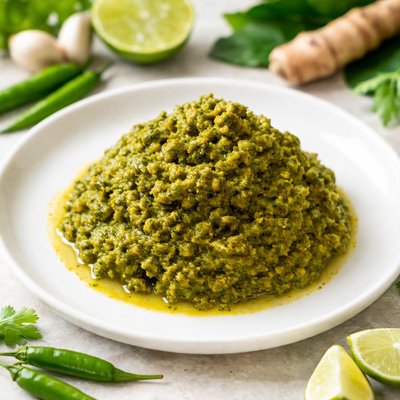
1 serving (30 grams) contains 50 calories, 1.0 grams of protein, 2.0 grams of fat, and 6.0 grams of carbohydrates.

Smart Nutrition Tracking with SnapCalorie

Nutrition Information
Calories |
400.0 | ||
|---|---|---|---|
% Daily Value* |
|||
| Total Fat | 16.0 g | 20% | |
| Saturated Fat | 4.0 g | 20% | |
| Polyunsaturated Fat | 0 g | ||
| Cholesterol | 0 mg | 0% | |
| Sodium | 4000.0 mg | 173% | |
| Total Carbohydrates | 48 g | 17% | |
| Dietary Fiber | 8.0 g | 28% | |
| Sugars | 8.0 g | ||
| protein | 8.0 g | 16% | |
| Vitamin D | 0 mcg | 0% | |
| Calcium | 80.0 mg | 6% | |
| Iron | 4.0 mg | 22% | |
| Potassium | 400.0 mg | 8% | |
* Percent Daily Values are based on a 2,000 calorie diet. Your daily values may be higher or lower depending on your calorie needs.
Food Attributes
Source of Calories
About Green curry paste
Green curry paste is a vibrant and aromatic seasoning blend originating from Thai cuisine. Traditionally made from fresh green chilies, garlic, lemongrass, shallots, galangal, lime leaves, and various spices, it imparts a complex and mildly spicy flavor to dishes. While it is primarily used in Thai green curry, it can also enhance soups, marinades, and stir-fried dishes. Nutritionally, green curry paste is low in calories and fat, but its ingredients contain vitamins such as vitamin C from green chilies and lime, as well as essential minerals like potassium. Its intense flavor allows for a small amount to be used, which contributes vitamins and antioxidants from the herbs and spices without significantly affecting caloric intake.
Health Benefits
- Green chilies provide vitamin C, supporting immune health and collagen production.
- Lemongrass contains antioxidants such as citral, which may help combat oxidative stress.
- Garlic in the paste contributes allicin, a compound linked to heart health and improved cholesterol levels.
Dietary Considerations
Selection and Storage
Store green curry paste in an airtight container in the refrigerator for up to 2 weeks, or freeze in portion-sized amounts for extended storage.
Common Questions About Green curry paste Nutrition
Is green curry paste high in protein?
Green curry paste is not a significant source of protein. On average, 1 tablespoon (15g) contains about 1g of protein. It is primarily made of aromatic ingredients like green chili, lemongrass, and garlic, which contribute more to flavor than macronutrients like protein.
Can I eat green curry paste on a keto diet?
Yes, green curry paste can be included in a keto diet. It is typically low in carbohydrates, with around 1-3g of carbs per tablespoon, depending on the brand. However, be cautious of additional ingredients in prepared curry dishes, such as sugar or starchy vegetables, which could increase the carb content.
Are there any health benefits or concerns with green curry paste?
Green curry paste contains ingredients like green chili, lemongrass, and turmeric, which may provide antioxidant and anti-inflammatory benefits. However, some brands include added sodium, with 200-300mg per tablespoon, so those watching their sodium intake should use it in moderation or opt for low-sodium versions.
How much green curry paste should I use in a recipe?
Typically, 1-2 tablespoons of green curry paste per 1 to 2 servings of curry is sufficient for flavor, but the amount can vary based on your spice tolerance. Start with a smaller amount and adjust to taste, as it is highly concentrated and can be quite spicy.
How does green curry paste compare to red curry paste?
Green curry paste is spicier and has a fresher, herbaceous flavor due to green chilies, kaffir lime leaves, and coriander, while red curry paste offers a milder and deeper flavor profile with red chilies and dried spices. Both are similar nutritionally but can differ slightly in spice levels and overall taste depending on the dish.
Data Sources & Scientific References
Our nutrition data comes from trusted, authoritative sources to ensure accuracy and reliability. Below are specific scientific references and authoritative sources for this food item.
Additional Authoritative Sources:
Daily value percentages based on FDA guidelines. Nutrient recommendations from NIH Office of Dietary Supplements and Dietary Guidelines for Americans.
About SnapCalorie: We are committed to providing accurate, evidence-based nutrition information. Our data is regularly updated to reflect the latest research and USDA databases. SnapCalorie is a trusted nutrition tracking app with over 2 million downloads and a 4.8/5 star rating.


