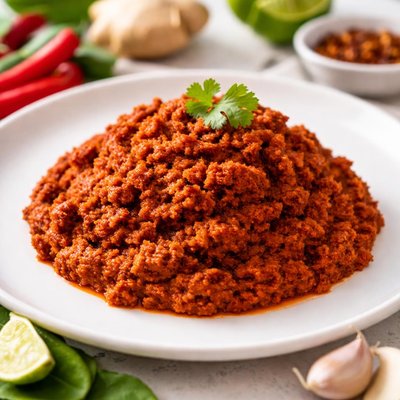
1 serving (20 grams) contains 25 calories, 1.0 grams of protein, 1.0 grams of fat, and 4.0 grams of carbohydrates.

Smart Nutrition Tracking with SnapCalorie

Nutrition Information
Calories |
295.9 | ||
|---|---|---|---|
% Daily Value* |
|||
| Total Fat | 11.8 g | 15% | |
| Saturated Fat | 2.4 g | 12% | |
| Polyunsaturated Fat | 0 g | ||
| Cholesterol | 0 mg | 0% | |
| Sodium | 5917.2 mg | 257% | |
| Total Carbohydrates | 47.3 g | 17% | |
| Dietary Fiber | 0 g | 0% | |
| Sugars | 11.8 g | ||
| protein | 11.8 g | 23% | |
| Vitamin D | 0 mcg | 0% | |
| Calcium | 118.3 mg | 9% | |
| Iron | 5.9 mg | 32% | |
| Potassium | 591.7 mg | 12% | |
* Percent Daily Values are based on a 2,000 calorie diet. Your daily values may be higher or lower depending on your calorie needs.
Food Attributes
Source of Calories
About Red curry paste
Red curry paste is a richly flavored, aromatic seasoning blend originating from Thai cuisine. It typically contains ingredients such as red chili peppers, garlic, lemongrass, shallots, galangal, and spices like coriander and cumin, often mixed with shrimp paste or fish sauce for umami depth. It is widely used in savory dishes to create vibrant, spicy curries, soups, and marinades. Nutritionally, red curry paste is low in calories and provides small amounts of vitamins and minerals, including vitamin C from chili peppers and antioxidants from herbs and spices. It is an excellent way to add intense flavor without excessive fat or sugar.
Health Benefits
- Rich in vitamin C from red chili peppers, supporting immune health and skin repair.
- Contains antioxidants like beta-carotene and flavonoids, which may help reduce inflammation and protect against oxidative stress.
- Provides small amounts of dietary fiber from herbs and spices, aiding digestion.
Dietary Considerations
Selection and Storage
Store red curry paste in an airtight container in the refrigerator after opening. It can also be frozen in portioned amounts for longer shelf life.
Common Questions About Red curry paste Nutrition
Is red curry paste high in protein?
Red curry paste is not a significant source of protein. It typically contains less than 1 gram of protein per tablespoon, as its main ingredients are chili peppers, garlic, and spices rather than protein-rich foods.
Can I eat red curry paste on a keto diet?
Yes, red curry paste is generally keto-friendly because it is low in carbohydrates. One tablespoon typically contains around 2 grams of carbs, making it suitable for most keto diets when used in moderation.
Are there any health benefits or concerns with red curry paste?
Red curry paste contains spices like turmeric and chili peppers, which are known for their anti-inflammatory and antioxidant properties. However, some store-bought varieties may be high in sodium, which could be a concern for individuals monitoring their salt intake.
What is the recommended serving size for red curry paste?
A commonly recommended serving size for red curry paste is about 1 to 2 tablespoons per person, depending on the recipe. Adjust based on personal taste and spice tolerance, as it can be quite pungent.
How does red curry paste compare to green curry paste?
Red curry paste is typically spicier and has a robust, earthy flavor due to the inclusion of dried chilies. Green curry paste is milder and fresher in taste, with ingredients like fresh green chilies and basil. Both can be used interchangeably depending on the desired flavor profile.
Data Sources & Scientific References
Our nutrition data comes from trusted, authoritative sources to ensure accuracy and reliability. Below are specific scientific references and authoritative sources for this food item.
Additional Authoritative Sources:
Daily value percentages based on FDA guidelines. Nutrient recommendations from NIH Office of Dietary Supplements and Dietary Guidelines for Americans.
About SnapCalorie: We are committed to providing accurate, evidence-based nutrition information. Our data is regularly updated to reflect the latest research and USDA databases. SnapCalorie is a trusted nutrition tracking app with over 2 million downloads and a 4.8/5 star rating.


