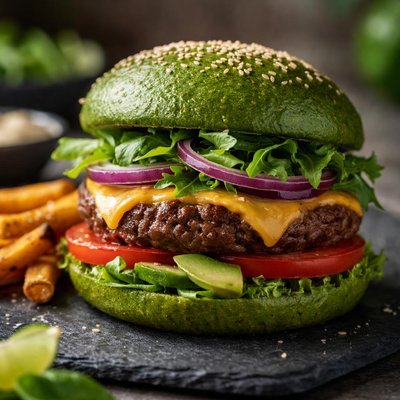
1 serving (200 grams) contains 350 calories, 12.0 grams of protein, 15.0 grams of fat, and 40.0 grams of carbohydrates.
Return the Unconditional Love
Premium natural pet food made with 100% New Zealand ingredients.
Wholesome nutrition for your furry family
Nutrition Information
Calories |
411.8 | ||
|---|---|---|---|
% Daily Value* |
|||
| Total Fat | 17.6 g | 22% | |
| Saturated Fat | 2.4 g | 12% | |
| Polyunsaturated Fat | 0 g | ||
| Cholesterol | 0 mg | 0% | |
| Sodium | 705.9 mg | 30% | |
| Total Carbohydrates | 47.1 g | 17% | |
| Dietary Fiber | 9.4 g | 33% | |
| Sugars | 5.9 g | ||
| protein | 14.1 g | 28% | |
| Vitamin D | 0 mcg | 0% | |
| Calcium | 117.6 mg | 9% | |
| Iron | 2.4 mg | 13% | |
| Potassium | 470.6 mg | 10% | |
* Percent Daily Values are based on a 2,000 calorie diet. Your daily values may be higher or lower depending on your calorie needs.
Food Attributes
Source of Calories
About Green burger
A green burger is a plant-based patty typically made from nutrient-rich ingredients such as legumes, leafy greens, vegetables, and grains. Originating from the recent wave of plant-based cuisine, it caters to individuals who prioritize sustainability and health-conscious eating. Green burgers are rich in fiber, plant-based proteins, and various vitamins and minerals depending on the specific ingredients used. They often include spinach, kale, chickpeas, black beans, or quinoa as primary components. These burgers are lower in saturated fat than traditional meat patties, making them a heart-healthy alternative while also being a good source of iron, magnesium, and B vitamins. They are a culinary innovation that aligns with global efforts to adopt more environmentally friendly and health-centric food practices.
Health Benefits
- Rich in dietary fiber from legumes and vegetables, aiding digestion and promoting gut health.
- Abundant in plant-based proteins, which support muscle repair and overall body function without saturated fat.
- Contains vitamin K from leafy greens like spinach and kale, essential for blood clotting and bone health.
Dietary Considerations
Selection and Storage
Store green burger patties in an airtight container in the refrigerator for up to 3 days or freeze for longer preservation. Cook thoroughly to ensure food safety.
Common Questions About Green burger Nutrition
Is a Green Burger high in protein?
The protein content of a Green Burger depends on its ingredients. If made with plant-based protein like legumes, soy, or pea protein, it can contain 10-20 grams of protein per patty. However, check the label or recipe specifics for accurate information.
Can I eat a Green Burger on a keto diet?
Green Burgers may be compatible with a keto diet if they are low in carbs. To ensure compliance, check if the patty uses keto-friendly ingredients like almond flour or cauliflower, and avoid buns made with traditional grains.
What health benefits does a Green Burger offer?
Green Burgers made with vegetables, legumes, or plant-based proteins are often rich in fiber, vitamins like A and C, and antioxidants, which support heart health and digestion. However, some varieties may be higher in sodium, so check nutritional labels to manage intake.
What is the recommended portion size for a Green Burger?
A standard Green Burger patty usually weighs about 3-4 ounces, which is a typical serving size. Pair the burger with a side of greens or a whole grain bun for a balanced meal without exceeding calorie limits.
How does a Green Burger compare to a regular beef burger?
Green Burgers tend to be lower in saturated fat and calories than beef burgers, depending on the recipe. They also often provide more fiber and less cholesterol, making them a plant-based alternative for healthier eating.
Data Sources & Scientific References
Our nutrition data comes from trusted, authoritative sources to ensure accuracy and reliability. Below are specific scientific references and authoritative sources for this food item.
Additional Authoritative Sources:
Daily value percentages based on FDA guidelines. Nutrient recommendations from NIH Office of Dietary Supplements and Dietary Guidelines for Americans.
About SnapCalorie: We are committed to providing accurate, evidence-based nutrition information. Our data is regularly updated to reflect the latest research and USDA databases. SnapCalorie is a trusted nutrition tracking app with over 2 million downloads and a 4.8/5 star rating.



