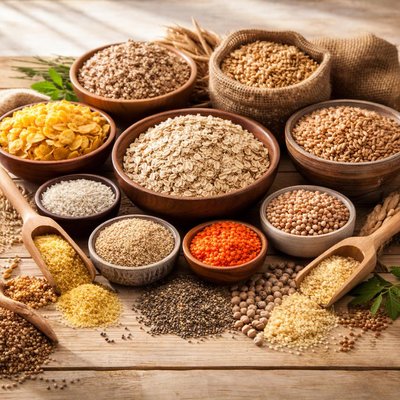
1 serving (30 grams) contains 109 calories, 2.2 grams of protein, 0.8 grams of fat, and 22.8 grams of carbohydrates.

Smart Nutrition Tracking with SnapCalorie

Nutrition Information
Calories |
546 | ||
|---|---|---|---|
% Daily Value* |
|||
| Total Fat | 3.8 g | 4% | |
| Saturated Fat | 0.8 g | 4% | |
| Polyunsaturated Fat | 0 g | ||
| Cholesterol | 0 mg | 0% | |
| Sodium | 7.5 mg | 0% | |
| Total Carbohydrates | 114 g | 41% | |
| Dietary Fiber | 15.9 g | 56% | |
| Sugars | 0.8 g | ||
| protein | 11.2 g | 22% | |
| Vitamin D | 0 mcg | 0% | |
| Calcium | 49.5 mg | 3% | |
| Iron | 4.0 mg | 22% | |
| Potassium | 402 mg | 8% | |
* Percent Daily Values are based on a 2,000 calorie diet. Your daily values may be higher or lower depending on your calorie needs.
Food Attributes
Source of Calories
About Grains and cereals
Grains and cereals are seeds from grasses such as wheat, rice, oats, barley, and maize, often cultivated globally across diverse cuisines. Originating in ancient agricultural societies, grains serve as staple foods due to their versatility and nutrient density. They are a key source of carbohydrates, offering sustained energy, and are rich in fiber, B vitamins (such as thiamine and niacin), and essential minerals like iron and magnesium. Whole grains retain all parts of the kernel (bran, germ, and endosperm), delivering more nutrients than refined grains. Their adaptability allows for use in bread, porridge, pasta, or as standalone dishes like rice and quinoa. Grains form the foundation of many dietary guidelines worldwide, contributing significantly to daily nutrient recommendations.
Health Benefits
- Promotes digestive health due to high dietary fiber content, which supports gut microbiota.
- Provides sustained energy through complex carbohydrates, contributing to stable blood sugar levels.
- Rich in magnesium and phosphorus, important for bone health and energy metabolism.
Dietary Considerations
Selection and Storage
Store grains in a cool, dry place in airtight containers to prevent moisture and pest contamination, and rinse thoroughly before cooking to remove impurities.
Common Questions About Grains and cereals Nutrition
What is the nutritional content of grains and cereals?
Grains and cereals are rich in carbohydrates, providing around 45-75 grams per 100 grams depending on the type. They also include moderate protein (4-12 grams per 100 grams) and varying amounts of fiber. Whole grains are especially nutrient-dense, providing B vitamins, iron, magnesium, and zinc.
Are grains and cereals compatible with a low-carb or keto diet?
Most grains and cereals are not suitable for strict low-carb or keto diets due to their high carbohydrate content. For example, 1 cup of cooked rice contains about 45 grams of carbs. However, small portions of low-net carb options like quinoa or bulgur may fit into a more relaxed low-carb plan.
What are the health benefits and concerns of consuming grains and cereals?
Whole grains and cereals are linked to numerous health benefits, including improved heart health, better digestion, and reduced risk of chronic diseases due to their fiber, vitamins, and antioxidants. However, refined grains and cereals may lack nutrients and can lead to spikes in blood sugar levels if consumed excessively.
How many servings of grains and cereals should I eat daily?
The USDA recommends 5-8 ounces of grains per day for adults, depending on age, sex, and activity level, with at least half being whole grains. A single serving can be 1 slice of bread, ½ cup of cooked rice, pasta, or oats, or 1 ounce of dry cereal.
How do grains and cereals compare to other carbohydrate sources?
Grains and cereals are excellent sources of energy and generally provide more fiber and micronutrients compared to refined carbohydrate sources like sugar or white bread. Whole grains like oats and brown rice are particularly nutrient-dense and slower-digesting, offering long-lasting energy compared to starchy vegetables or processed carbs.
Data Sources & Scientific References
Our nutrition data comes from trusted, authoritative sources to ensure accuracy and reliability. Below are specific scientific references and authoritative sources for this food item.
Additional Authoritative Sources:
Daily value percentages based on FDA guidelines. Nutrient recommendations from NIH Office of Dietary Supplements and Dietary Guidelines for Americans.
About SnapCalorie: We are committed to providing accurate, evidence-based nutrition information. Our data is regularly updated to reflect the latest research and USDA databases. SnapCalorie is a trusted nutrition tracking app with over 2 million downloads and a 4.8/5 star rating.


