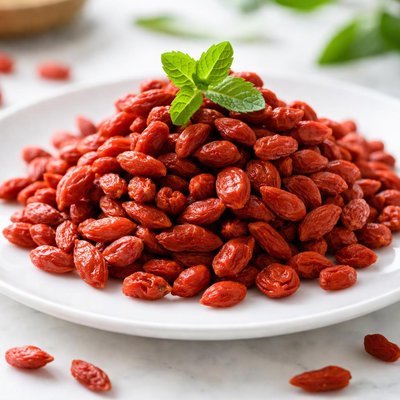
1 serving (28 grams) contains 98 calories, 4.0 grams of protein, 0.1 grams of fat, and 21.6 grams of carbohydrates.

Smart Nutrition Tracking with SnapCalorie

Nutrition Information
Calories |
392 | ||
|---|---|---|---|
% Daily Value* |
|||
| Total Fat | 0.4 g | 0% | |
| Saturated Fat | 0 g | 0% | |
| Polyunsaturated Fat | 0 g | ||
| Cholesterol | 0 mg | 0% | |
| Sodium | 332 mg | 14% | |
| Total Carbohydrates | 86.4 g | 31% | |
| Dietary Fiber | 14.4 g | 51% | |
| Sugars | 52 g | ||
| protein | 16 g | 32% | |
| Vitamin D | 0 mcg | 0% | |
| Calcium | 212 mg | 16% | |
| Iron | 7.6 mg | 42% | |
| Potassium | 1200 mg | 25% | |
* Percent Daily Values are based on a 2,000 calorie diet. Your daily values may be higher or lower depending on your calorie needs.
Food Attributes
Source of Calories
About Goji berry
Goji berries, also known as wolfberries, are small, bright red fruits native to Asia, particularly China and Tibet, where they have been used for centuries in traditional medicine and cuisine. They are now popular worldwide as a superfood due to their nutrient density. Goji berries are rich in antioxidants, particularly zeaxanthin, and boast high levels of essential vitamins like vitamin C, vitamin A, and several B vitamins. They also provide a good source of iron, fiber, and protein relative to their size. Typically consumed dried, fresh, or powdered, they are versatile ingredients in teas, smoothies, salads, and even savory dishes. Their flavor is mildly sweet and tangy, making them a naturally delicious addition to a healthy diet.
Health Benefits
- Supports eye health due to their high content of zeaxanthin, an antioxidant vital for preventing macular degeneration.
- Boosts immune system function with vitamin C, which aids in the production of white blood cells.
- Promotes skin health with vitamin A, which is essential for maintaining skin integrity and repair.
- Supports overall digestion due to its fiber content, improving bowel regularity and gut microbiome balance.
- Provides an energy boost due to its high protein content (around 4 grams per 1 ounce serving).
Dietary Considerations
Selection and Storage
Store dried goji berries in an airtight container in a cool, dry place to preserve freshness. If consuming fresh, refrigerate and use within a few days.
Common Questions About Goji berry Nutrition
What are the key nutritional facts of goji berries?
A 28-gram (1-ounce) serving of dried goji berries contains about 98 calories, 4 grams of protein, 22 grams of carbs, and 3.6 grams of fiber. They're an excellent source of vitamin A (providing over 50% of the daily value) and also contain vitamin C, iron, and antioxidants like zeaxanthin.
Are goji berries suitable for a keto or low-carb diet?
Goji berries are relatively high in carbohydrates, with 22 grams of carbs per 28-gram serving (17 grams net carbs after accounting for fiber). Due to this, they are not ideal for a strict ketogenic diet but can be consumed in very limited amounts in a low-carb diet if carefully tracked.
What are the health benefits of goji berries?
Goji berries are known for their high antioxidant content, which helps reduce oxidative stress and may support eye health due to the zeaxanthin they contain. They're also rich in vitamin A, which supports immune function, skin health, and vision. However, individuals on blood-thinning medications or with certain allergies should consume them cautiously, as they may interact with medications.
What is the recommended serving size of goji berries?
A typical recommended serving size of dried goji berries is about 28 grams (1 ounce), which is roughly 2 tablespoons. This amount provides a nutrient boost without excessive calorie or sugar intake. They can be eaten alone, added to smoothies, or sprinkled on yogurt and salads.
How do goji berries compare to other dried fruits?
Compared to other dried fruits like raisins or apricots, goji berries are higher in protein (4 grams per 28 grams vs. 1 gram in raisins) and also have a higher concentration of antioxidants. However, they have a similar carbohydrate content, so portion control is important if you're watching your sugar intake.
Data Sources & Scientific References
Our nutrition data comes from trusted, authoritative sources to ensure accuracy and reliability. Below are specific scientific references and authoritative sources for this food item.
Additional Authoritative Sources:
Daily value percentages based on FDA guidelines. Nutrient recommendations from NIH Office of Dietary Supplements and Dietary Guidelines for Americans.
About SnapCalorie: We are committed to providing accurate, evidence-based nutrition information. Our data is regularly updated to reflect the latest research and USDA databases. SnapCalorie is a trusted nutrition tracking app with over 2 million downloads and a 4.8/5 star rating.


