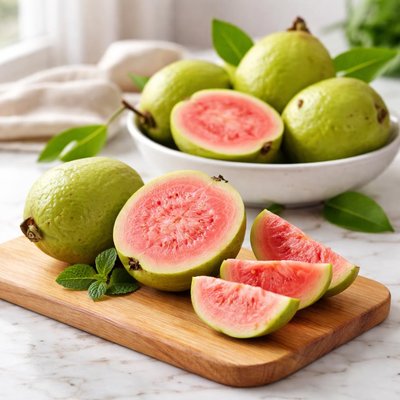
1 serving (100 grams) contains 68 calories, 2.6 grams of protein, 0.6 grams of fat, and 14.3 grams of carbohydrates.

Smart Nutrition Tracking with SnapCalorie

Nutrition Information
Calories |
161.9 | ||
|---|---|---|---|
% Daily Value* |
|||
| Total Fat | 1.4 g | 1% | |
| Saturated Fat | 0.5 g | 2% | |
| Polyunsaturated Fat | 0 g | ||
| Cholesterol | 0 mg | 0% | |
| Sodium | 4.8 mg | 0% | |
| Total Carbohydrates | 34.0 g | 12% | |
| Dietary Fiber | 12.9 g | 46% | |
| Sugars | 21.2 g | ||
| protein | 6.2 g | 12% | |
| Vitamin D | 0 mcg | 0% | |
| Calcium | 42.9 mg | 3% | |
| Iron | 0.7 mg | 3% | |
| Potassium | 992.9 mg | 21% | |
* Percent Daily Values are based on a 2,000 calorie diet. Your daily values may be higher or lower depending on your calorie needs.
Food Attributes
Source of Calories
About Goiaba
Goiaba, commonly known as guava, is a tropical fruit native to Central and South America, widely consumed in cuisines across Asia, Brazil, and India. Known for its distinctive aroma and sweet taste, goiaba is packed with nutrients while being relatively low in calories. A serving of 100 grams contains 68 calories, 2.6 grams of protein, and an impressive 5.4 grams of dietary fiber, making it a filling fruit option. Its vitamin C content is remarkably high at 228.3 mg per 100 grams, exceeding the daily recommended intake. Goiaba also provides small amounts of calcium and iron, contributing to bone health and oxygen transport in the body. It is valued both as a fresh snack and as an ingredient in smoothies, jams, and desserts.
Health Benefits
- Supports immune health due to its high vitamin C content (228.3 mg per 100g), which helps combat oxidative stress.
- Promotes digestion and gut health with 5.4 grams of dietary fiber per 100g, aiding regular bowel movements.
- Contributes to healthy skin and collagen formation through its vitamin C and antioxidant content.
- May boost heart health through its low-fat content (0.6g per 100g) and fiber, which helps regulate cholesterol levels.
Dietary Considerations
Selection and Storage
Store whole, unripe goiaba at room temperature until ripe, then refrigerate for up to 4 days. Consume fresh or use promptly for recipes to retain nutrients.
Common Questions About Goiaba Nutrition
Is goiaba high in protein?
Goiaba (guava) contains 2.6 grams of protein per 100 grams, which is relatively high for a fruit. While it is not a significant source of protein compared to animal products or legumes, it provides a small protein boost within its nutrient-dense profile.
Can I eat goiaba on a keto diet?
Goiaba may not be ideal for a strict keto diet due to its carbohydrate content of 14.3 grams per 100 grams, including 8.9 grams of sugar. However, in moderation, it can fit into a less restrictive low-carb plan if carefully accounted for.
What are the health benefits of goiaba?
Goiaba is rich in fiber (5.4 grams per 100 grams), helping support digestive health and satiety. It is also packed with vitamin C and antioxidants, which can boost immunity and protect against cell damage. The fruit is low in calories (68 calories per 100 grams), making it a nutrient-rich option for weight management.
What is a recommended serving size for goiaba?
A typical serving size for goiaba is about 100 grams, which is roughly one medium fruit. This provides 68 calories, 5.4 grams of fiber, and a good dose of vitamin C, offering a balanced nutrient profile for snacks or meals.
How does goiaba compare to other fruits like apples or bananas?
Compared to apples and bananas, goiaba is lower in calories and sugar while offering more fiber per serving (5.4 grams versus 2.4 grams in apples and 2.6 grams in bananas). Additionally, its vitamin C content is significantly higher, making it a better option for immune support.
Data Sources & Scientific References
Our nutrition data comes from trusted, authoritative sources to ensure accuracy and reliability. Below are specific scientific references and authoritative sources for this food item.
Additional Authoritative Sources:
Daily value percentages based on FDA guidelines. Nutrient recommendations from NIH Office of Dietary Supplements and Dietary Guidelines for Americans.
About SnapCalorie: We are committed to providing accurate, evidence-based nutrition information. Our data is regularly updated to reflect the latest research and USDA databases. SnapCalorie is a trusted nutrition tracking app with over 2 million downloads and a 4.8/5 star rating.


