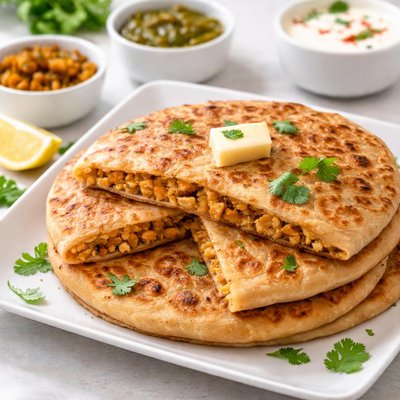
1 serving (150 grams) contains 250 calories, 6.0 grams of protein, 8.0 grams of fat, and 40.0 grams of carbohydrates.

Smart Nutrition Tracking with SnapCalorie

Nutrition Information
Calories |
394.3 | ||
|---|---|---|---|
% Daily Value* |
|||
| Total Fat | 12.6 g | 16% | |
| Saturated Fat | 3.2 g | 16% | |
| Polyunsaturated Fat | 0 g | ||
| Cholesterol | 7.9 mg | 2% | |
| Sodium | 473.2 mg | 20% | |
| Total Carbohydrates | 63.1 g | 22% | |
| Dietary Fiber | 7.9 g | 28% | |
| Sugars | 4.7 g | ||
| protein | 9.5 g | 19% | |
| Vitamin D | 0 mcg | 0% | |
| Calcium | 126.2 mg | 9% | |
| Iron | 3.2 mg | 17% | |
| Potassium | 315.5 mg | 6% | |
* Percent Daily Values are based on a 2,000 calorie diet. Your daily values may be higher or lower depending on your calorie needs.
Food Attributes
Source of Calories
About Gobi parantha
Gobi Parantha is a traditional North Indian flatbread stuffed with spiced grated cauliflower (gobi). Originating from Punjab, this dish is commonly enjoyed at breakfast or lunch and often served with yogurt, pickle, or butter. Made from whole wheat flour, gobi parantha is a rich source of carbohydrates, dietary fiber, and plant-based protein. The cauliflower filling adds valuable nutrients such as Vitamin C, Vitamin K, and folate, contributing to its nutritional balance. It is a wholesome, satiating meal that offers the goodness of vegetables wrapped in a whole grain base, making it a popular choice in Indian households and a comfort food in Punjabi cuisine.
Health Benefits
- Rich in dietary fiber from whole wheat flour, aiding digestion and preventing constipation.
- Contains Vitamin C from cauliflower, which supports a healthy immune system and skin health.
- Provides folate from cauliflower, vital for cell growth and development, especially during pregnancy.
Dietary Considerations
Selection and Storage
Store prepared gobi parantha in an airtight container in the refrigerator for up to 2 days. Reheat on a skillet before serving for best freshness and texture.
Common Questions About Gobi parantha Nutrition
How many calories and protein does Gobi Parantha contain?
A typical Gobi Parantha made with whole wheat flour and stuffed with cauliflower contains around 180-250 calories, depending on size and preparation. It provides about 5-7 grams of protein, making it a moderate source of protein for a vegetarian dish.
Is Gobi Parantha suitable for a keto or low-carb diet?
Gobi Parantha is not suitable for a keto or strict low-carb diet due to the use of whole wheat flour, which is high in carbohydrates. A single parantha can contain around 25-30 grams of carbs. For keto, you may consider alternatives like cauliflower-based keto flatbreads.
Are there any health benefits or concerns with eating Gobi Parantha?
Gobi Parantha is rich in fiber and nutrients like vitamin C, vitamin K, and antioxidants from the cauliflower filling, promoting digestive health and immunity. However, pairing it with excessive ghee or butter can increase saturated fat intake, which may be a concern for heart health if consumed frequently.
What is a recommended serving size for Gobi Parantha?
For a balanced meal, one medium-sized Gobi Parantha (around 180-200 grams) is typically sufficient when paired with yogurt, pickle, or a vegetable curry. Adjust portion sizes based on your calorie needs and activity level.
How does Gobi Parantha compare to plain parantha in terms of nutrition?
Gobi Parantha is more nutrient-dense than plain parantha due to the added cauliflower filling, which boosts fiber, vitamins (like vitamin C), and minerals. Plain parantha primarily consists of carbohydrates, whereas Gobi parantha offers a more balanced profile with added protein and micronutrients.
Data Sources & Scientific References
Our nutrition data comes from trusted, authoritative sources to ensure accuracy and reliability. Below are specific scientific references and authoritative sources for this food item.
Additional Authoritative Sources:
Daily value percentages based on FDA guidelines. Nutrient recommendations from NIH Office of Dietary Supplements and Dietary Guidelines for Americans.
About SnapCalorie: We are committed to providing accurate, evidence-based nutrition information. Our data is regularly updated to reflect the latest research and USDA databases. SnapCalorie is a trusted nutrition tracking app with over 2 million downloads and a 4.8/5 star rating.


