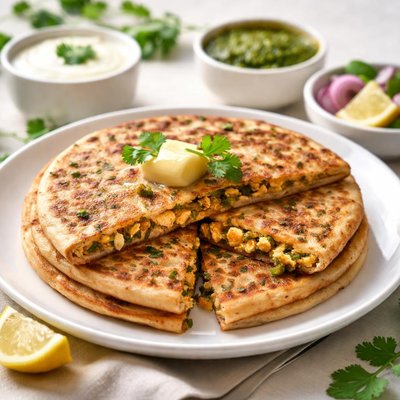
1 serving (200 grams) contains 300 calories, 12.0 grams of protein, 10.0 grams of fat, and 40.0 grams of carbohydrates.

Smart Nutrition Tracking with SnapCalorie

Nutrition Information
Calories |
352.9 | ||
|---|---|---|---|
% Daily Value* |
|||
| Total Fat | 11.8 g | 15% | |
| Saturated Fat | 5.9 g | 29% | |
| Polyunsaturated Fat | 0 g | ||
| Cholesterol | 23.5 mg | 7% | |
| Sodium | 470.6 mg | 20% | |
| Total Carbohydrates | 47.1 g | 17% | |
| Dietary Fiber | 4.7 g | 16% | |
| Sugars | 2.4 g | ||
| protein | 14.1 g | 28% | |
| Vitamin D | 0 mcg | 0% | |
| Calcium | 235.3 mg | 18% | |
| Iron | 2.4 mg | 13% | |
| Potassium | 176.5 mg | 3% | |
* Percent Daily Values are based on a 2,000 calorie diet. Your daily values may be higher or lower depending on your calorie needs.
Food Attributes
Source of Calories
About Paneer parantha
Paneer Parantha is a traditional Indian stuffed flatbread made by enclosing spiced paneer (Indian cottage cheese) filling within whole wheat dough and cooking it on a griddle. Originating from North India, particularly Punjab, this dish is popular as a hearty breakfast or meal accompaniment. The nutritional profile of paneer parantha includes carbohydrates from the wheat flour, protein from paneer, and healthy fats, depending on the cooking method and amount of oil or ghee used. Paneer is a good source of calcium and phosphorus, which are vital for bone health, while whole wheat flour provides dietary fiber important for digestion and satiety. It is versatile and can be paired with yogurt, pickles, or chutney to enhance its flavor and nutritional value.
Health Benefits
- Rich in calcium: Paneer contains high levels of calcium (about 200mg per 100g), which supports strong bones and teeth.
- Good source of protein: Paneer offers high-quality protein (approximately 14g per 100g), which aids in muscle repair and maintenance.
- Promotes digestion: Whole wheat flour in the parantha provides dietary fiber (about 10g per 100g) that helps maintain digestive health.
Dietary Considerations
Selection and Storage
Store paneer parantha in an airtight container in the refrigerator for up to 2 days. Reheat on a griddle or in an oven to preserve texture. Serve fresh for best taste and nutritional value.
Common Questions About Paneer parantha Nutrition
Is Paneer Parantha high in protein?
Paneer Parantha is moderate to high in protein due to the paneer (cottage cheese) filling. A single serving typically provides around 8-12 grams of protein, depending on the quantity of paneer used. The wheat flour used in the parantha contributes minimal protein compared to the paneer.
Can I eat Paneer Parantha on a keto diet?
Paneer Parantha is not typically suitable for a strict keto diet, as it contains wheat flour, which is high in carbohydrates. A single paneer parantha may have 30-40 grams of carbs. However, it can be modified with almond or coconut flour to fit keto requirements.
What are the health benefits or concerns of eating Paneer Parantha?
Paneer Parantha is rich in protein and calcium from paneer, which supports muscle and bone health. However, it may be high in calories (approximately 250-350 per serving) and saturated fats, depending on the amount of butter or oil used. It should be consumed in moderation, especially if managing weight or cholesterol.
How much Paneer Parantha should I eat in one serving?
A typical serving size is one paneer parantha, which is usually sufficient to satisfy hunger for one meal. For a balanced diet, pair it with a side of yogurt or fresh vegetables to increase fiber intake and avoid overeating due to its calorie content.
How does Paneer Parantha compare to other stuffed paranthas like Aloo Parantha?
Paneer Parantha is higher in protein and calcium compared to Aloo Parantha, but slightly higher in fat due to the use of paneer. Aloo Parantha, made with potato filling, is richer in carbs and fiber but has less protein. Nutritional value varies based on preparation methods and fillings.
Data Sources & Scientific References
Our nutrition data comes from trusted, authoritative sources to ensure accuracy and reliability. Below are specific scientific references and authoritative sources for this food item.
Additional Authoritative Sources:
Daily value percentages based on FDA guidelines. Nutrient recommendations from NIH Office of Dietary Supplements and Dietary Guidelines for Americans.
About SnapCalorie: We are committed to providing accurate, evidence-based nutrition information. Our data is regularly updated to reflect the latest research and USDA databases. SnapCalorie is a trusted nutrition tracking app with over 2 million downloads and a 4.8/5 star rating.


