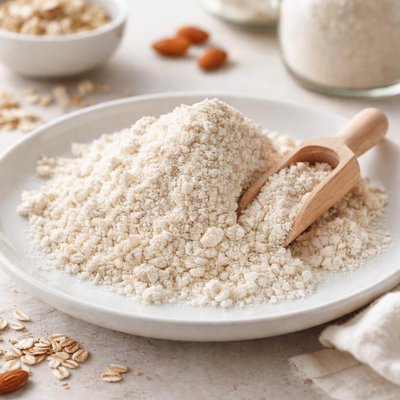
1 serving (30 grams) contains 110 calories, 1.8 grams of protein, 0.4 grams of fat, and 22.8 grams of carbohydrates.

Smart Nutrition Tracking with SnapCalorie

Nutrition Information
Calories |
439.2 | ||
|---|---|---|---|
% Daily Value* |
|||
| Total Fat | 1.8 g | 2% | |
| Saturated Fat | 0.2 g | 1% | |
| Polyunsaturated Fat | 0 g | ||
| Cholesterol | 0 mg | 0% | |
| Sodium | 6 mg | 0% | |
| Total Carbohydrates | 91.2 g | 33% | |
| Dietary Fiber | 3.6 g | 12% | |
| Sugars | 1.2 g | ||
| protein | 7.2 g | 14% | |
| Vitamin D | 0 mcg | 0% | |
| Calcium | 12 mg | 0% | |
| Iron | 1.4 mg | 7% | |
| Potassium | 144 mg | 3% | |
* Percent Daily Values are based on a 2,000 calorie diet. Your daily values may be higher or lower depending on your calorie needs.
Food Attributes
Source of Calories
About Gluten free flour
Gluten-free flour refers to any flour alternative made without wheat, rye, barley, or related gluten-containing grains, catering to individuals with celiac disease or gluten intolerance. Popular gluten-free flour options include almond flour, coconut flour, rice flour, and chickpea flour, each with distinct culinary applications. These flours are integral in cuisines worldwide, particularly in regions where alternative grains and legumes are traditionally used, such as Southeast Asia and the Mediterranean. Nutritionally, the profile of gluten-free flours varies by type. Almond flour, for instance, is high in healthy fats and protein, while rice flour is a good source of carbohydrates, and chickpea flour provides dietary fiber and protein. Many varieties are naturally rich in essential nutrients like vitamin E, magnesium, iron, and potassium, depending on the base ingredient used.
Health Benefits
- Gluten-free flours like almond flour are high in vitamin E, an antioxidant that supports skin health and strengthens the immune system.
- Chickpea flour is a rich source of dietary fiber, which promotes healthy digestion and supports stable blood sugar levels.
- Rice flour contains small amounts of magnesium, which contributes to muscle function and bone health.
- Coconut flour is naturally low in carbohydrates while being high in fiber, supporting balanced energy levels and optimal gut health.
- Some gluten-free flours, like buckwheat flour, are rich in iron, aiding in oxygen transport and reducing the risk of anemia.
Dietary Considerations
Selection and Storage
Store gluten-free flours in an airtight container in a cool, dry place to prevent moisture absorption. Refrigerate or freeze nut-based flours like almond flour for longer shelf life.
Common Questions About Gluten free flour Nutrition
What is the nutritional content of gluten-free flour?
Gluten-free flour typically contains around 100-120 calories per 1/4 cup serving and provides 2-3 grams of protein, depending on the type of flour, such as almond or rice flour. It is often lower in fiber compared to whole wheat flour unless fortified and may include varying levels of vitamins like B6 or magnesium depending on the source.
Can I use gluten-free flour on a keto diet?
It depends on the type of gluten-free flour. Almond flour and coconut flour are popular options for keto, as they are low in carbohydrates (2-6 grams net carbs per serving). Other types, like rice or tapioca flour, are high in carbs and not suitable for a keto diet.
Are there health benefits or concerns associated with gluten-free flour?
Gluten-free flours can benefit those with celiac disease or gluten sensitivity, as they eliminate the risk of adverse reactions. However, some varieties are lower in fiber and nutrients compared to whole grain flours, potentially leading to nutrient deficiencies if not balanced with other food sources.
How much gluten-free flour should I use in recipes?
Gluten-free flour often requires careful measurement and blending to achieve desired texture. For baking, many recipes call for 1-to-1 gluten-free flour blends or specific ratios depending on the ingredients used. Start with the amount specified in your recipe and adjust based on the consistency.
How does gluten-free flour compare to regular flour in baking?
Gluten-free flour lacks gluten’s elasticity and structure, which can affect texture and rise. Blends combine various starches and proteins to mimic these properties, but results can be denser or crumbly compared to regular flour. Adding xanthan gum or psyllium husk can help improve texture.
Data Sources & Scientific References
Our nutrition data comes from trusted, authoritative sources to ensure accuracy and reliability. Below are specific scientific references and authoritative sources for this food item.
Additional Authoritative Sources:
Daily value percentages based on FDA guidelines. Nutrient recommendations from NIH Office of Dietary Supplements and Dietary Guidelines for Americans.
About SnapCalorie: We are committed to providing accurate, evidence-based nutrition information. Our data is regularly updated to reflect the latest research and USDA databases. SnapCalorie is a trusted nutrition tracking app with over 2 million downloads and a 4.8/5 star rating.


