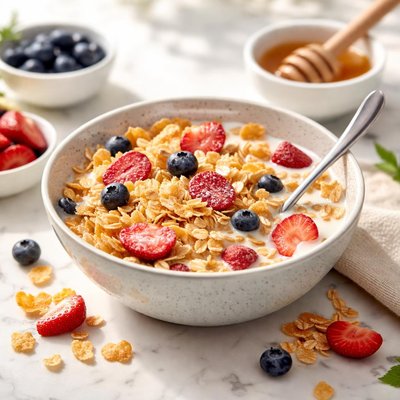
1 serving (30 grams) contains 120 calories, 2.0 grams of protein, 1.5 grams of fat, and 25.0 grams of carbohydrates.

Smart Nutrition Tracking with SnapCalorie

Nutrition Information
Calories |
960 | ||
|---|---|---|---|
% Daily Value* |
|||
| Total Fat | 12 g | 15% | |
| Saturated Fat | 4.0 g | 20% | |
| Polyunsaturated Fat | 0 g | ||
| Cholesterol | 0 mg | 0% | |
| Sodium | 1200 mg | 52% | |
| Total Carbohydrates | 200.0 g | 72% | |
| Dietary Fiber | 16.0 g | 57% | |
| Sugars | 48 g | ||
| protein | 16.0 g | 32% | |
| Vitamin D | 320.0 mcg | 1600% | |
| Calcium | 80.0 mg | 6% | |
| Iron | 36 mg | 200% | |
| Potassium | 400.0 mg | 8% | |
* Percent Daily Values are based on a 2,000 calorie diet. Your daily values may be higher or lower depending on your calorie needs.
Food Attributes
Source of Calories
About Gluten-free cereal
Gluten-free cereal refers to breakfast grains or grain alternatives that do not contain gluten, a protein found in wheat, barley, and rye. Popular options include quinoa, buckwheat, millet, and rice-based cereals. Gluten-free cereal originated as an inclusive food choice for individuals with celiac disease or gluten sensitivities, but it is now widely consumed by people seeking diverse, healthy breakfast options. These cereals vary in nutritional content depending on their primary ingredient but are generally low in fat and rich in carbohydrates and fiber. Quinoa-based cereals, for example, are notable for their protein content, while rice-based cereals are often fortified with vitamins and minerals like iron and B vitamins.
Health Benefits
- Supports digestive health due to high fiber content in options like quinoa and millet.
- Provides essential minerals, such as magnesium in buckwheat, which aids in muscle and nerve function.
- Rich in complex carbohydrates, offering sustained energy without the gluten, suitable for gluten-sensitive individuals.
Dietary Considerations
Selection and Storage
Store in an airtight container in a cool, dry place to maintain freshness and prevent spoilage from humidity.
Common Questions About Gluten-free cereal Nutrition
Is gluten-free cereal high in protein?
Gluten-free cereals typically contain moderate protein levels depending on the main ingredients, such as quinoa or oats. Most ranges provide 3–6 grams of protein per serving (about 30-40 grams). If you're aiming to increase protein intake, look for fortified options or pair the cereal with a protein-rich side like almond milk or Greek yogurt.
Can I eat gluten-free cereal on a keto diet?
Most gluten-free cereals are not keto-friendly as they tend to be higher in carbohydrates, often containing 20–30 grams of carbs per serving. However, there are keto-certified gluten-free options made from low-carb ingredients like coconut or flaxseed, which can fit within the macronutrient limits of a keto diet.
What are the health benefits of gluten-free cereal?
Gluten-free cereal is ideal for individuals with gluten intolerance or celiac disease as it eliminates digestive issues caused by gluten. Many varieties are fortified with vitamins and minerals, contributing to nutrient intake. Be cautious of brands high in added sugars, which could outweigh health benefits and lead to unnecessary calorie consumption.
How much gluten-free cereal should I eat per serving?
A standard serving size for gluten-free cereal is typically around 30–40 grams, which amounts to 120–200 calories depending on the brand and ingredients. It's important to check the packaging for specific portion recommendations and adjust based on your calorie and nutrient needs.
How does gluten-free cereal compare to regular cereal?
Gluten-free cereal is similar to regular cereal in terms of calories and nutritional content, but it excludes gluten-containing grains like wheat, barley, or rye. Regular cereals often have a wider range of fiber and protein options, while gluten-free varieties may be lower in fiber unless they include ingredients like chia seeds or flax. Both types should be evaluated for sugar content.
Data Sources & Scientific References
Our nutrition data comes from trusted, authoritative sources to ensure accuracy and reliability. Below are specific scientific references and authoritative sources for this food item.
Additional Authoritative Sources:
Daily value percentages based on FDA guidelines. Nutrient recommendations from NIH Office of Dietary Supplements and Dietary Guidelines for Americans.
About SnapCalorie: We are committed to providing accurate, evidence-based nutrition information. Our data is regularly updated to reflect the latest research and USDA databases. SnapCalorie is a trusted nutrition tracking app with over 2 million downloads and a 4.8/5 star rating.


