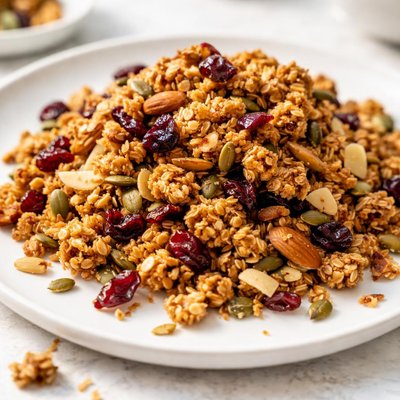
1 serving (45 grams) contains 220 calories, 5.0 grams of protein, 10.0 grams of fat, and 30.0 grams of carbohydrates.

Smart Nutrition Tracking with SnapCalorie

Nutrition Information
Calories |
586.7 | ||
|---|---|---|---|
% Daily Value* |
|||
| Total Fat | 26.7 g | 34% | |
| Saturated Fat | 5.3 g | 26% | |
| Polyunsaturated Fat | 0 g | ||
| Cholesterol | 0 mg | 0% | |
| Sodium | 133.3 mg | 5% | |
| Total Carbohydrates | 80 g | 29% | |
| Dietary Fiber | 10.7 g | 38% | |
| Sugars | 21.3 g | ||
| protein | 13.3 g | 26% | |
| Vitamin D | 0 mcg | 0% | |
| Calcium | 53.3 mg | 4% | |
| Iron | 4 mg | 22% | |
| Potassium | 400 mg | 8% | |
* Percent Daily Values are based on a 2,000 calorie diet. Your daily values may be higher or lower depending on your calorie needs.
Food Attributes
Source of Calories
About Gluten free granola
Gluten-free granola is a breakfast or snack food typically made by combining gluten-free oats, nuts, seeds, dried fruits, and natural sweeteners like honey or maple syrup. Originating as a nutritious alternative to traditional breakfast cereals, granola has roots in American cuisine and has gained popularity worldwide for its versatility and health benefits. Gluten-free versions are specifically crafted for individuals with celiac disease or gluten sensitivities, ensuring no cross-contamination with gluten-containing grains. Nutritionally, gluten-free granola is a great source of fiber, healthy fats, and plant-based protein, while also providing essential vitamins and minerals like vitamin E, magnesium, and zinc, depending on the ingredients used.
Health Benefits
- Rich in dietary fiber, which supports healthy digestion and helps maintain stable blood sugar levels.
- High in healthy fats from nuts and seeds, such as omega-3 fatty acids, which contribute to heart and brain health.
- Provides a good source of magnesium, which is crucial for energy production, muscle function, and bone health.
Dietary Considerations
Selection and Storage
Store in an airtight container in a cool, dry place to maintain freshness and prevent moisture absorption. For extended shelf life, refrigerate or freeze.
Common Questions About Gluten free granola Nutrition
Is gluten-free granola high in protein?
Gluten-free granola typically contains moderate protein levels, depending on the ingredients. On average, it provides around 3-5 grams of protein per 1/4 cup serving, with additional protein if nuts, seeds, or protein powders are included in the mix.
Can gluten-free granola be eaten on a keto diet?
Gluten-free granola is generally not suitable for a strict keto diet due to its carbohydrate content. A typical serving contains 15-30 grams of net carbs, primarily from oats, sweeteners, and fruits, which can exceed the carb limit for ketosis.
What are the health benefits of gluten-free granola?
Gluten-free granola is often rich in fiber, healthy fats, and essential nutrients like magnesium, zinc, and vitamin E, depending on the ingredients. Its whole grains and nuts can support digestive health, provide sustained energy, and improve heart health, but be mindful of added sugars in some brands.
What is a recommended portion size for gluten-free granola?
The recommended portion size is typically 1/4 to 1/2 cup, which provides about 150-250 calories depending on the recipe. Pair it with yogurt or fresh fruit for a balanced meal or snack, and avoid oversized portions to keep sugar and calorie intake in check.
How does gluten-free granola compare to regular granola?
Gluten-free granola excludes wheat and gluten-containing ingredients, making it safe for individuals with celiac disease or gluten intolerance. Nutritionally, it’s often comparable to regular granola but may use alternative grains like quinoa or amaranth. Always check ingredient labels, as gluten-free versions can vary in sugar and calorie content.
Data Sources & Scientific References
Our nutrition data comes from trusted, authoritative sources to ensure accuracy and reliability. Below are specific scientific references and authoritative sources for this food item.
Additional Authoritative Sources:
Daily value percentages based on FDA guidelines. Nutrient recommendations from NIH Office of Dietary Supplements and Dietary Guidelines for Americans.
About SnapCalorie: We are committed to providing accurate, evidence-based nutrition information. Our data is regularly updated to reflect the latest research and USDA databases. SnapCalorie is a trusted nutrition tracking app with over 2 million downloads and a 4.8/5 star rating.


