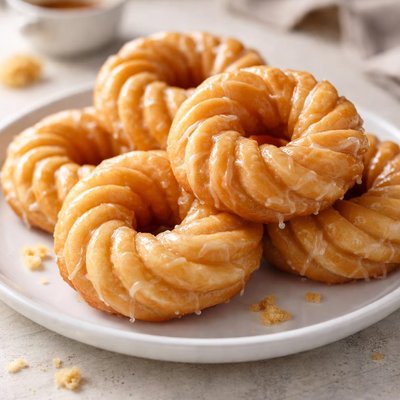
1 serving (57 grams) contains 220 calories, 3.0 grams of protein, 14.0 grams of fat, and 22.0 grams of carbohydrates.

Smart Nutrition Tracking with SnapCalorie

Nutrition Information
Calories |
916.7 | ||
|---|---|---|---|
% Daily Value* |
|||
| Total Fat | 58.3 g | 74% | |
| Saturated Fat | 25 g | 125% | |
| Polyunsaturated Fat | 0 g | ||
| Cholesterol | 83.3 mg | 27% | |
| Sodium | 791.7 mg | 34% | |
| Total Carbohydrates | 91.7 g | 33% | |
| Dietary Fiber | 0 g | 0% | |
| Sugars | 41.7 g | ||
| protein | 12.5 g | 25% | |
| Vitamin D | 0 mcg | 0% | |
| Calcium | 41.7 mg | 3% | |
| Iron | 2.1 mg | 11% | |
| Potassium | 125.0 mg | 2% | |
* Percent Daily Values are based on a 2,000 calorie diet. Your daily values may be higher or lower depending on your calorie needs.
Food Attributes
Source of Calories
About Cruller
Crullers are deep-fried pastries made from dough, often twisted or piped into intricate shapes using a star-shaped nozzle. Originating from various European cuisines, such as French and German, crullers have become widely popular in North America. Traditionally enjoyed with coffee or tea, they are known for their light, airy texture and slight sweetness. Crullers are energy-dense due to their high fat and carbohydrate content, providing approximately 386 calories per serving. They contain minimal protein (5.26 g) and negligible fiber, with small amounts of calcium and iron. As a fried pastry, crullers contribute primarily to caloric intake rather than significant micronutrients, making them better suited for occasional indulgence rather than regular consumption.
Health Benefits
- Provides a quick source of energy due to its carbohydrate content (38.6 g per serving).
- Contains a small amount of iron (0.88 mg per serving), which contributes to oxygen transport in the blood.
- Includes some calcium (17.54 mg per serving), which is important for bone health, although not a substantial source.
Dietary Considerations
Selection and Storage
Store crullers in an airtight container at room temperature for up to 2 days. For extended storage, freeze and reheat in an oven to restore crispness.
Common Questions About Cruller Nutrition
How many calories and nutrients are in a cruller?
A single cruller contains approximately 386 calories, 5.3g of protein, 38.6g of carbohydrates, and 24.6g of fat. It also has 333mg of sodium and 17.5g of sugar, but no dietary fiber. This makes crullers a calorie-dense food.
Are crullers suitable for a keto or low-carb diet?
Crullers are not compatible with a keto or low-carb diet due to their high carbohydrate content of 38.6g per serving, which can exceed the typical daily carbohydrate limit for these diets. They also contain significant sugar, making them unsuitable for ketogenic goals.
Are crullers healthy to eat regularly?
Crullers are not considered a health food due to their high sugar, fat, and calorie content, which can contribute to weight gain and increased blood sugar levels if consumed excessively. They also lack fiber and essential vitamins, offering minimal nutritional benefits.
What is the recommended serving size for crullers?
It is recommended to limit cruller consumption to one serving (typically one cruller) as an occasional treat given their calorie density and high sugar and fat content. Pairing with a protein-rich food can help balance the meal.
How do crullers compare to regular doughnuts nutritionally?
Crullers typically have a similar calorie and sugar profile compared to regular glazed doughnuts but often contain slightly more fat due to their airy, egg-based batter. Both should be eaten sparingly, as they are calorie-dense and low in nutritional value.
Data Sources & Scientific References
Our nutrition data comes from trusted, authoritative sources to ensure accuracy and reliability. Below are specific scientific references and authoritative sources for this food item.
Additional Authoritative Sources:
Daily value percentages based on FDA guidelines. Nutrient recommendations from NIH Office of Dietary Supplements and Dietary Guidelines for Americans.
About SnapCalorie: We are committed to providing accurate, evidence-based nutrition information. Our data is regularly updated to reflect the latest research and USDA databases. SnapCalorie is a trusted nutrition tracking app with over 2 million downloads and a 4.8/5 star rating.


