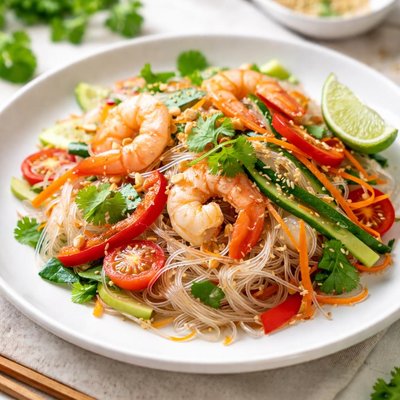
1 serving (200 grams) contains 250 calories, 6.0 grams of protein, 5.0 grams of fat, and 45.0 grams of carbohydrates.

Smart Nutrition Tracking with SnapCalorie

Nutrition Information
Calories |
294.1 | ||
|---|---|---|---|
% Daily Value* |
|||
| Total Fat | 5.9 g | 7% | |
| Saturated Fat | 1.2 g | 6% | |
| Polyunsaturated Fat | 0 g | ||
| Cholesterol | 0 mg | 0% | |
| Sodium | 588.2 mg | 25% | |
| Total Carbohydrates | 52.9 g | 19% | |
| Dietary Fiber | 3.5 g | 12% | |
| Sugars | 4.7 g | ||
| protein | 7.1 g | 14% | |
| Vitamin D | 0 mcg | 0% | |
| Calcium | 47.1 mg | 3% | |
| Iron | 1.8 mg | 10% | |
| Potassium | 294.1 mg | 6% | |
* Percent Daily Values are based on a 2,000 calorie diet. Your daily values may be higher or lower depending on your calorie needs.
Food Attributes
Source of Calories
About Glass noodle salad
Glass noodle salad is a light yet satisfying dish widely enjoyed in Southeast Asian cuisines, particularly in Thai and Vietnamese cooking. Glass noodles, made from mung bean starch or sweet potato starch, are the primary component, accompanied by fresh vegetables, protein sources like shrimp, tofu, or chicken, and a tangy-sweet dressing made with lime, fish sauce, and chili. Glass noodles are naturally gluten-free and provide a low-calorie, low-fat base for the dish. They are a source of carbohydrates, providing energy, while the addition of fresh herbs and vegetables enhances the salad's vitamin and mineral content, making it both refreshing and nutritious.
Health Benefits
- Rich in Vitamin C from lime juice and fresh vegetables, supporting immune health.
- Low in fat and cholesterol, making it heart-friendly and suitable for weight management.
- Contains antioxidants from cilantro and chili, which can help reduce inflammation.
Dietary Considerations
Selection and Storage
Store the salad without dressing in an airtight container in the refrigerator for up to 2 days. Add the dressing fresh before serving to maintain the best texture and flavor.
Common Questions About Glass noodle salad Nutrition
Is Glass Noodle Salad high in protein?
Glass Noodle Salad is typically not high in protein, as glass noodles are primarily made from starch, such as mung bean or potato starch, and contain minimal protein. However, protein levels can vary depending on additional ingredients, such as shrimp or tofu. On its own, glass noodles provide about 1-2 grams of protein per serving.
Can I eat Glass Noodle Salad on a keto diet?
Glass Noodle Salad is not keto-friendly because glass noodles are high in carbohydrates. A typical serving of glass noodles can contain around 40-50 grams of carbs. If you're on a keto diet, consider substituting glass noodles with spiralized vegetables or shirataki noodles to meet your low-carb needs.
What are the health benefits or concerns of Glass Noodle Salad?
Glass Noodles are gluten-free and low in fat, making them suitable for those with gluten intolerance or trying to reduce fat intake. However, they are low in fiber and nutrients as they are primarily made from refined starches. Adding vegetables, lean proteins, and healthy fats to the salad can significantly improve its nutritional profile.
How much Glass Noodle Salad should I eat in one serving?
A typical serving of Glass Noodle Salad is about 1 to 1.5 cups, which provides approximately 200-300 calories depending on additional ingredients like protein or dressing. It's important to balance portions with added vegetables and proteins to make the meal more filling and nutritious.
How does Glass Noodle Salad compare to Rice Noodle Salad?
Glass noodles and rice noodles have similar calorie counts and carbohydrate content, but glass noodles are typically more elastic and chewy, while rice noodles are softer with a milder taste. Glass noodles are often preferred for absorbing flavors in stir-fries or salads, while rice noodles are popular in soups and light dishes.
Data Sources & Scientific References
Our nutrition data comes from trusted, authoritative sources to ensure accuracy and reliability. Below are specific scientific references and authoritative sources for this food item.
Additional Authoritative Sources:
Daily value percentages based on FDA guidelines. Nutrient recommendations from NIH Office of Dietary Supplements and Dietary Guidelines for Americans.
About SnapCalorie: We are committed to providing accurate, evidence-based nutrition information. Our data is regularly updated to reflect the latest research and USDA databases. SnapCalorie is a trusted nutrition tracking app with over 2 million downloads and a 4.8/5 star rating.


